
Last updated November 16, 2026
 AC repair
 Furnace & heating
 Heat pumps
 Ductless mini splits
 Carrier
 Trane
 Goodman
Seasonal tune-up and full diagnostic on your Carrier, Trane, or Goodman system - readings shown to you before any repair is proposed
Diagnosis first, numbers second - you approve the repair price before a single part goes in.
Get your free estimateAC Installation Troubleshooting in Clearwater: Common Problems and How to Fix Them
A brand-new AC system in Clearwater that runs constantly but never gets the house below 76°F isn’t a defective unit. It’s almost certainly a sizing or airflow installation error, and the original installer is the last person who will volunteer to admit it. The equipment itself is rarely the culprit. What fails is the design work behind it: the load calculation nobody showed you, the return duct that’s too small for the blower, the charge that was set by feel instead of by weight. Most homeowners don’t learn to spot these problems until the first summer electric bill lands and the numbers don’t match what the salesperson promised. This guide gives you the diagnostic language to describe what’s actually wrong, and the knowledge to tell whether a contractor is fixing it or just selling you another system.
Quick Answer
When a newly installed AC underperforms in Clearwater, the cause is almost always one of five installation errors: an undersized unit for the home’s actual cooling load, restricted airflow from an undersized or improperly connected return duct, an incorrect refrigerant charge (overcharged as often as undercharged), a thermostat or control misconfiguration, or a duct system running through a hot attic with leaks and poor insulation. The equipment brand matters far less than whether the installer measured the house, measured static pressure, and documented the charge. If your new system can’t hold temperature on a Clearwater afternoon, the fix usually lives in the installation, not the box.
Styles & brands we work with
- AC repair
- Furnace & heating
- Heat pumps
- Ductless mini splits
- Carrier
- Trane
- Goodman
Table of Contents
- Is It an Undersized Unit or an Airflow Problem? How to Tell the Difference
- Why Refrigerant Overcharge Is as Common as Undercharge After Installation
- Duct Connections and Static Pressure in Clearwater’s Attic Installs
- How to Read Your Thermostat’s Runtime Data Before You Call Back
- Why High Humidity Makes a New System Feel Broken
- What Documentation to Demand After Installation
- Questions That Reveal Whether a Contractor Is Diagnosing or Guessing
- Repair or Replace a Bad Installation?
Is It an Undersized Unit or an Airflow Problem? How to Tell the Difference
These two problems produce similar complaints and completely different fixes. Homeowners confuse them constantly, and that confusion is expensive because an airflow fix is often a duct repair while an undersized unit means equipment replacement. Learning to separate the symptoms saves you from paying for the wrong solution.
An undersized unit has a specific signature: it runs nearly nonstop, the supply air coming out of the registers feels appropriately cold (typically 15 to 20 degrees below room temperature), and the house still drifts upward through the hottest part of the afternoon. The system is working correctly. It simply can’t remove heat as fast as a Clearwater afternoon adds it. This happens when the installer sized the equipment by square footage alone instead of running a proper load calculation that accounts for window area, insulation, ceiling height, and the afternoon sun exposure that varies block to block across Clearwater.
An airflow problem looks different. The system may cycle on and off normally, or short-cycle, but the air coming from the registers feels weak or only mildly cool. Some rooms never cool while others freeze. The blower may sound strained. You might hear whistling at the return grille. That’s resistance, not capacity.
Here’s how to sort them out before you call anyone:
- Measure the temperature split. Hold a thermometer in a supply register for a few minutes, then in the return air. A working system shows a split of roughly 15 to 20 degrees. A narrow split with weak airflow points to an airflow or charge problem, not an undersized unit.
- Check which rooms underperform. Uniform under-cooling across the whole house suggests capacity. One or two rooms that never cool suggests duct design or balancing.
- Listen at the return. A loud, rushing return grille means the system is starved for air. That’s a duct problem every time.
- Note the runtime pattern. Nonstop runtime with cold supply air means undersized. Frequent short cycles with lukewarm air point elsewhere.
If you’re documenting symptoms before a callback, write down these four observations. They give a technician a real starting point instead of a guess, and they make it much harder for an installer to wave off a genuine sizing error.
Why Refrigerant Overcharge Is as Common as Undercharge After Installation
Most homeowners know an undercharged system won’t cool. Far fewer know that an overcharged system also underperforms, and that overcharging is a common post-installation error. When a technician adds refrigerant “to be safe” without weighing it in against the manufacturer’s specified charge, the system runs at higher head pressure, the compressor works harder, and efficiency drops over time in a way that doesn’t announce itself.
Proper charging on a new install isn’t a judgment call. It follows a procedure:
- The line set length and elevation are measured and the charge adjusted for them, because factory charge assumes a standard line length.
- Refrigerant is weighed in using a scale, not estimated by gauge readings alone.
- Superheat or subcooling is verified against the manufacturer’s target for the indoor and outdoor conditions at the time.
- The indoor wet-bulb temperature is recorded, since charge targets shift with humidity. In Clearwater’s summer humidity, that number matters more than it does in a dry climate.
An overcharged system shows up as high head pressure, a compressor that runs hot, and electric consumption that creeps up month over month. You won’t see it on a thermometer right away. The cooling may seem acceptable for the first season and degrade slowly. That’s what makes it hard to catch and easy to blame on the equipment.
If your new system’s performance has drifted since installation and the installer’s answer is “that’s just how it is in Florida,” ask specifically whether the charge was weighed in and what the subcooling reading was at startup. A technician who did the job correctly has those numbers. If they can’t produce them, the charge is unknown, and unknown charge is worth verifying. Our technicians have up to 10 years of experience across the major brands, including Daikin and Carrier systems, and we always document the charge we find.
Duct Connections and Static Pressure in Clearwater’s Attic Installs
Most Clearwater homes run their ductwork through the attic, and an attic in a Clearwater summer is one of the harshest environments ductwork ever sees. Attic temperatures climb well above outdoor air temperature, humidity is high, and any gap in the duct system becomes a path for hot, moist air to enter the supply stream. This is where a large share of “my new AC isn’t working” complaints actually originate.
The two problems that matter most are duct connection failures and excessive static pressure.
Duct connections. Where flex duct meets a plenum, register boot, or trunk line, the connection has to be sealed, not just slipped on and taped. In a high-humidity attic, tape adhesive fails, mastic cracks, and flex duct inner liners separate from their outer jackets. A disconnected or leaking supply run dumps cool air into the attic, which is the same as throwing money into a hot room. A leaking return pulls attic air, humidity and all, straight into the system.
Static pressure. This is the total resistance the blower pushes against, and it’s the number most installers never measure. When a new system is installed on old ductwork sized for a different blower, static pressure can climb well past what the equipment was designed for. The consequences show up as reduced airflow, a noisy system, coil icing, and premature blower motor failure. A properly commissioned install includes a static pressure reading, and a good one falls within the manufacturer’s specified range.
What to look for and ask about after the install:
- Was static pressure measured and recorded on the commissioning paperwork?
- Were all duct connections at the air handler and registers sealed with mastic or proper mechanical connections?
- Are the flex runs supported and straight, without sharp bends that choke airflow?
- Is the return air path adequately sized for the new blower’s capacity?
If a contractor can’t tell you what your static pressure was at startup, the commissioning was incomplete. That’s not a minor omission in a Clearwater attic; it’s the difference between a system that lasts and one that limps through its warranty period.
How to Read Your Thermostat’s Runtime Data Before You Call Back
Modern thermostats log data, and that data is your strongest evidence when a system underperforms. Before you call the installer back, spend a few days collecting numbers. A contractor can argue with a feeling. A contractor can’t argue with a runtime log that shows the system running 14 hours a day to hold 78°F.
Here’s how to build that record:
- Download the thermostat app if yours has one. Most connected thermostats track runtime hours, indoor and outdoor temperature, and setpoint history.
- Log daily runtime. For three to five days, note total cooling runtime per day alongside the outdoor high temperature. A system that runs most of the day to hold setpoint in ordinary summer heat is telling you something.
- Record the setpoint versus actual temperature. If you set 74°F and the system holds 78°F, note the gap and the time of day it appears. Late afternoon gaps point toward capacity or duct issues more than morning gaps.
- Note any short cycling. Systems that start and stop every few minutes may be oversized, overcharged, or fighting a control problem.
- Compare the first month to the month after if you have utility usage data. Rising consumption on a system that hasn’t changed setpoints is a signal worth investigating.
For homeowners without a connected thermostat, a simple paper log works just as well. Write down the date, the outdoor high, the setpoint, the indoor temperature at the hottest part of the day, and how long the system ran. Three days of that is usually enough to see a pattern.
When you call for AC installation follow-up, hand over those notes. A technician who sees a documented runtime problem treats the callback as a diagnostic job instead of a quick look. If your system is out entirely in the meantime, our Millbrook AC Repair team can help you sort out the fastest path.
Why High Humidity Makes a New System Feel Broken
A new system can be perfectly sized, properly charged, and still feel wrong in a Clearwater summer. Humidity is the reason. Air conditioning removes moisture as a byproduct of cooling, and if the system isn’t running long enough cycles, or the blower is set too high, it cools the air without pulling enough water out of it. The house reaches setpoint and still feels clammy.
Two installation choices cause this. The first is an oversized unit that cools quickly and shuts off before it has time to dehumidify. The second is a blower speed set to its maximum, which pushes air across the coil too fast for the coil to wring the moisture out. A properly commissioned system runs longer cycles and moves less air per minute than many installers default to.
What you can check on your own:
- Measure indoor relative humidity with an inexpensive hygrometer. Numbers that sit well above 55% while the system is running steadily point to a dehumidification problem.
- Look for condensation or water streaks on supply registers. Persistent sweating on ducts inside the conditioned space suggests the air isn’t dry enough.
- Notice whether the system cycles frequently during mild weather. Short cycles in moderate temperatures are a setup problem.
If humidity is the issue, the fix is usually a blower speed adjustment or a control setup change, not new equipment. Ask the installer whether the blower taps were set for the home’s actual duct static pressure. That question tells you whether anyone thought about dehumidification at all.
What Documentation to Demand After Installation
An installation is only as good as the paperwork behind it. If problems surface in year two, documentation is what proves the original work was defective versus just aging, and it’s what protects you when warranty questions come up. Demand the following before the installer leaves, and if you don’t have it, request it now.
- The load calculation. A room-by-room load calculation (Manual J or an equivalent) shows the equipment was sized for the house, not estimated. Ask for the report.
- The equipment model and serial numbers. Record the indoor and outdoor unit model numbers, serial numbers, and manufacture dates. These tie your equipment to the manufacturer’s warranty.
- The commissioning sheet. Look for measured static pressure, refrigerant charge verified by weight and subcooling or superheat readings, indoor and outdoor conditions at startup, and temperature split.
- The refrigerant log. How much refrigerant was added and why. Weight-based charges are the standard.
- The warranty registration confirmation. Many manufacturer warranties require registration within a set window. Keep the confirmation.
- The permit documentation. Equipment replacement usually requires a permit, and inspection records protect you if the work is ever questioned.
- The invoice with scope of work. What was replaced, what was reused, and what was excluded. Reused line sets and old ductwork should be named.
If an installer can’t produce a load calculation or commissioning sheet, that’s information. It tells you the job was done by feel. It doesn’t mean the system is broken today, but it does mean you have no proof of how it was set up, and when performance drops, you’ll be arguing from memory instead of documentation.
Questions That Reveal Whether a Contractor Is Diagnosing or Guessing
You don’t need to be an HVAC technician to tell whether one is on the job. The questions below expose the difference between someone diagnosing your system and someone guessing at it. Ask them plainly and listen to how the answers come back.
- “What’s my static pressure?” A real diagnostician either knows the number or goes and measures it. A guesser changes the subject.
- “Was the charge weighed in or gauged in?” The correct answer is by weight, adjusted for line length, verified by subcooling or superheat.
- “What’s my temperature split right now?” Anyone diagnosing a cooling problem should be measuring the difference between supply and return air.
- “Did you run a load calculation on this house?” If the answer is “we matched the old unit’s tonnage,” ask why that’s the same as the correct size.
- “What’s my duct static pressure versus the blower’s rated capacity?” If the numbers don’t align, the equipment is fighting the ducts.
One more thing worth knowing before you talk to anyone: brand choice is far less important than installation quality. We work across nine major brands, including Daikin, Bryant, American Standard, and Carrier, and the honest truth is that a well-installed Bryant will outperform a poorly installed Carrier every time. When a contractor steers you hard toward one brand without explaining why it fits your house, that’s a sales conversation, not a diagnostic one.
That’s why we work on the brand you already have and help you choose wisely if you need something new. Nine brands. One team. No runaround.
Repair or Replace a Bad Installation?
This question comes up more than you’d expect. Homeowners call because their new system doesn’t work, and they assume the answer is a full replacement. Often it isn’t. If the equipment is correct but the installation is flawed, you’re repairing the install, not replacing the equipment.
The decision breaks down by what’s actually wrong:
- Sizing error. If the load calculation was skipped and the unit is genuinely undersized, equipment replacement is usually the answer. The system can’t produce cooling it wasn’t built for.
- Airflow or duct problem. Duct repair, return resizing, and blower speed adjustments fix most of these without touching the equipment.
- Refrigerant charge error. Recovering and recharging to the correct weight is a straightforward repair.
- Control or thermostat misconfiguration. Settings, wiring, and staging adjustments fix this quickly.
- Oversized system causing humidity problems. Sometimes blower speed and controls solve it. Sometimes the right answer is replacing an oversized unit with a properly sized one.
Before you accept a replacement quote on an install under a few years old, get a second diagnostic opinion that includes measured static pressure, measured charge, and a temperature split. Those three numbers tell you what’s actually wrong. A contractor who won’t measure them isn’t diagnosing. They’re selling.
Common Mistakes to Avoid
- Judging a new system by brand instead of installation. Equipment brand is a distant second to whether the installer measured the house, the ducts, and the charge. The same brand installed two different ways produces two very different results in Clearwater.
- Assuming a cold register means the system is working. Cold air at the register with nonstop runtime is the signature of an undersized unit, not a healthy one.
- Skipping the humidity check. A system that reaches setpoint but leaves the house clammy in a Clearwater summer has an airflow or cycle-length problem, and no thermostat adjustment fixes what a blower speed change would.
- Letting the installer choose blower speed without measuring static pressure. Default settings push air too fast for Florida humidity, cutting dehumidification.
- Not collecting runtime data before calling back. A morning phone call with no numbers behind it invites a hand-wave answer and a “that’s normal” dismissal.
- Accepting an install without commissioning documentation. No load calculation and no static pressure reading means no proof of how the system was set up.
- Assuming the original installer is the only contractor who can fix it. A brand-agnostic diagnosis from a second company often finds what the original installer missed, especially on duct and charge problems.
See the difference
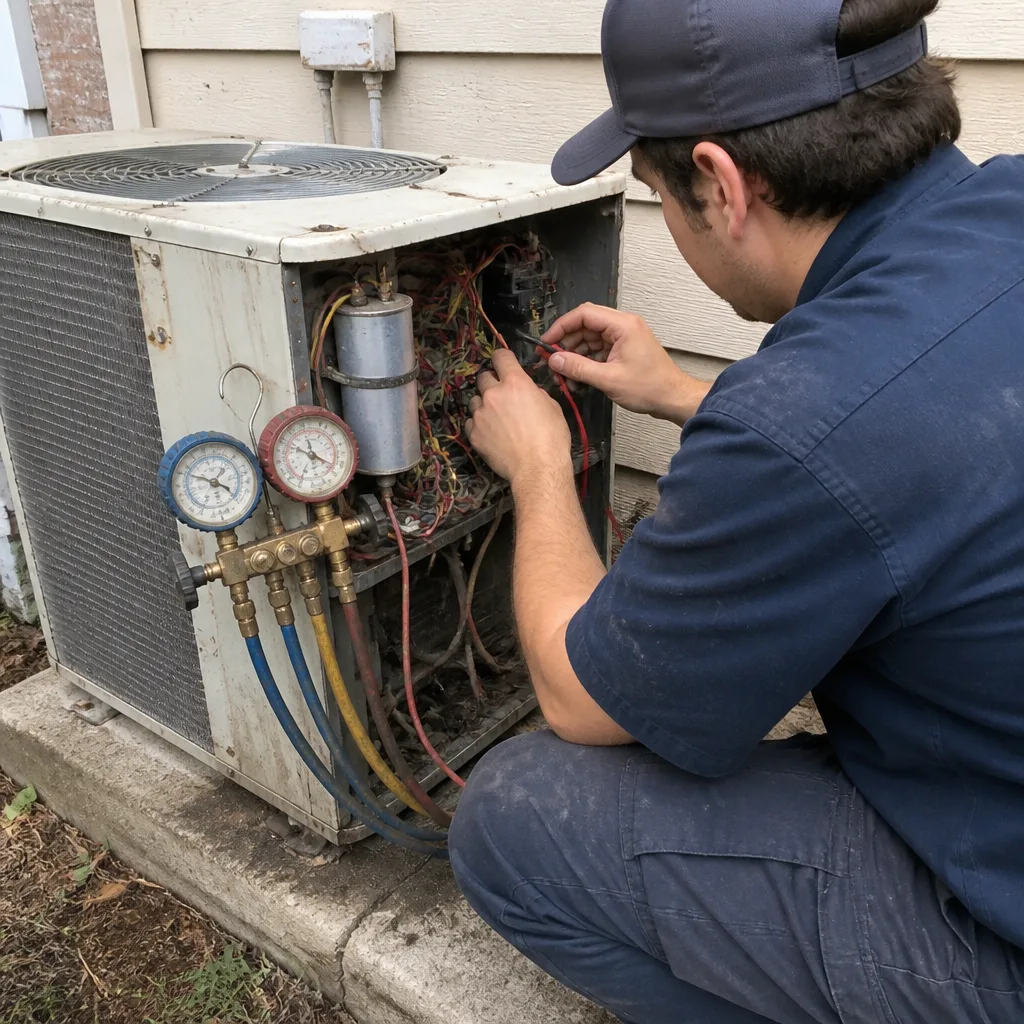 Before
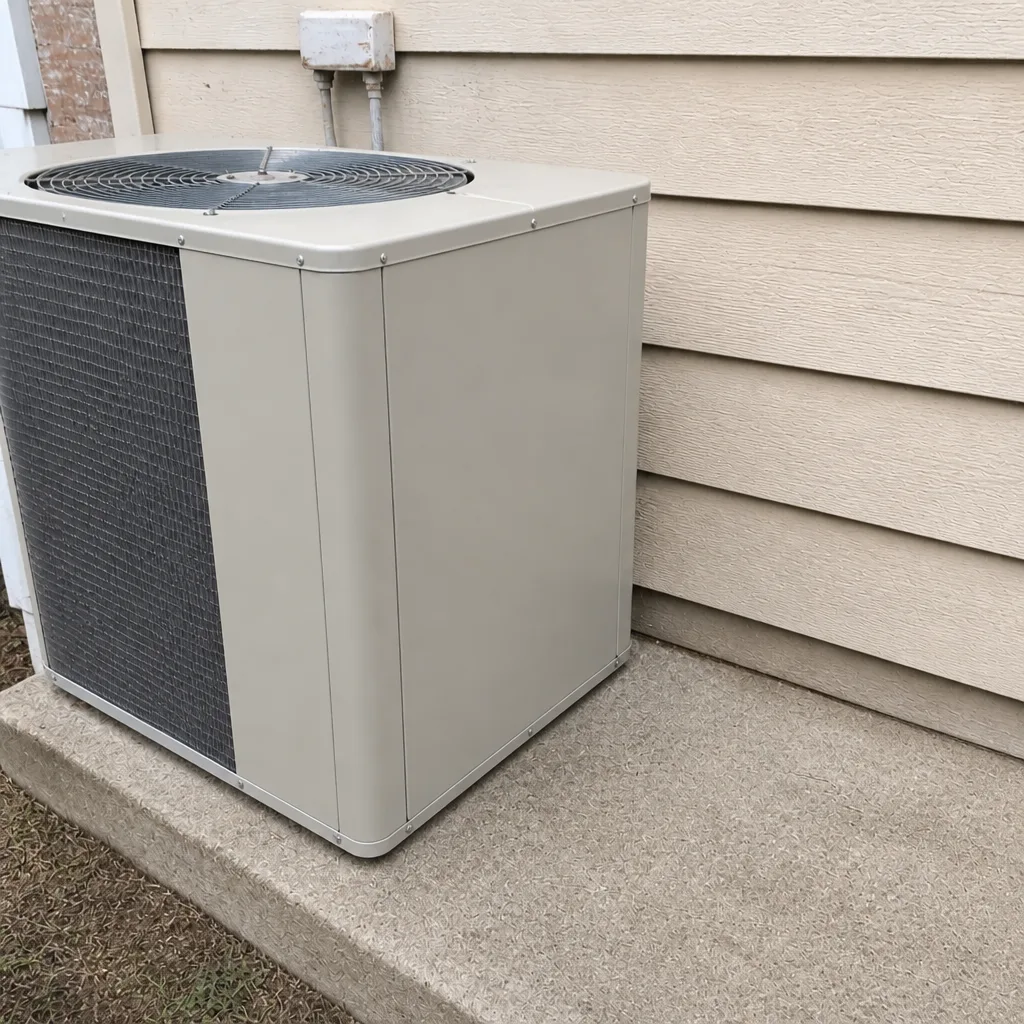 After
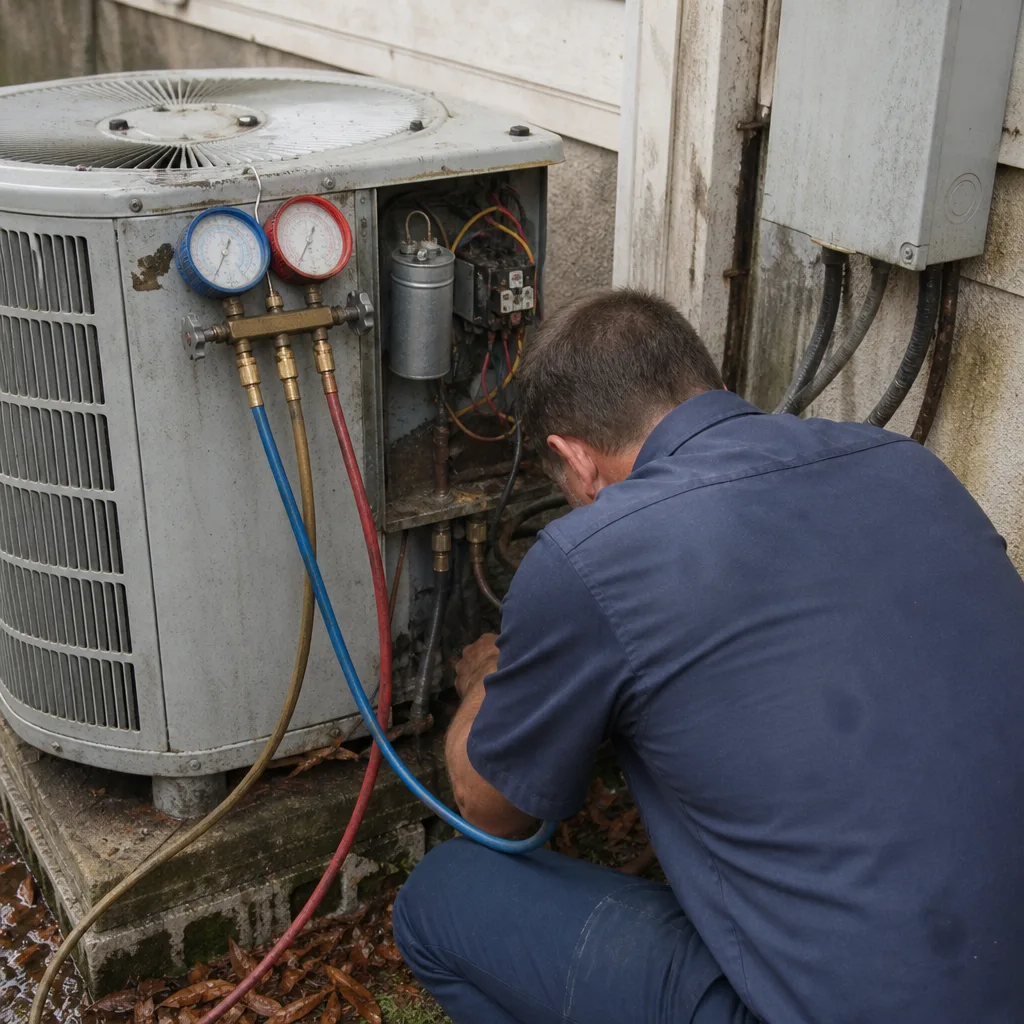 Before
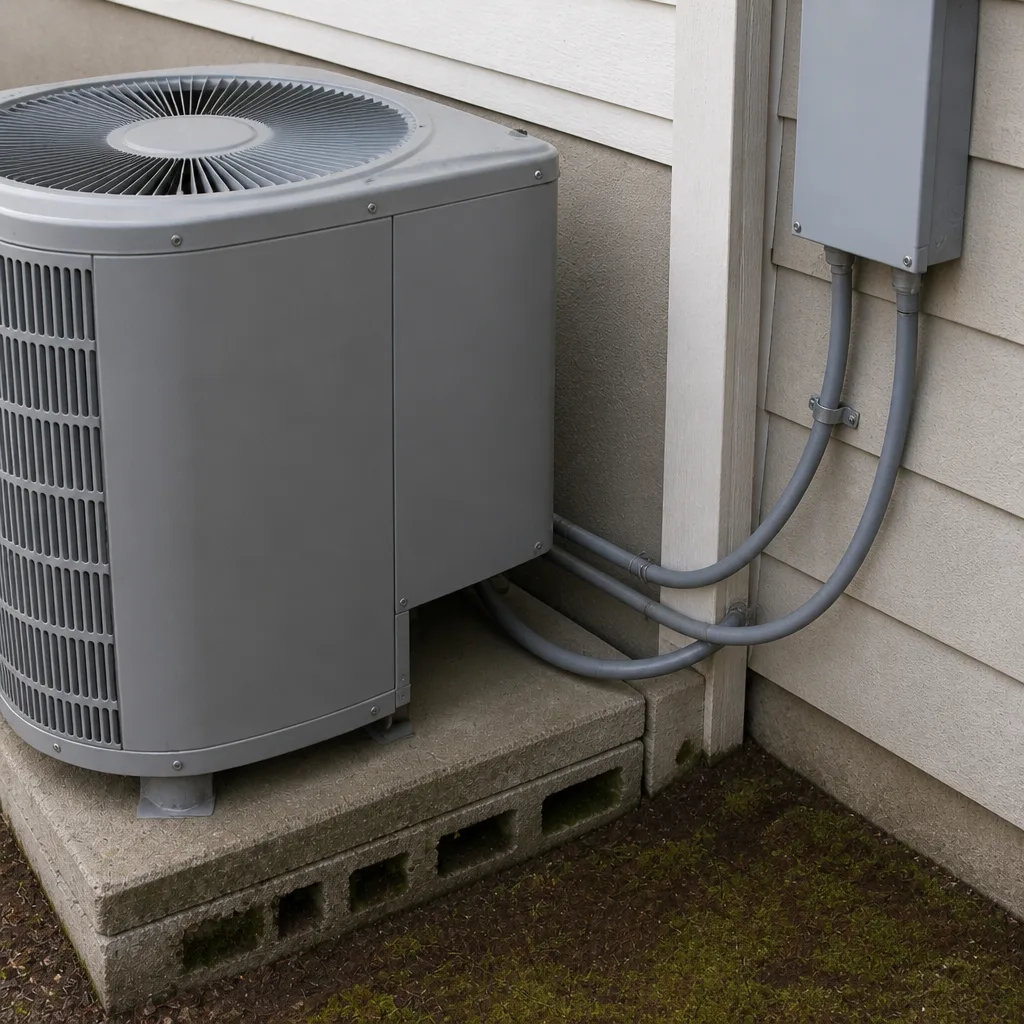 After
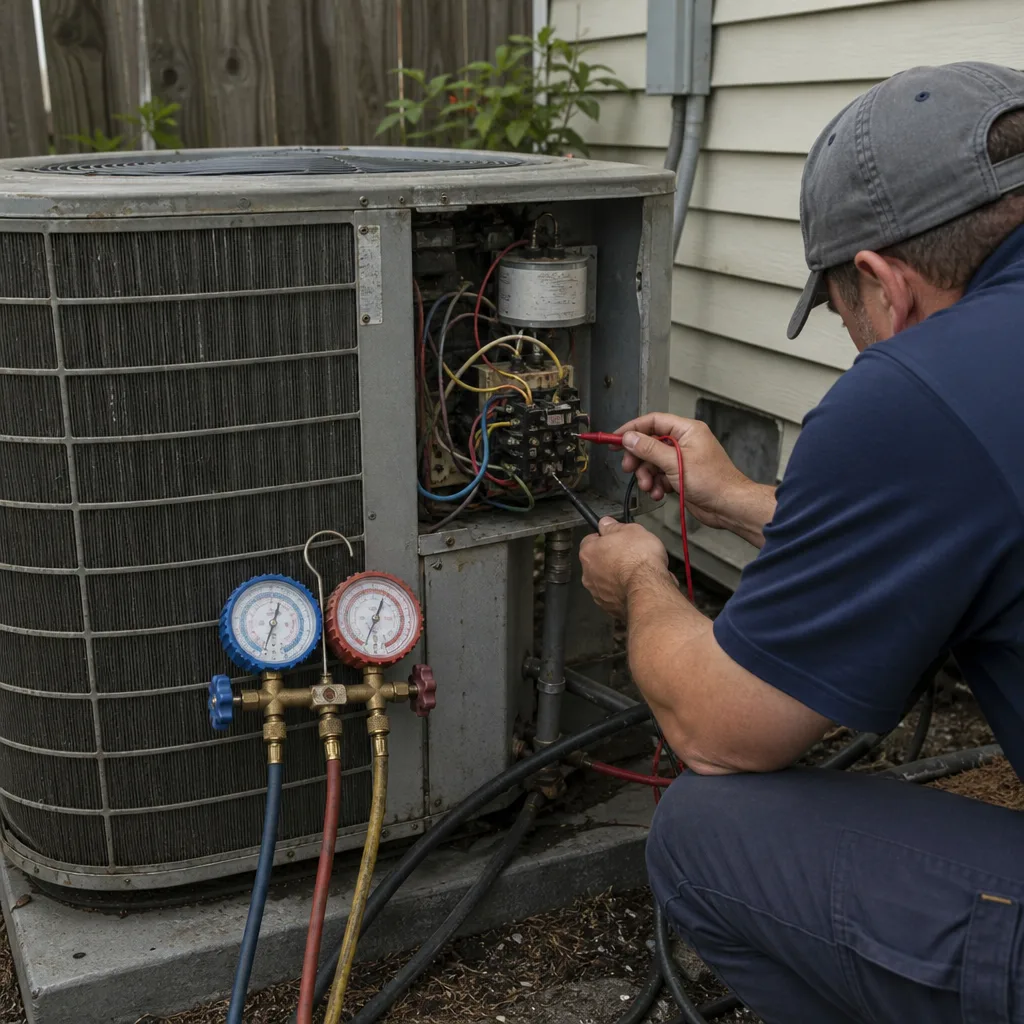 Before
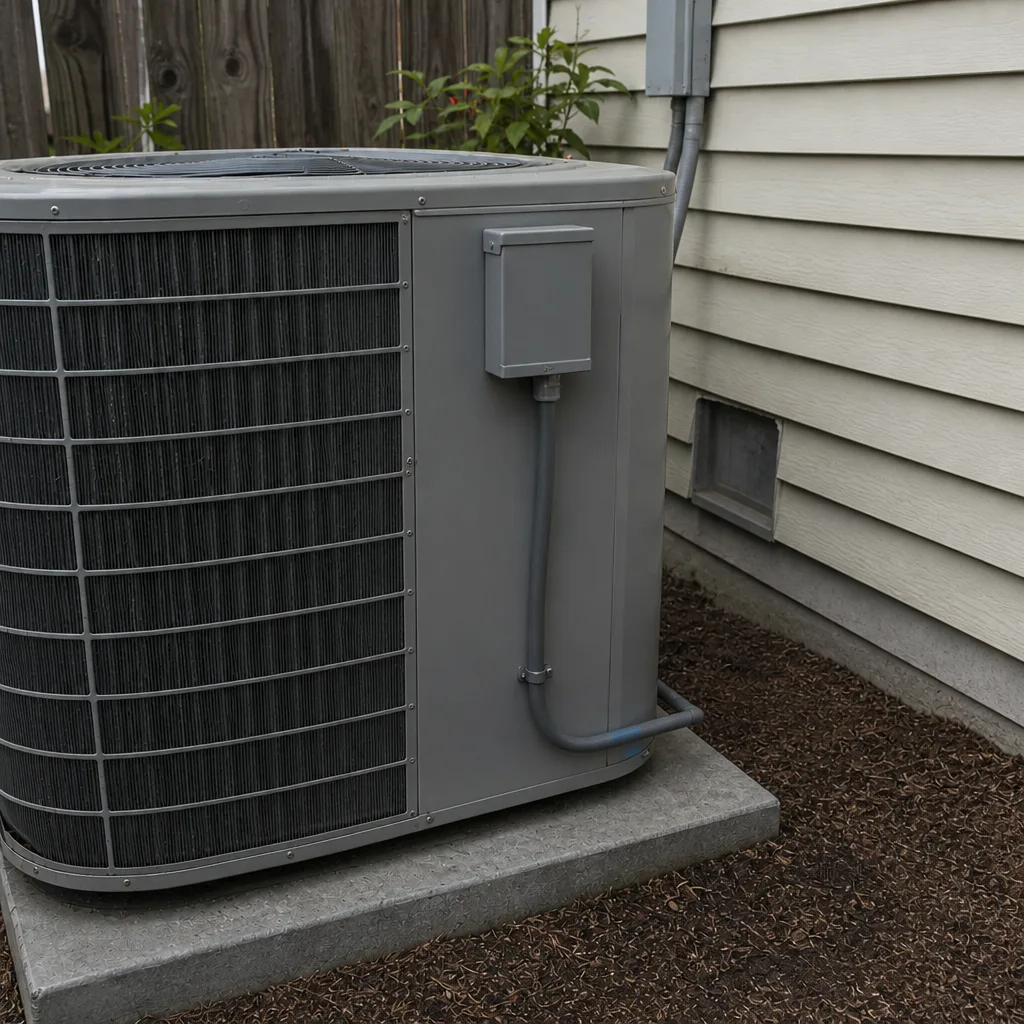 After
When to Call a Professional
Some symptoms are worth handling on your own. Others need a trained technician in front of the equipment. Call a professional if the temperature split measured at the registers falls below 15 degrees, if you see ice on the indoor coil or line set, if your humidity stays high with the system running steadily, if the system short-cycles, or if your thermostat logs show constant runtime to hold setpoint in ordinary weather. Those are installation or equipment symptoms that need real measurement, not guesswork. Refrigerant work and electrical diagnosis in particular belong to a licensed technician; refrigerant systems operate under pressure and mishandling them is a genuine safety issue, so leave the gauges and the panel to a professional. Millbrook AC Repair offers free estimates in Clearwater – call (855) 360-7082. We answer 24/7. Fast dispatch from 7am to 7pm, Sunday through Friday.
Frequently Asked Questions
The most common cause is an installation error rather than a defective unit: undersizing, restricted airflow, improper refrigerant charge, or a thermostat setup problem. In Clearwater’s climate, high humidity and attic-mounted ductwork add two more frequent culprits, which are leaking duct connections and excessive static pressure that starves the blower. Start by measuring the temperature split between supply and return; a reading outside 15 to 20 degrees tells you where to look. Then call a technician to measure static pressure and verify the charge.
An undersized unit runs nearly nonstop, delivers cold supply air, and still lets the house drift warm during the hottest afternoons. An airflow problem shows up as weak supply air, one or two rooms that never cool, a strained or whistling return grille, or a narrow temperature split. Uniform under-cooling points to capacity; room-by-room differences point to ducts. The distinction matters because the fixes are completely different.
Yes, and overcharging happens about as often as undercharging. An overcharged system runs at elevated head pressure, works the compressor harder, and loses efficiency gradually over the first seasons, which makes it hard to notice. Proper charging is weighed in against the manufacturer’s spec, adjusted for line-set length, and verified by subcooling or superheat with indoor humidity recorded. Ask for those startup readings before you accept a “that’s normal” answer.
Humidity problems usually trace to an oversized unit that cools too fast to dehumidify, or a blower speed set too high for the home’s duct system. In a Clearwater summer, long cooling cycles pull moisture out; short cycles don’t. Check indoor relative humidity with an inexpensive hygrometer and compare the runtime pattern. A blower speed adjustment usually solves it without replacing equipment.
Ask for the load calculation report, the equipment model and serial numbers, the commissioning sheet with measured static pressure and charge verification, the refrigerant log, the warranty registration confirmation, and the permit documentation. Those records are what prove the installation was done correctly if problems surface in year two. Call a contractor who can produce them without hesitation.
It depends on what’s actually wrong. Duct repairs, refrigerant recharging, and control adjustments are repairs. A genuinely undersized unit that can’t meet the home’s load usually means equipment replacement. Get a diagnostic that includes measured static pressure, verified charge, and a temperature split before you accept a replacement quote. Call (855) 360-7082 for a free estimate – a proper diagnosis tells you which side you’re on, and it’s far cheaper than guessing.
The Bottom Line
When a new AC underperforms in Clearwater, the equipment is almost never the problem. Installation is. Undersized units, restricted airflow, incorrect refrigerant charge, attic duct leaks, excessive static pressure, and humidity control failures account for the majority of post-installation complaints, and each has a specific tell. The homeowners who get these problems fixed quickly are the ones who collected runtime data, measured temperature splits, and asked the right questions before calling. Documentation is your protection: the load calculation, the commissioning sheet, and the refrigerant log are what prove the job was done right, and their absence is what makes a year-two problem so much harder to resolve. We work on the brand you already have and help you choose wisely if you need something new, on equipment from nine major manufacturers.
If your system isn’t performing the way it should, or you’re planning a new installation and want it done right the first time, we can help. Our furnace repair and replacement work pairs with our cooling service so that heating and cooling are handled by one team and one call, which matters when you want the whole system matched properly. If you’re in Clearwater or nearby and want a straight answer about what’s actually wrong with your system, call Millbrook AC Repair at (855) 360-7082 for a free estimate. We answer 24/7. Fast dispatch from 7am to 7pm, Sunday through Friday. You can also learn more about Clearwater and the neighborhoods we cover.
Written by the team at Millbrook AC Repair.