
Last updated November 16, 2026
 AC repair
 Furnace & heating
 Heat pumps
 Ductless mini splits
 Carrier
 Trane
 Goodman
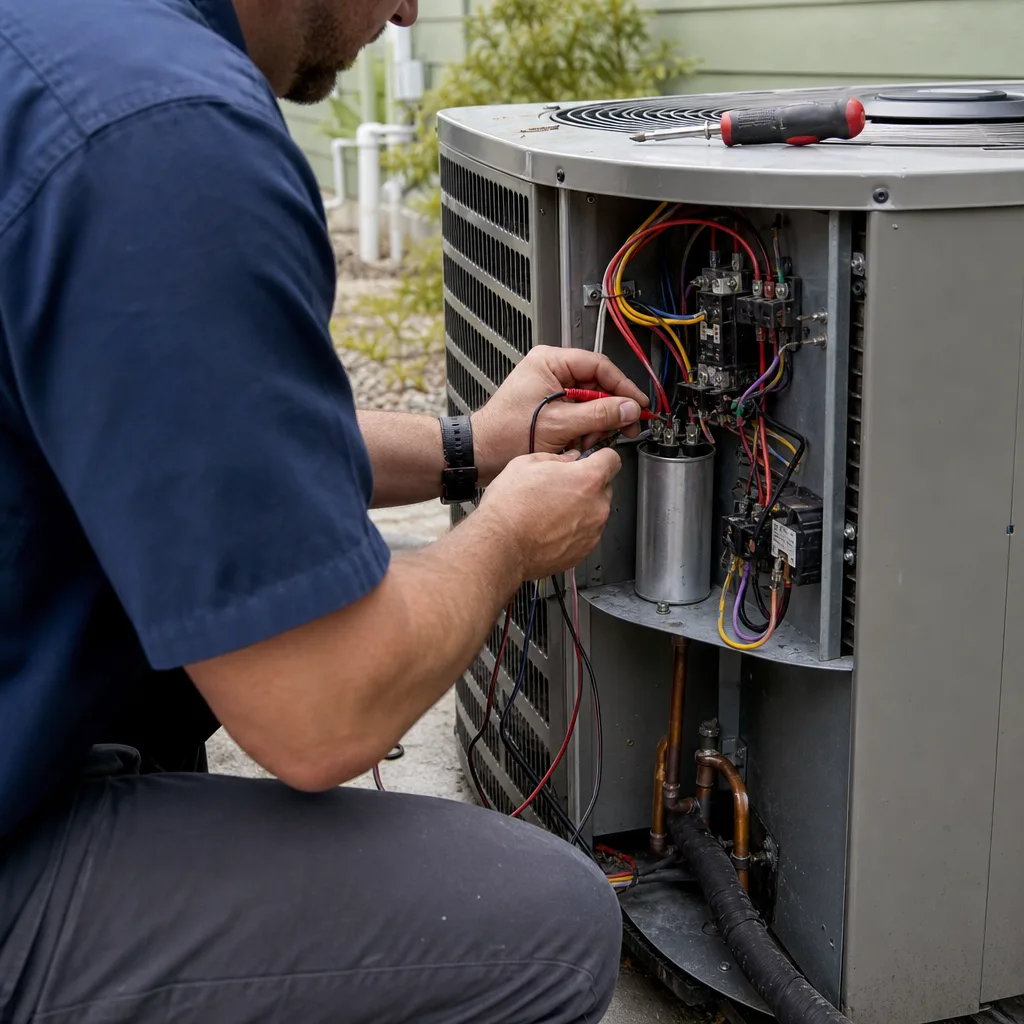
Seasonal tune-up and full diagnostic on your Carrier, Trane, or Goodman system - readings shown to you before any repair is proposed
Diagnosis first, numbers second - you approve the repair price before a single part goes in.
Get your free estimateSeasonal HVAC Care for Clearwater: Year-Round Homeowner’s Guide
Most seasonal maintenance guides were written for places with four distinct seasons, and they don’t fit Clearwater. The advice to “winterize before the first freeze” assumes a freeze that may never arrive, and the summer checklist ignores the humidity-only months that actually do the quiet damage here. What Clearwater really has is a long, punishing cooling peak, a stretch of warm-but-sticky weeks where your system works in a strange in-between mode, and a brief mild window that most homeowners sleep through. This guide maps real maintenance to those phases, and it pays special attention to the October-through-December shoulder period, because that’s when a small summer problem is either caught cheaply or discovered much too late.
Quick Answer
Seasonal HVAC care in Clearwater works around three real phases rather than four calendar seasons: a heavy cooling season from roughly May through September, a humidity-management season through the fall, and a short light-heating stretch in the cooler months. Schedule a post-summer inspection in October while the cooling load is dropping, test your heating system well before the first cold snap, and book spring prep in January before the February rush. That timing, more than any single task, is what keeps a Clearwater system running through the year.
Styles & brands we work with
- AC repair
- Furnace & heating
- Heat pumps
- Ductless mini splits
- Carrier
- Trane
- Goodman
Table of Contents
- The Clearwater HVAC Phase Calendar
- Why the October Inspection Matters More Than a Spring Tune-Up
- Managing Humidity When the Temperature Lets You Turn Cooling Down
- Heat Strip and Heat Pump Checks During the Mild Season
- What “Pre-Season” Means for a Clearwater Contractor
- Filters, Coils, and Drain Lines Through the Year
- When Replacement Beats Repair, and How to Time It
The Clearwater HVAC Phase Calendar
Clearwater’s climate doesn’t hand you four equal seasons, so treating the calendar as spring, summer, fall, and winter puts your maintenance on the wrong schedule. In our experience, the better model breaks the year into four functional phases, each with its own tasks. Cooling runs hard for most of the year, a humidity-heavy stretch follows the peak, heating gets a short but real window, and spring prep is a narrow lead-in before the cooling load climbs again.
Here’s how we map the phases and what matters in each:
- Heavy cooling season (roughly May through September). The compressor runs long cycles, condensate production is high, and filters load up fast. Task priority: replace the air filter on a tighter interval, watch the condensate drain for clogs, and listen for short cycling or weak airflow.
- Humidity-management season (roughly October through December). Outdoor temperatures ease, but indoor moisture doesn’t leave on its own. Task priority: this is inspection season. Get a technician to check refrigerant charge, coil condition, and drain lines now, before any summer wear becomes a winter surprise.
- Light heating season (roughly January through February). Cold snaps here can be short, but that’s exactly why neglected heating fails at the worst moment. Task priority: run the heat before you need it, and address any strange smell or weak output early.
- Pre-season prep (roughly late January into February). The cooling load is still low, which makes it the ideal window to book maintenance before everyone else remembers their AC. Task priority: schedule the pre-summer check and any deferred repairs.
The core idea: maintenance should follow the load, not the calendar page. When your system works hardest, you protect it; when it works least, you inspect it.
Why the October Inspection Matters More Than a Spring Tune-Up
Most seasonal guides push the pre-summer tune-up as the centerpiece, and a pre-summer check is worth doing. But in Clearwater, the post-summer inspection is where the real value sits. By October, your system has just finished months of heavy load. That’s when wear from the cooling season is at its visible peak and when catching it is cheapest.
Think about what a full cooling season actually does to a system. Refrigerant charge can drift. The evaporator coil picks up debris and biology. The condensate drain collects the slime that eventually clogs it. Belts and capacitors take a beating under long runtimes. In October, these are all small, cheap to correct, and easy to detect. If you wait until the following May or June, some of them have quietly turned into larger problems, and the first hot week of the next season is the worst possible time to discover a weak capacitor or a partially clogged coil.
Here’s why we lead with the October window:
- Load is dropping. A technician can measure performance more cleanly when the system isn’t running flat-out every cycle.
- Repair slots are open. The summer queue has cleared. Booking a full inspection in the post-summer months is easier than in the spring rush.
- Small fixes stay small. A slow condensate drain is a five-minute clearing in October. Ignored through the humidity season, it can lead to standing water and a much bigger headache.
- You still have a heating check ahead. An October visit lets a technician check the cooling side and flag heating items while both are fresh.
If you only do one professional visit a year in Clearwater, we’d put it in October. The Clearwater climate rewards that timing more than any other.
Managing Humidity When the Temperature Lets You Turn Cooling Down
Here’s a comfort trap the seasonal guides don’t prepare you for: in Clearwater, some of the most uncomfortable weeks aren’t hot at all. Outdoor temps ease into the comfortable range, a homeowner turns the thermostat up or off, and a few days later the house feels clammy, musty, and wrong. That’s the humidity-without-heat stretch, and it’s one of the trickiest parts of the year.
The reason is simple. An air conditioner doesn’t just cool air; it also pulls moisture out of it as the air passes over the evaporator coil. When you barely run the AC because the temperature is tolerable, you also dial back the dehumidifying. Warm, moist air lingers indoors, and the house starts to feel heavier than the thermometer suggests.
What to do during the humidity-heavy months:
- Keep the fan on low, not auto-and-off. Long, gentle runtimes remove more moisture than short, cold blasts. A slightly higher thermostat with steady airflow beats a low thermostat with the system cycling on and off.
- Don’t let the indoor humidity creep. If the house feels sticky even when cool, the system is telling you something. It may be running short cycles, a common sign of an airflow or charge issue that’s worth a professional look.
- Watch for musty smells. A damp, sour odor means moisture is sitting somewhere it shouldn’t: the coil, the drain pan, or the ductwork. That’s a signal to call.
- Mind the drain line. The condensate drain carries a lot of water through these months. A slow drain here is a common cause of water damage. If you see standing water near the indoor unit, stop and call.
This is one of the reasons we think of Clearwater HVAC care as humidity-management first and cooling second. Your system is doing two jobs, and the season when it’s doing them gently is the season to make sure it’s still doing both.
Heat Strip and Heat Pump Checks During the Mild Season
A heating system in Clearwater can sit unused for ten months and then be called on during the first genuinely cold night of the year. And that’s exactly when it’s most likely to fail. If you think about it, the system is a machine that gets no exercise most of the year and then asked to work at full capacity on demand. That’s a setup for an unwelcome surprise.
The fix is simple: test your heating during the mild season, not during the cold snap. On a comfortable day, well before the cold stretch, turn the thermostat to heat and let it run. Watch for the following:
- Does it actually produce heat? A heat strip or heat pump that runs but doesn’t warm is a problem you want to find on a mild afternoon, not a cold night.
- Is the airflow strong? Weak output can point to a blower or airflow issue that affects heating and cooling both.
- Is there an odd smell? A burning or dusty smell on first use is common in heat strips that have sat idle, but a persistent smell is worth investigating.
- Any unusual noise? Rattling or buzzing on startup deserves a look before the cold arrives.
Testing the heat in the mild months is low-cost and high-value. You’re essentially asking the system to demonstrate it works while the stakes are low. If it doesn’t, you have time to book furnace repair on a normal schedule rather than during the first cold week when everyone’s system is failing at once.
One honest caveat: heating equipment involves electrical components, including heat strips and wiring. That’s not a place for a do-it-yourself repair. If your test turns up a real fault, have a trained technician handle it.
What “Pre-Season” Means for a Clearwater Contractor
“Pre-season” is a phrase that sounds like marketing, but it has a concrete meaning on a Clearwater contractor’s calendar. It’s the window before the cooling season ramps up, and it’s built around the reality that everyone books their AC work at the same moment: the first hot week of spring.
The lead-in to that rush is late January and February. Cooling load is still low, the phone isn’t flooded, and the work can be scheduled without pressure. If you want a maintenance visit done before summer, that’s the window to book it. Wait until the first genuinely warm stretch, and the schedule fills fast, appointments go further out, and a routine tune-up turns into a wait.
Here’s how pre-season works in practice for a homeowner planning ahead:
- Book in January or early February. That’s ahead of the spring rush, and it gets your system looked at while the calendar is still open.
- Decide on deferred repairs now. If the October inspection flagged a capacitor or a coil issue, fix it during the quiet months rather than in a scramble in June.
- Plan any replacement in the off-load months. Replacement work is load-calculated and scheduled, not something done same-day. Booking in the shoulder season gets it done without leaving you without cooling during a peak week.
- Reconfirm your filter schedule. A fresh filter going into the cooling season buys you runtime headroom right when you’ll use it.
That last point matters more than it sounds. A clogged filter restricts airflow, and restricted airflow is behind a large share of the performance complaints we see in Clearwater. A filter change in February is cheap. A compressor straining against blocked airflow in July is not.
Filters, Coils, and Drain Lines Through the Year
Most of the difference between a system that lasts and one that fails early comes down to three components that need attention through the year: the air filter, the evaporator coil, and the condensate drain. If you track only these three, you’ll stay ahead of the majority of avoidable problems in Clearwater.
The air filter. During the heavy cooling season, a standard 1-inch filter can load up quickly. Check it monthly and replace when it looks visibly dirty, or on a tighter interval than a cooler climate would call for. A clean filter is the single easiest thing you can do for airflow, and airflow affects everything downstream.
The evaporator coil. The indoor coil is where your system pulls moisture and heat out of the air. It can pick up dust and biology through a long cooling season. A dirty coil struggles, and a struggling coil means higher runtimes. A professional inspection in the post-summer window can catch a coil that needs cleaning before it causes trouble.
The condensate drain. Your system produces a surprising amount of water through a Clearwater cooling season, and that water has to leave. A drain line that’s starting to clog can cause standing water and, eventually, water damage near the indoor equipment. Watch for standing water or a slow drain, and have a technician clear and check the line during your seasonal inspection.
These three items are the backbone of homeowner-side maintenance. Everything else you do throughout the year builds on them.
When Replacement Beats Repair, and How to Time It
There comes a point on almost every system where continued repair stops making sense, and the question becomes replacement. The honest answer depends on the specific machine: its age, its repair history, the cost of the next fix, and how it’s performing between repairs. We don’t believe in a one-size rule here, and we don’t lead with replacement. We lead with the diagnosis, because a brand-independent look at your system is the only fair basis for the recommendation.
That’s part of why we work across nine major brands, including Trane, Lennox, and Goodman. A single-brand dealer has one answer; a brand-agnostic technician can match the equipment to the home and the budget. When the recommendation is replacement, we discuss it plainly, with the trade-offs and the alternatives.
On timing: replacement is a scheduled, load-calculated job, not a same-day repair. That’s actually good news, because it means you can choose the window. The shoulder months, when cooling load is lower and the calendar is open, are the natural choice. Booking in the off-load months lets you plan around it and avoid a mid-summer scramble. If your system is limping into the cooling season, the sooner you get an honest assessment, the more options you have. You can read more about our approach to AC installation and get a free estimate on a new system when the time comes.
Common Mistakes to Avoid
- Treating a Clearwater year like four equal seasons. Remembering that the local climate works in phases, not calendar quarters, and schedule maintenance around the actual load, not the calendar.
- Skipping the post-summer inspection. The October-to-December window is when summer wear is at its peak and repairs are cheapest. Wait until spring and you may pay more for the same fix.
- Never testing the heat until a cold night. A Clearwater heating system that sits idle for ten months fails right when you need it. Test it during the mild stretch.
- Turning the system off during the humidity stretch. The comfortable-temperature weeks still bring moisture, and the AC is your dehumidifier. Dial it to a higher setting with steady airflow rather than shutting it down.
- Ignoring the condensate drain. Standing water near the indoor unit is a warning you don’t want to miss. Have the drain checked and cleared before it causes damage.
- Waiting for the February rush. Booking spring prep ahead of the crowd gets you an open slot. Booking it after means a longer wait.
- Running a dirty filter through the summer. A clogged filter cuts airflow, and a system that’s straining in the heat wears faster. Check it monthly through the cooling months.
See the difference
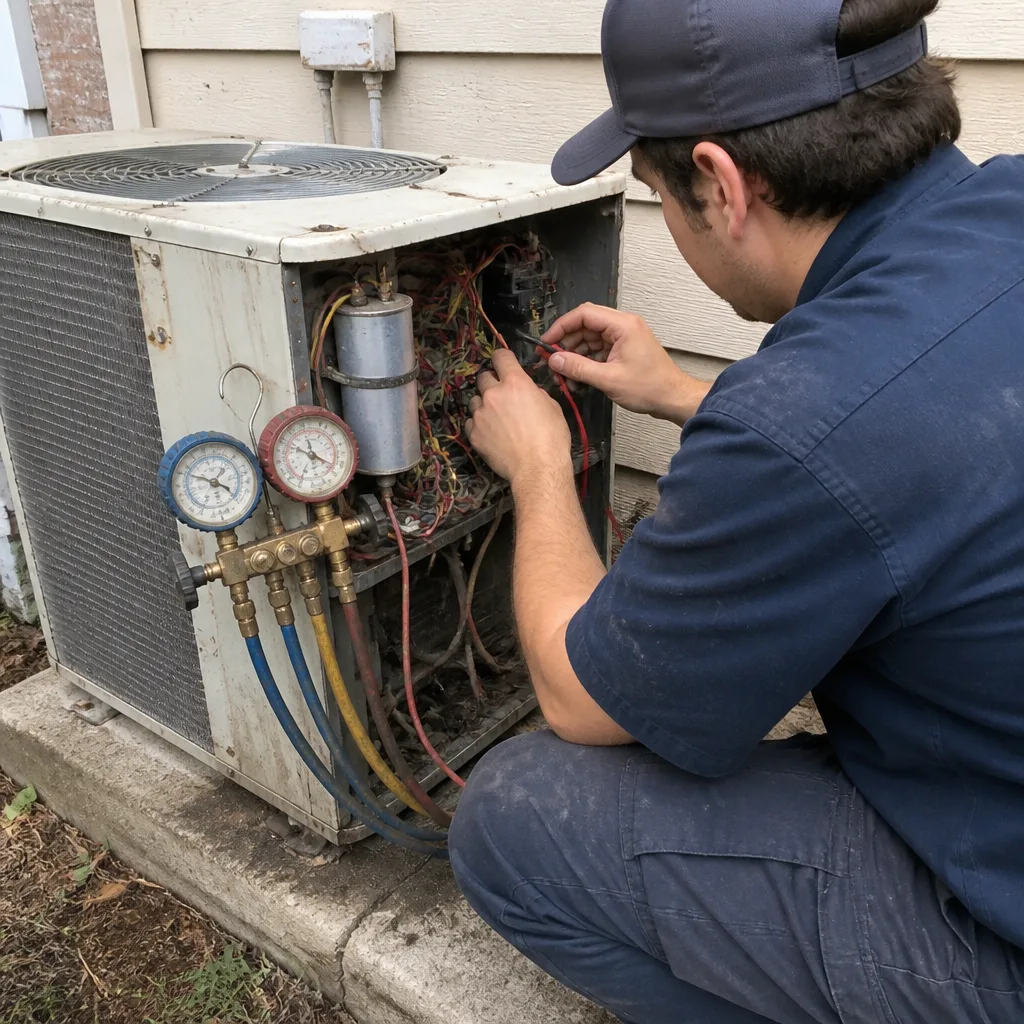 Before
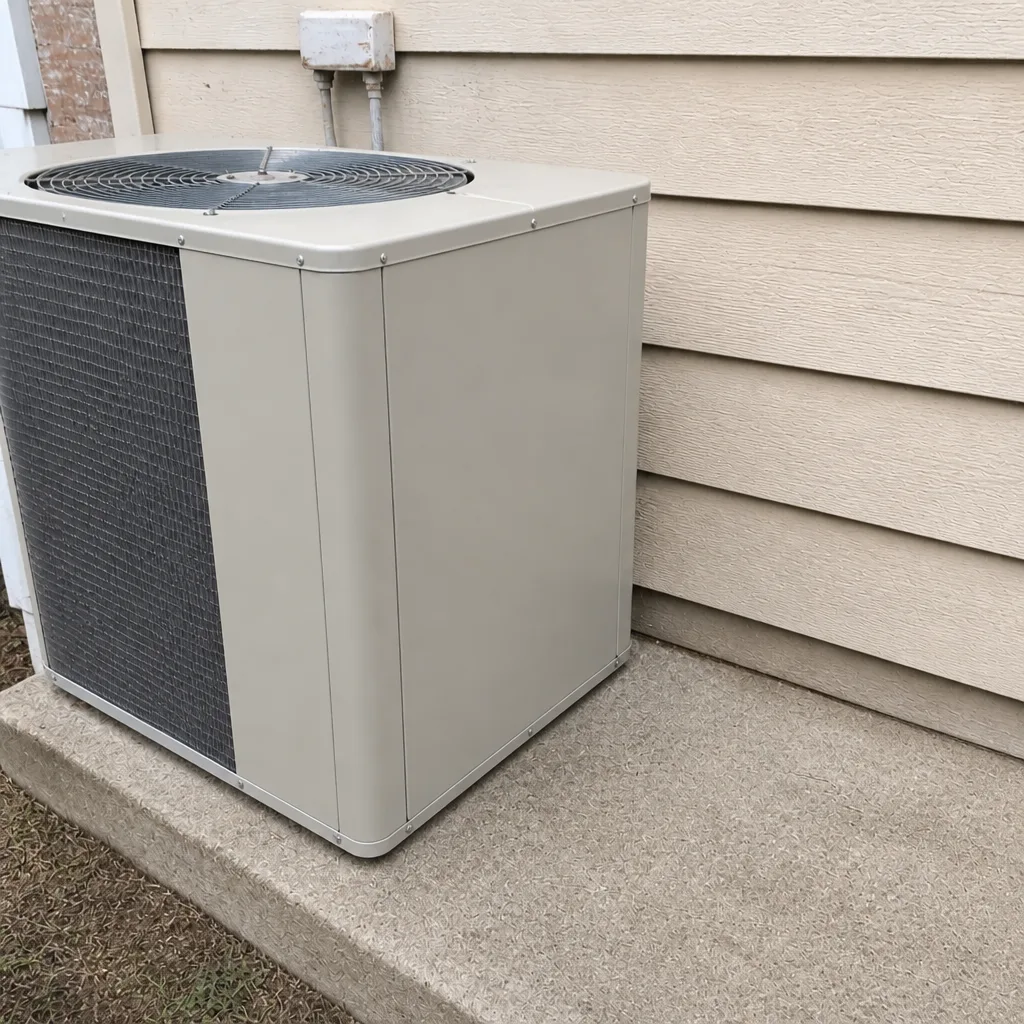 After
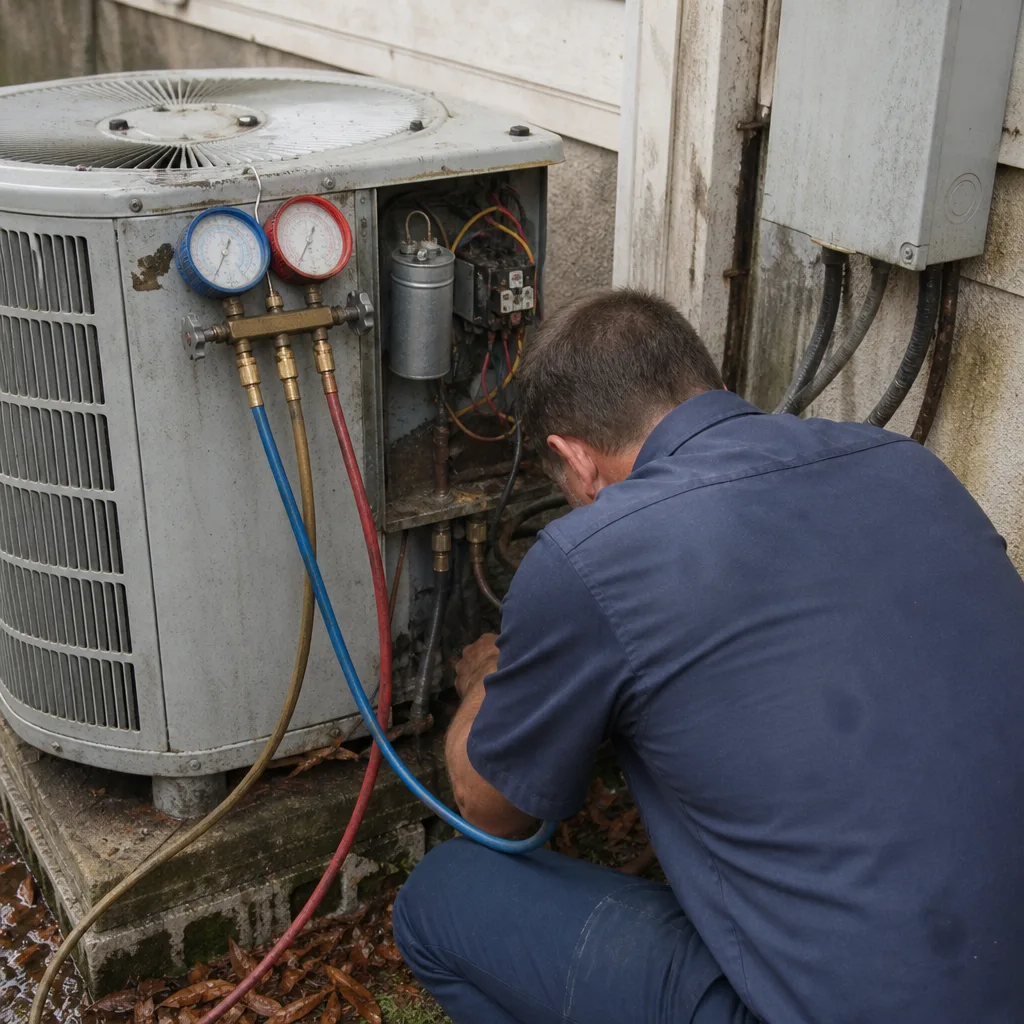 Before
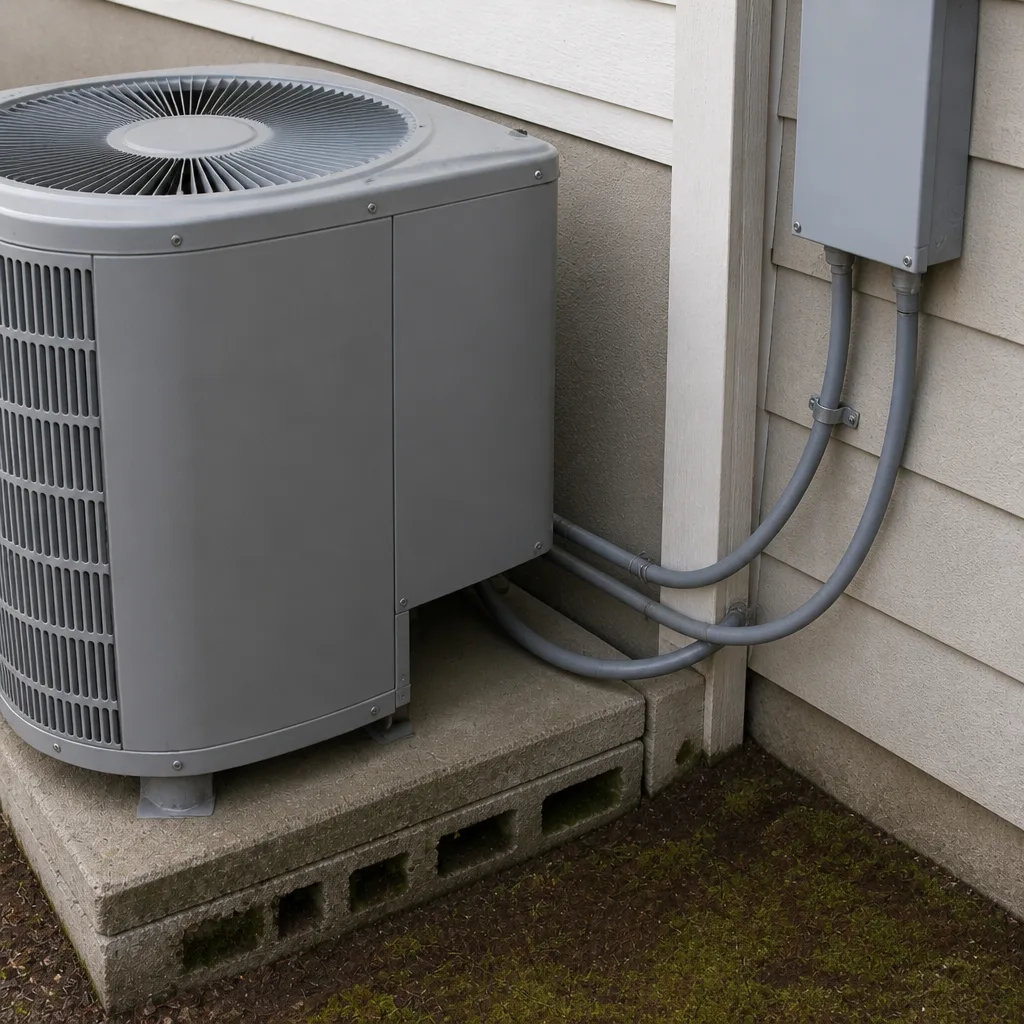 After
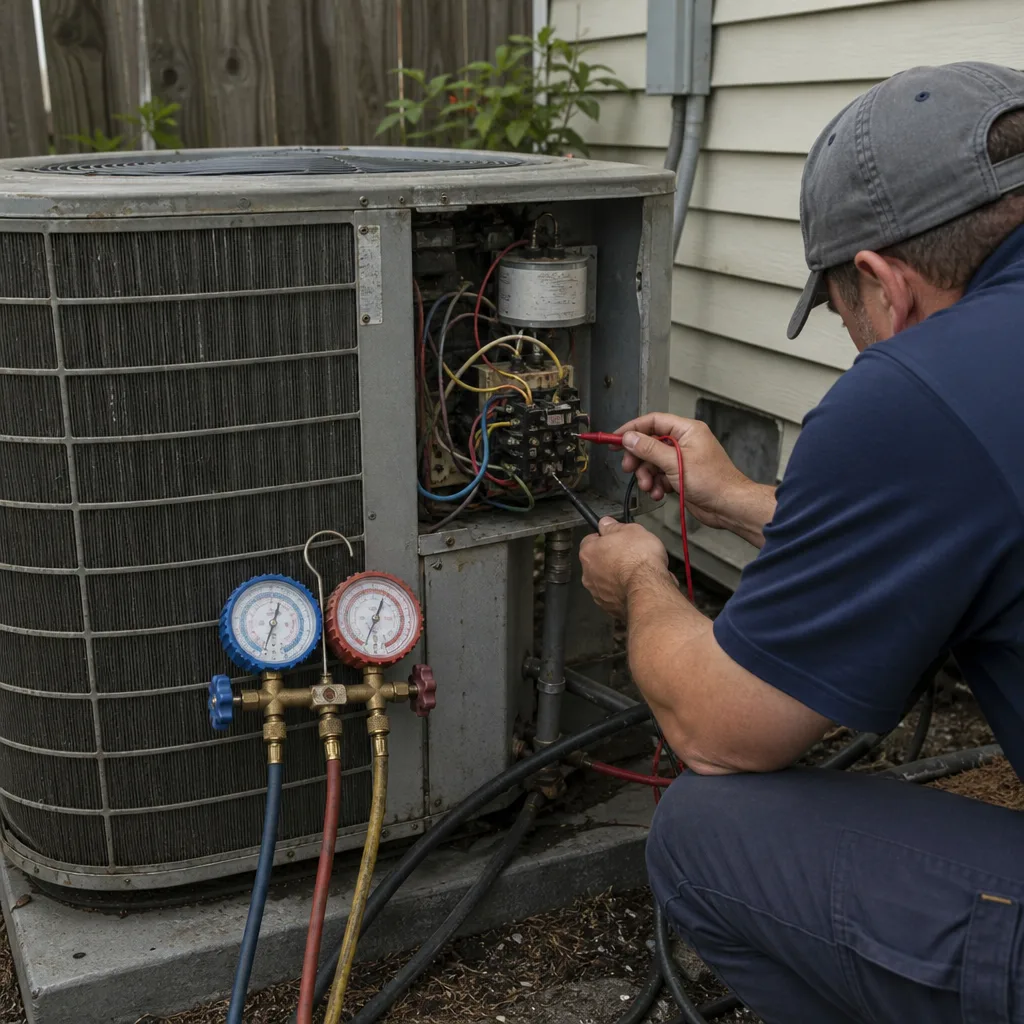 Before
 After
When to Call a Professional
Some HVAC problems are things a homeowner can watch and manage. Others are calls you should make as soon as you notice them. Call a professional if you see standing water or a persistently slow condensate drain near the indoor unit, if your system runs but doesn’t cool or heat the way it should, if you notice an unusual smell or noise from the equipment, or if your heating fails to produce warm air when you test it in the mild season. Call before the peak, too, if your system is aging and you want an honest assessment of repair versus replacement. For heating and cooling together, we handle both. If you have a furnace repair need and a cooling concern, one call to a team that works across nine brands keeps it simple. Millbrook AC Repair offers free estimates in Clearwater – call (855) 360-7082. You can also learn more about our team and how we work.
Frequently Asked Questions
For most homes, a full professional maintenance visit once a year is the baseline, and the Clearwater climate rewards putting it in the post-summer window rather than the spring. A technician can check the coil, refrigerant charge, drain line, and overall condition after the heavy cooling season. If you add a heating check before the cold stretch, you’ll have both sides of the system covered. Call (855) 360-7082 for a free estimate on scheduling.
Post-summer is better for Clearwater, because the heavy cooling season is what does the damage, and inspecting right after it catches wear while it’s still cheap. A pre-summer check has value too, mainly for confirming the system is ready for the load ahead. If you can only do one, put it in October through December. If you can do two, add a January booking before the spring rush.
Heating fails on the first cold night because it sat unused for most of the year and was never tested. A heat strip or heat pump that hasn’t run in months can have a weak component or an airflow issue that only shows up under load. The fix is to test it during the mild season, not the cold. If your test turns up a problem, book furnace repair before the cold arrives. Call (855) 360-7082 for a free estimate.
You can raise the thermostat, but don’t turn the system off entirely, because the AC is also your dehumidifier. During the humidity-heavy weeks, run it on a higher setting with steady airflow so it can remove moisture without over-cooling. If the house still feels clammy, that’s a sign the system may need a look. Call (855) 360-7082 to schedule an assessment – estimates are free.
Book AC repair as soon as you notice a problem, and book replacement in the shoulder months when the calendar is open. Replacement is a load-calculated, scheduled job, so the off-load months give you time to plan without a mid-summer rushing. If your system is aging, get an honest assessment well before the cooling season starts so you know your options.
We work on equipment from Carrier, Trane, Lennox, Goodman, Rheem, York, Daikin, Bryant, and American Standard. That breadth means the diagnosis is based on what your home needs, not what’s easiest to sell. Our technicians have up to 10 years of experience across the full range of residential HVAC manufacturers. Call (855) 360-7082 to talk through your system.
The Bottom Line
Clearwater doesn’t give you four seasons, so don’t maintain your system like it does. Follow the load: heavy cooling season asks for filter checks and drain attention, the humidity stretch asks for steady airflow and a moisture check, the mild season asks you to test the heat before you need it, and the pre-season window asks you to book ahead of the February rush. The single highest-value move is the post-summer inspection in October through December, when wear is visible and fixes are still cheap. Get that one right and you’re ahead of most homeowners in Clearwater.
Written by the team at Millbrook AC Repair.
If you’d like a free estimate or a system checked before the next phase hits, call Millbrook AC Repair at (855) 360-7082. We answer 24/7. Fast dispatch from 7am to 7pm, Sunday through Friday. We work on the brand you already have, and we help you choose wisely if you need something new. Heating and cooling, one team, one call.