
Last updated November 16, 2026
 AC repair
 Furnace & heating
 Heat pumps
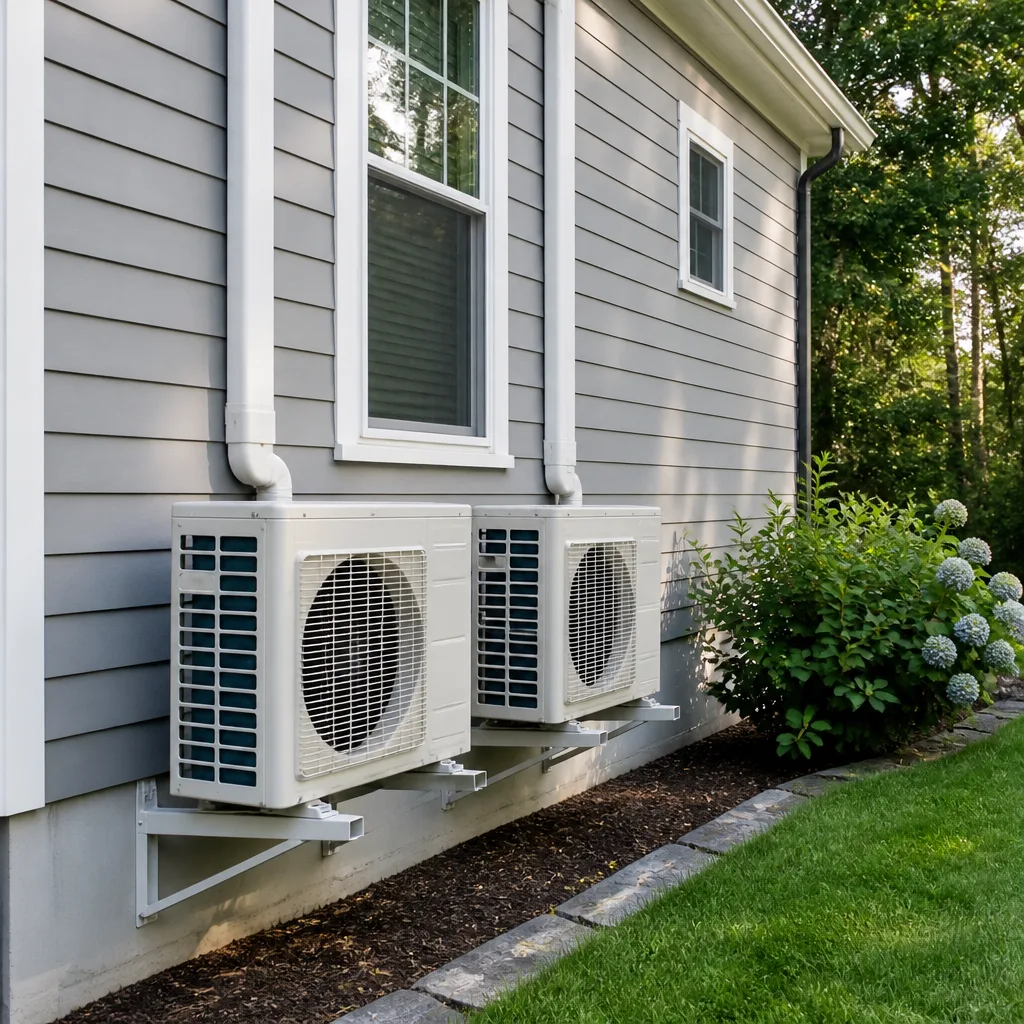 Ductless mini splits
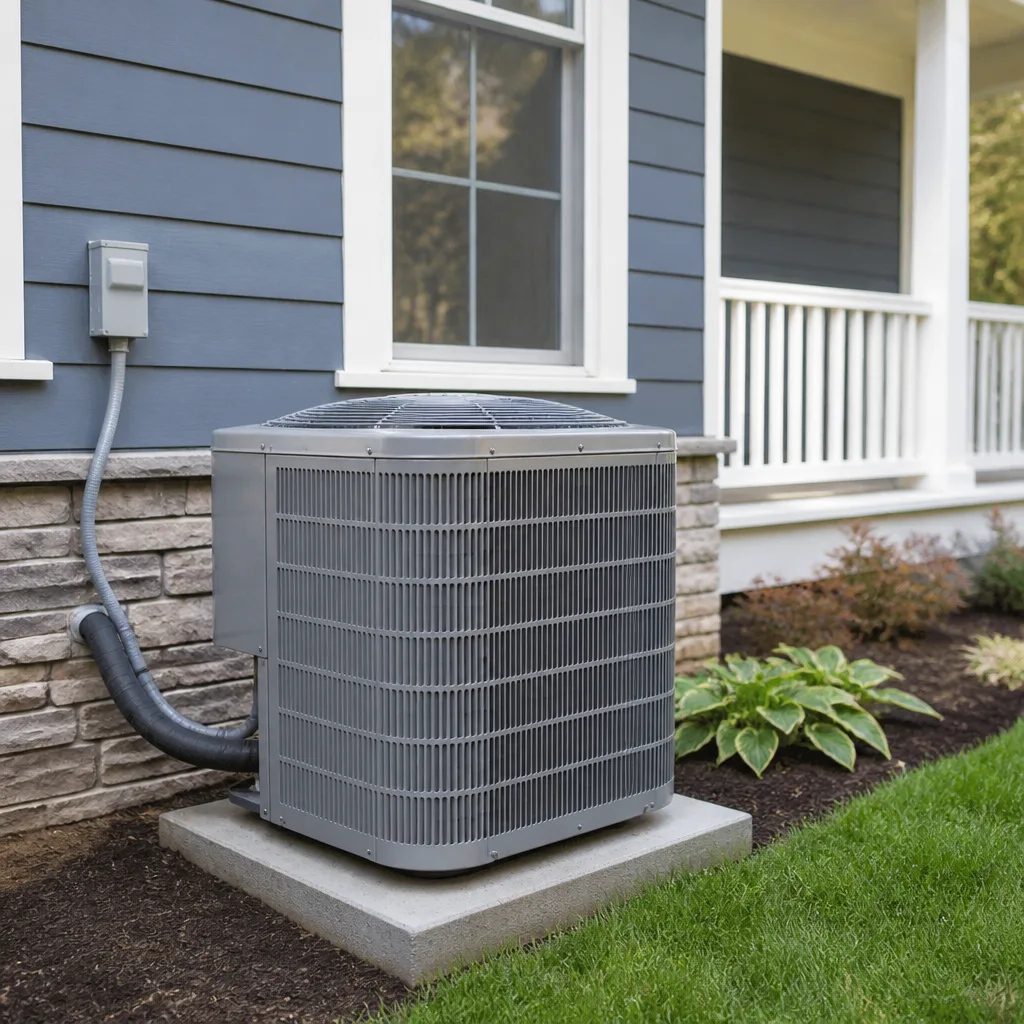 Carrier
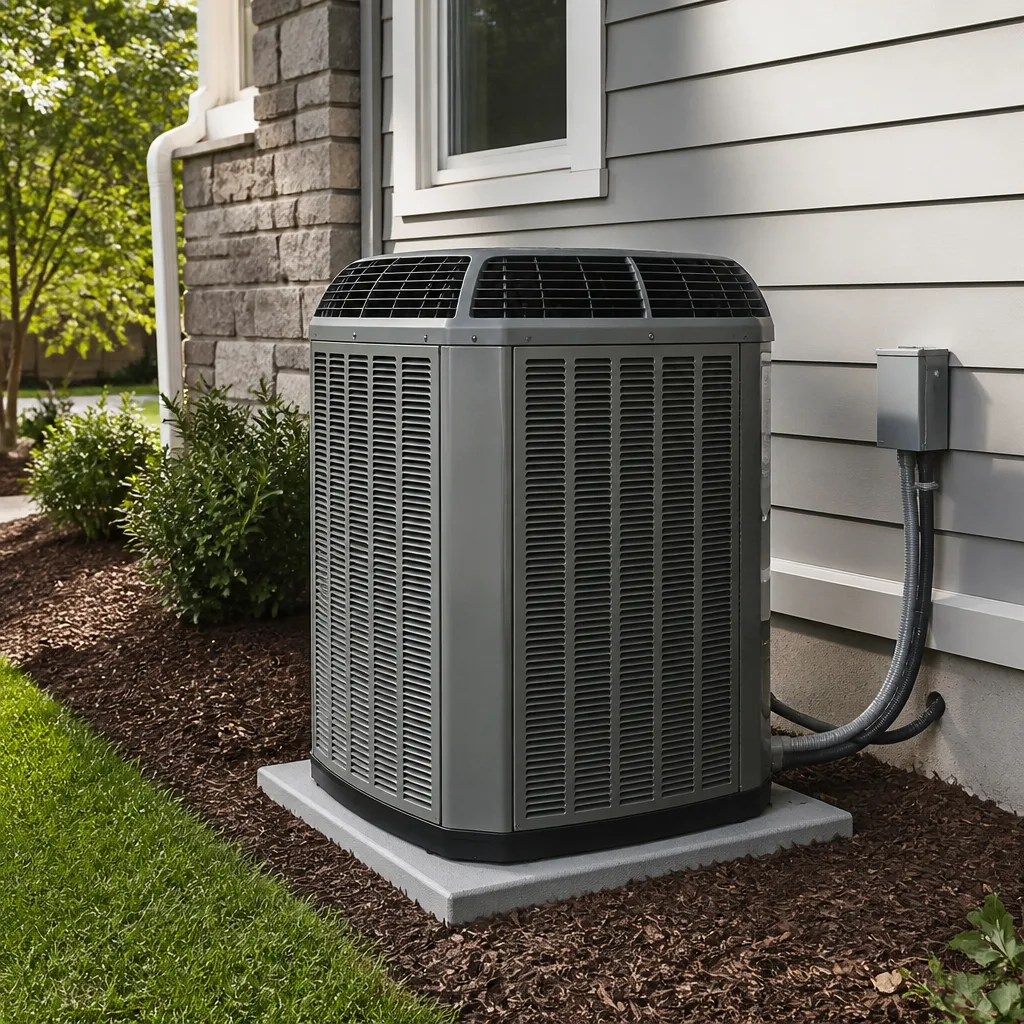 Trane
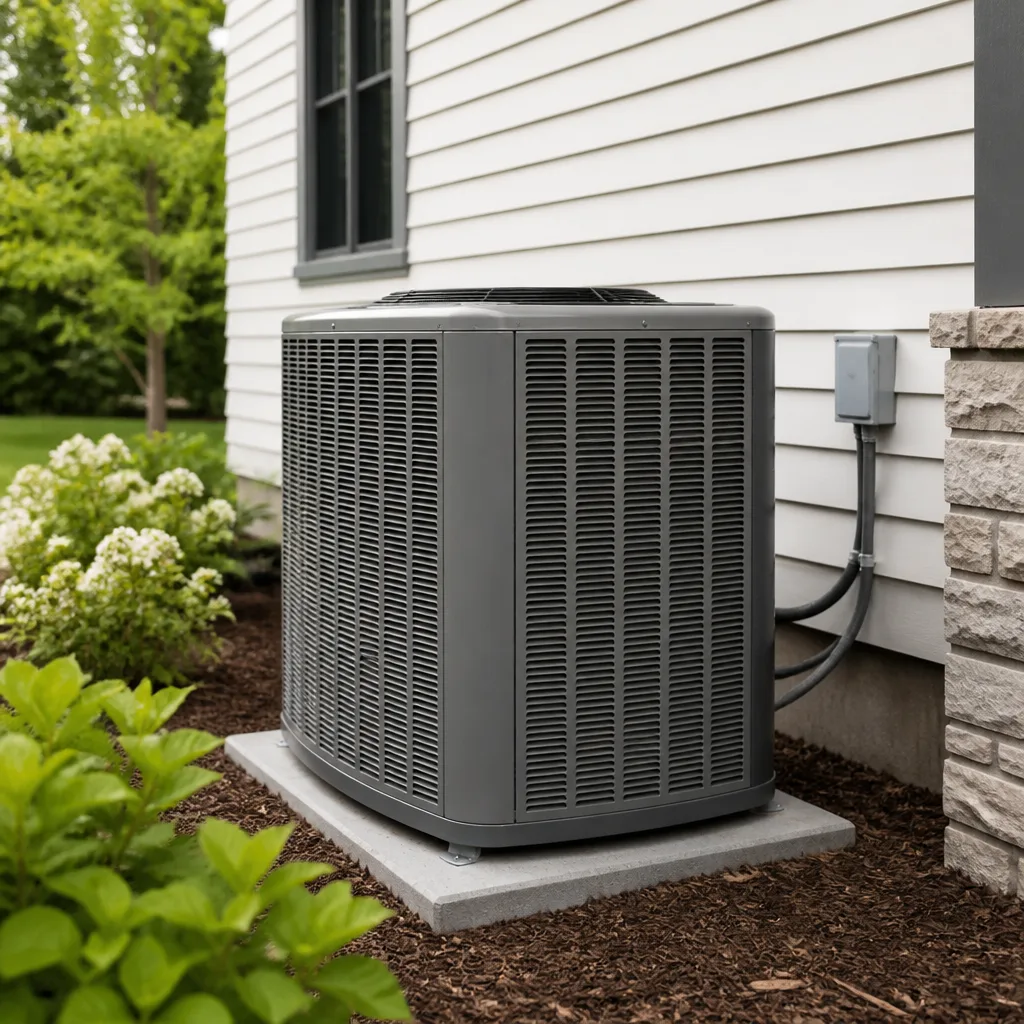 Goodman
Seasonal tune-up and full diagnostic on your Carrier, Trane, or Goodman system - readings shown to you before any repair is proposed
Diagnosis first, numbers second - you approve the repair price before a single part goes in.
Get your free estimateDIY vs Professional HVAC: The Clearwater Homeowner’s Decision Guide
Replacing a capacitor in your own air handler is legal in Florida. Handling refrigerant without federal certification is a crime. Those two facts sit inches apart on the same system, and most homeowners in Clearwater have no idea where the line falls. That gap is where good intentions turn into voided warranties, denied insurance claims, and expensive repeat visits.
This guide draws the line clearly. You’ll learn which HVAC tasks are safe, legal, and genuinely worth doing yourself in Clearwater’s heat and humidity; which are legal but a bad idea in a Clearwater attic in July; and which require a licensed contractor, a permit, or a certification you probably don’t have. You’ll also see exactly what to check in your warranty and insurance policy before you touch anything.
Quick Answer
In Clearwater, DIY HVAC work is limited to low-voltage, no-refrigerant, no-permit tasks: filter changes, coil cleaning with water, clearing a condensate drain, and thermostat settings. Anything involving refrigerant requires EPA Section 608 certification, and anything involving equipment replacement or new refrigerant lines requires a licensed contractor and a permit. Capacitors, contactors, and fan motors are technically legal to swap yourself, but the warranty and insurance consequences usually outweigh the savings.
Styles & brands we work with
- AC repair
- Furnace & heating
- Heat pumps
- Ductless mini splits
- Carrier
- Trane
- Goodman
Table of Contents
- Where Florida Draws the Legal Line on DIY HVAC Work
- What Clearwater Homeowners Can Safely Do Themselves
- Legal to DIY, Problematic in a Clearwater Summer
- How DIY Repairs Affect Manufacturer Warranties
- What Your Homeowner’s Insurance Policy Actually Says
- When DIY Costs More Than Calling a Pro
- When DIY Is Off the Table Entirely
- When to Call a Professional
Where Florida Draws the Legal Line on DIY HVAC Work
Federal and state rules separate HVAC tasks into three buckets, and knowing which bucket a job belongs in takes about thirty seconds once you know the rules.
The strictest rule is refrigerant. Under Section 608 of the Clean Air Act, anyone who handles refrigerants, including topping off a system, recovering refrigerant, or opening a sealed circuit, must hold EPA certification at the appropriate level. The refrigerant in your Clearwater home’s system is a regulated substance. Buying it requires a certification number in most cases, and knowingly venting it into the atmosphere carries federal penalties. This isn’t a gray area. It’s the clearest line in the trade.
The second rule is permitting. Replacing an air conditioner or air handler, installing new refrigerant lines, or modifying the electrical circuit that feeds the system typically requires a permit from the local building department in Clearwater and Pinellas County. Permits exist so the work gets inspected against the Florida Building Code and the Mechanical Code. A permit pulls a licensed contractor into the job by definition, since the permit must be pulled by someone licensed to do the work.
The third rule covers everything else, and it’s mostly silent. Swapping a capacitor, replacing a thermostat, changing a filter, or cleaning a coil doesn’t require a license or a permit. Those jobs are legal for a homeowner to do. The rules don’t stop you. The consequences do, and we’ll get to those next.
The three legal buckets, summarized
- Certification required: any refrigerant handling, including recharge, recovery, and leak repair on a sealed system. EPA 608 applies.
- License and permit required: equipment replacement, new line sets, new electrical circuits, duct system modifications.
- No license required: filters, thermostats, coil cleaning, drain flushing, and low-voltage component swaps.
What Clearwater Homeowners Can Safely Do Themselves
These are the tasks we’re genuinely happy to see homeowners handle. They’re low-risk, they don’t void anything, and doing them consistently extends equipment life more than most people realize.
1. Change the air filter on a real schedule
In a Clearwater home with the AC running most of the year, filters load up faster than the national average. Check monthly and change when the filter looks gray rather than waiting for a calendar date. Most homes land somewhere between 30 and 90 days depending on pets, dust, and whether the windows stay open in the cooler months. Filter changes preserve airflow, which directly reduces strain on the blower and the compressor. This is the highest-value thing a homeowner can do, and it’s free to learn.
2. Clear the condensate drain line
Air conditioning removes a lot of moisture from Clearwater air, and that moisture exits through the condensate drain. When the drain clogs, water backs up and either triggers the float switch or, if there’s no float switch, spills into the home. Look for the PVC drain line near the air handler and check the outdoor termination point for flow. A wet-dry vacuum on the outdoor end clears most simple clogs. If you see standing water in the drain pan or the system shuts off and won’t restart, that’s usually the float switch doing its job, and it’s time for a technician.
3. Rinse the outdoor condenser coil
With the power off at the breaker, a garden hose on low pressure can rinse pollen, grass clippings, and dust off the outdoor coil fins. Never use a pressure washer. Use a gentle stream and work top-down. A clean coil rejects heat more efficiently, which matters in a climate where the condenser works long hours.
4. Set the thermostat sensibly
Programmable and smart thermostats are homeowner territory. Set reasonable cooling targets, avoid cranking the thermostat way below the setpoint during the hottest part of the day, and use scheduling rather than constant manual adjustment.
5. Swap a thermostat or a filter grille
Both are low-voltage or no-voltage jobs. If you’re replacing a thermostat, photograph the wiring before you disconnect anything. If the wiring diagram doesn’t match the new unit’s instructions, stop. That’s when a mismatch can cause real trouble.
Legal to DIY, Problematic in a Clearwater Summer
Some jobs are perfectly legal to do yourself and still end up being a bad call in a Clearwater home. The reason isn’t code. It’s the physical reality of how these houses are built and how hot they get.
Filter changes in a hot attic
Many Clearwater homes have the air handler in the attic or a garage-mounted closet. In July and August, an attic can hit triple-digit temperatures well before noon. A filter change that takes two minutes in a hallway takes far longer when you’re climbing into a hot, poorly lit, low-clearance space and trying to slide a filter into a slot you can barely reach. We’ve seen homeowners skip filter changes for a full season because the access is that unpleasant, which costs more in efficiency than any filter could possibly save. If your filter location is this kind of setup, schedule changes for early morning and treat it as a task, not an afterthought.
Drain line flushing without the right setup
Flushing a drain line with the wrong tool, or snaking it too aggressively, can crack the PVC or dislodge a fitting. A cracked drain line under an attic air handler becomes a ceiling repair, not an AC repair. Most homeowners have a wet-dry vacuum but not a proper drain brush or flush port setup. If the drain has been slow for a while or the float switch keeps tripping, it’s cheaper to have the line cleared by someone with the tools than to risk a ceiling.
Coil cleaning in a hard-to-reach plenum
Rinsing the outdoor coil is easy. Cleaning an indoor evaporator coil requires getting into the air handler cabinet, and on many Clearwater installations that means working around wiring, a drain pan, and a coil that’s bolted in place. We’ve seen homeowners pull a panel and immediately realize they’re in over their heads. If the coil access looks anything but straightforward, leave it. An indoor coil cleaning is a professional task on most systems.
Any work during peak heat
There’s a practical reason trades work in the early morning in Clearwater summers. Attics get dangerous by midday. If you’re going to do a legal DIY task in the attic, do it first thing, hydrate, and don’t linger. Running your system with a panel removed while you work in a hot attic is how people get hurt.
How DIY Repairs Affect Manufacturer Warranties
Here’s the part that surprises almost every homeowner we talk to: the law doesn’t prohibit you from working on your own AC, but your warranty probably does.
Most manufacturer warranties on Rheem, York, Daikin, Bryant, and other residential equipment include language that limits coverage to work performed by licensed contractors. Some warranties state it plainly. Others bury it in terms like “installation and repairs must be performed by a qualified, licensed technician” or “warranty is void if the unit is altered, modified, or repaired by anyone other than a licensed contractor.” Either wording does the same thing. If a part fails and the manufacturer asks who installed it, a receipt with your own name on it won’t help.
There’s a second warranty issue that catches people off guard. When a homeowner replaces a component with a part that isn’t the manufacturer’s specified part number, even a perfectly functional aftermarket capacitor, some manufacturers treat that as a modification. That can jeopardize coverage on the related components, not just the part you swapped. On a system covered by a parts warranty, this is rarely a trade anyone would want to make.
The pattern holds across the major brands. Capacitors, contactors, and motors are the most common DIY swaps, and they’re also the parts most often tied to the warranty conditions. A $20 capacitor isn’t worth a $600 covered compressor if the chain of coverage breaks. If your equipment is still under any manufacturer warranty, check the terms before you touch a screwdriver.
Warranty language to look for
- “Must be installed or repaired by a licensed contractor” (direct restriction on who can do the work)
- “Void if altered or modified” (may cover aftermarket parts)
- “Original installation” language (defines which parts the warranty covers, and for how long)
- “Requires proof of professional service” (asks for maintenance records from a licensed tech)
- “Consequential damages excluded” (limits what the manufacturer pays if a repair fails)
If you’re unsure what a clause means, call the manufacturer’s warranty line and ask. We’ve referred homeowners to manufacturer customer service plenty of times and will do it again. It’s the right answer, and it’s free.
What Your Homeowner’s Insurance Policy Actually Says
Where warranties restrict coverage, insurance policies can deny it outright. Homeowner’s policies routinely exclude damage caused by “faulty workmanship” or “improper installation, repair, or maintenance.” That language is standard on Florida policies.
What that means in practice: if a DIY repair leads to water damage, a fire, or refrigerant loss that damages the home, the insurer can deny the claim on the grounds that the work itself caused the loss. A clogged condensate drain you flushed wrong that later overflows isn’t the same claim as a drain that failed on its own. An electrical component you swapped causing a fire isn’t the same claim as an electrical fault. The insurer’s question is nearly always the same: was the damage caused by the work, or did it happen independently?
Two kinds of language are worth finding in your own policy:
- Exclusions for faulty workmanship: typically excludes damage caused by your own improper work.
- Exclusions for gradual damage or lack of maintenance: often used to deny a claim if the insurer decides a small problem was ignored until it became a big one.
We’re not insurance professionals, and every policy is different. Read your own policy or call your agent before you decide that a DIY repair is “obviously safe.” The right answer for a piece of equipment is not always the right answer for a homeowner’s coverage.
If you want a licensed contractor on record so the insurance question doesn’t come up at the worst time, that’s a reason to call a professional even when the repair itself looks simple. It’s not the only reason, but it’s a legitimate one.
When DIY Costs More Than Calling a Pro
The real cost of DIY HVAC work in Clearwater is rarely the part. It’s the misdiagnosis.
HVAC symptoms stack on top of each other. A system blowing warm air could be a failing capacitor, a refrigerant leak, a dirty coil, a stuck contactor, a thermostat set incorrectly, or a compressor on its way out. A weak airflow could be a filter, a duct leak, a failing blower, or a partially frozen coil. DIY diagnosis usually follows the cheapest plausible theory first, and the part gets replaced. Sometimes that fixes it. Sometimes it doesn’t, and then the next theory gets tried, and the next.
Each attempt has a cost. Parts aren’t returnable in many cases once installed. The underlying problem keeps running the system under strain, which is where compressors get damaged. And when a licensed technician finally gets out, they’re diagnosing a system that’s been modified by someone else, sometimes with a mismatched capacitor or a miswired thermostat.
The most common DIY misdiagnosis patterns
- Replacing the capacitor when the real issue is refrigerant. Both cause warm air. Only one is legal for a homeowner to fix.
- Replacing the thermostat when the real issue is a low-voltage wire or a control board. Thermostats rarely fail, but they’re the easiest to swap.
- Adding refrigerant without diagnosing why it was low. Refrigerant doesn’t get consumed. If it’s low, there’s a leak. Topping off without finding the leak is how a $200 issue becomes a $2,000 compressor replacement.
- Clearing a coil that wasn’t dirty. Coil cleaning is worthwhile, but a system that won’t cool after you clean the coil is telling you the problem is somewhere else.
- Replacing a blower motor when the real issue is a control board relay. Both swap in similar ways, and only one is the actual fault.
We’ve seen all five of these patterns play out. The pattern isn’t that homeowners aren’t smart. It’s that HVAC diagnosis relies on a combination of pressure readings, electrical meters, temperature delta measurements, and experience listening to the system, and none of that is available at the average homeowner’s toolbox.
The cheapest path through most HVAC problems is a proper diagnosis the first time. That’s a professional task, and it’s worth the call. If you’re on the fence, our team at Millbrook AC Repair can walk through your symptoms before you commit to anything, and the estimate is free.
When DIY Is Off the Table Entirely
Some HVAC work isn’t a judgment call. It’s outside what a homeowner can legally or safely do at all.
Refrigerant handling
This is the federal line we started with. Recharging a system, recovering refrigerant, brazing a leaking joint, or opening the sealed circuit all require EPA 608 certification. There’s no homeowner exception for “I’m only doing it once.” If a system has low refrigerant, the answer isn’t to top it off. The answer is to find the leak, repair it, evacuate the system properly, and recharge to spec. That’s a certified technician’s job.
Equipment replacement
Replacing an AC or air handler needs a permit, and in Clearwater that means a licensed contractor pulls it and stands behind the inspection. A replacement also requires a load calculation to size the unit correctly, matched indoor and outdoor components, and a proper charge. Getting any of those wrong is expensive, and we’ve seen homeowners pay twice: once for a unit that was the wrong size, and again to replace it with the right one. If you’re shopping for a new system, AC installation done with a load calculation and matched equipment is the standard to hold a contractor to.
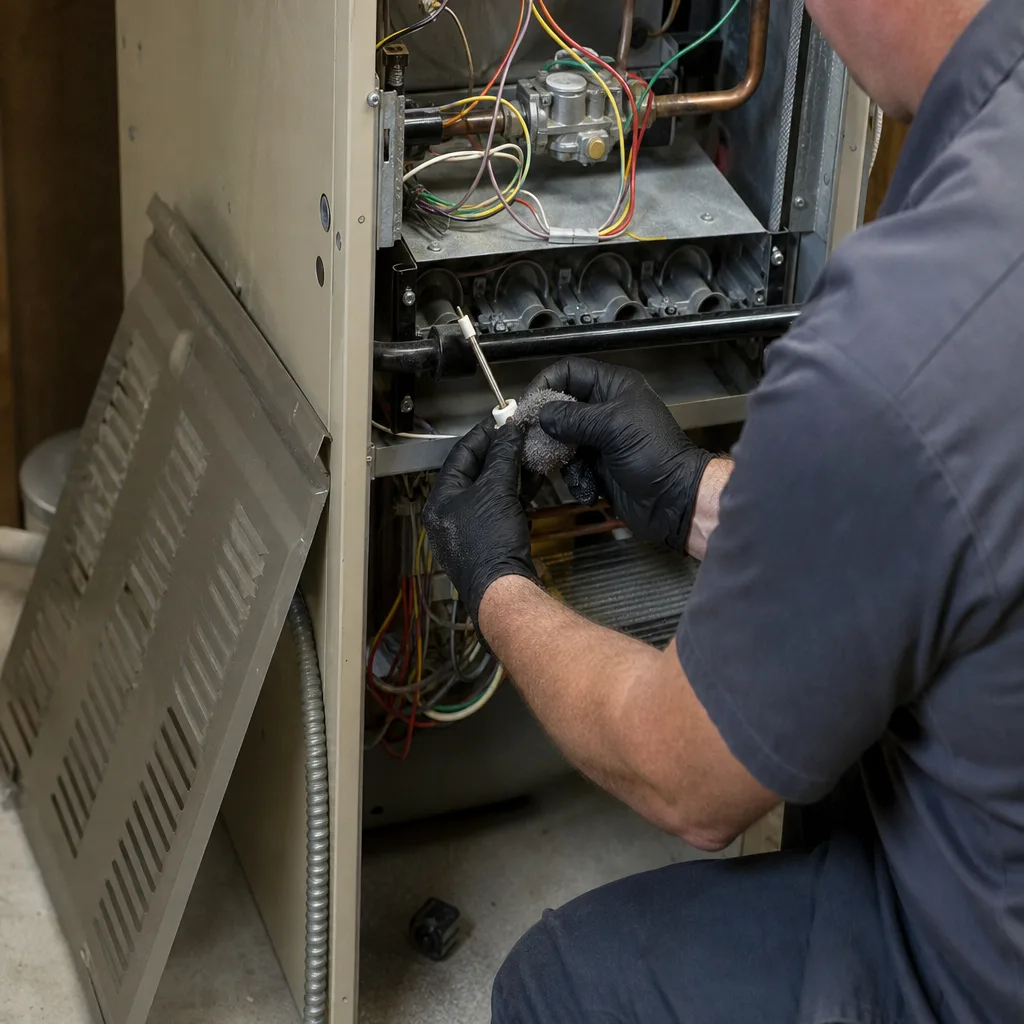
Furnace work falls on the same line. A furnace that’s failing ignition, showing a cracked heat exchanger, or has gas-related symptoms is a gas-safety situation, and it belongs with a licensed professional. Our furnace repair service exists because those problems aren’t a homeowner’s problem to solve.
Electrical work inside the equipment
Replacing a capacitor or contactor is technically legal to do yourself. But the electrical panel and wiring that feed the condenser are not, and the line between “inside the cabinet” and “at the panel” isn’t always obvious if you’re new to the system. If a job requires opening the electrical panel, stop. That’s an electrician’s task, and usually a licensed HVAC contractor’s task when it’s part of an equipment install.
Duct modifications
Sealing a small duct leak with mastic is a reasonable homeowner project. Modifying duct layout, resizing returns, or adding supply runs is not. Duct work affects static pressure and airflow, and a change made without calculation can leave a system worse off than it started.
When to Call a Professional
Call a professional when any of these are true: your system is still under manufacturer warranty (any DIY repair risks coverage); the symptom involves refrigerant, gas, the electrical panel, or a sealed system; the system is blowing warm air and you’ve already changed the filter; the drain keeps overflowing even after you’ve cleared it; you’re hearing new noises, seeing ice on the indoor coil, or smelling something burning; or you’re replacing equipment.
Millbrook AC Repair offers free estimates in Clearwater. We work on nine major HVAC brands, including Rheem, York, Daikin, and Bryant, so a recommendation is based on what your system actually needs rather than what’s easiest to sell. Call (855) 360-7082. We answer 24/7. Fast dispatch from 7am to 7pm, Sunday through Friday.
See the difference
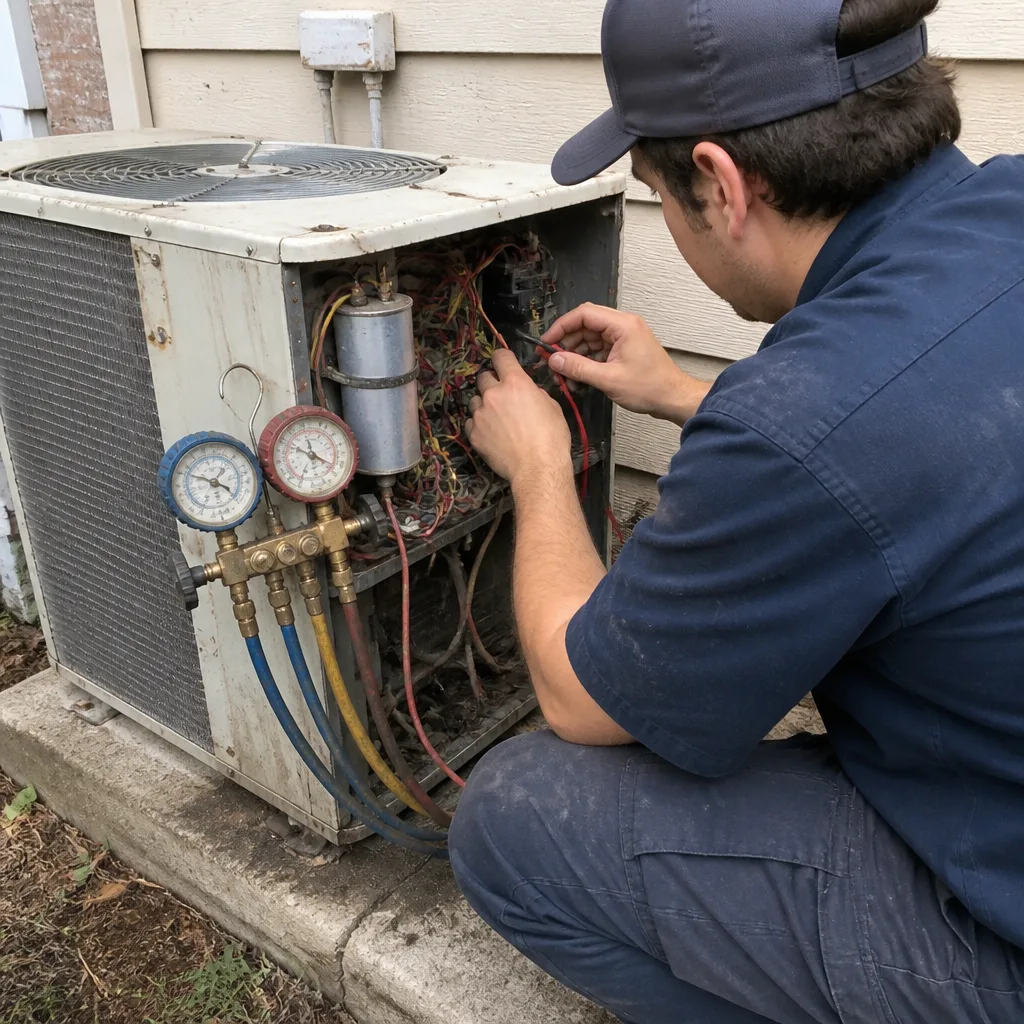 Before
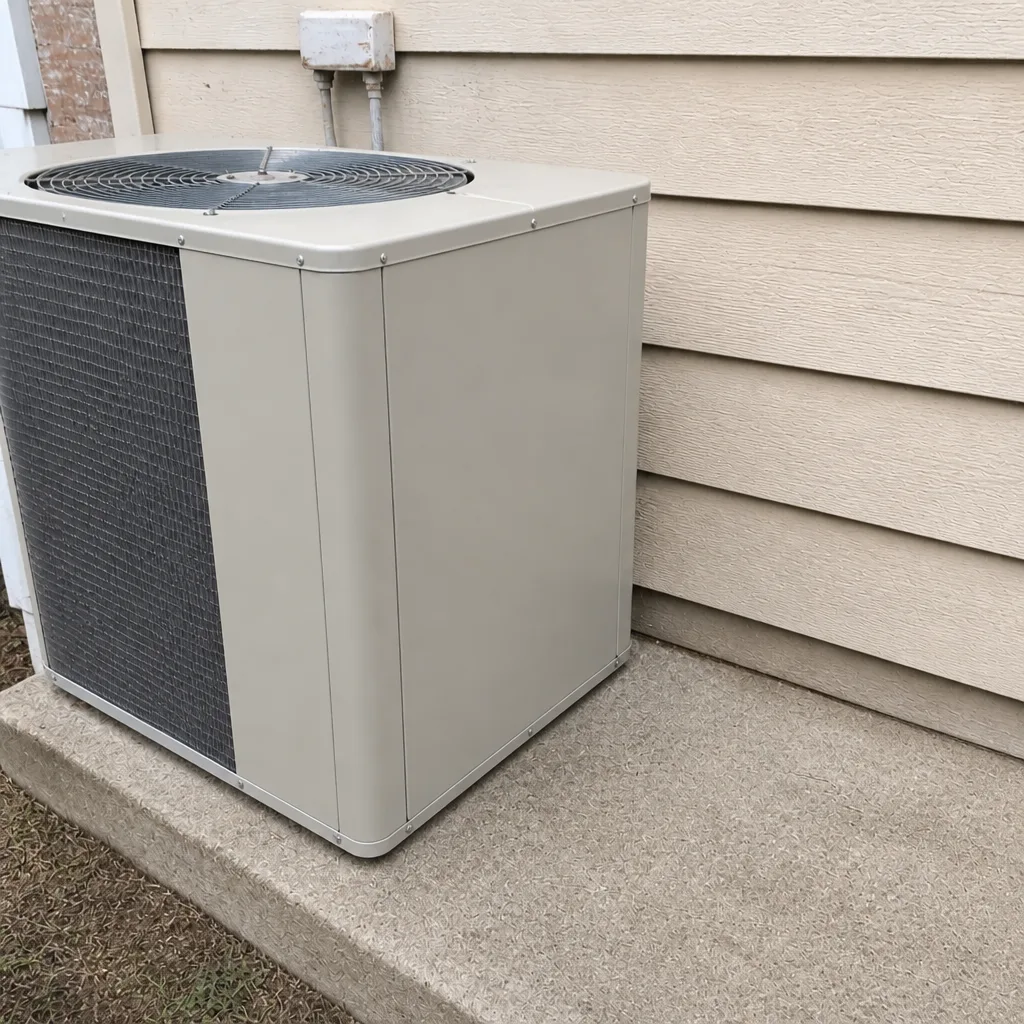 After
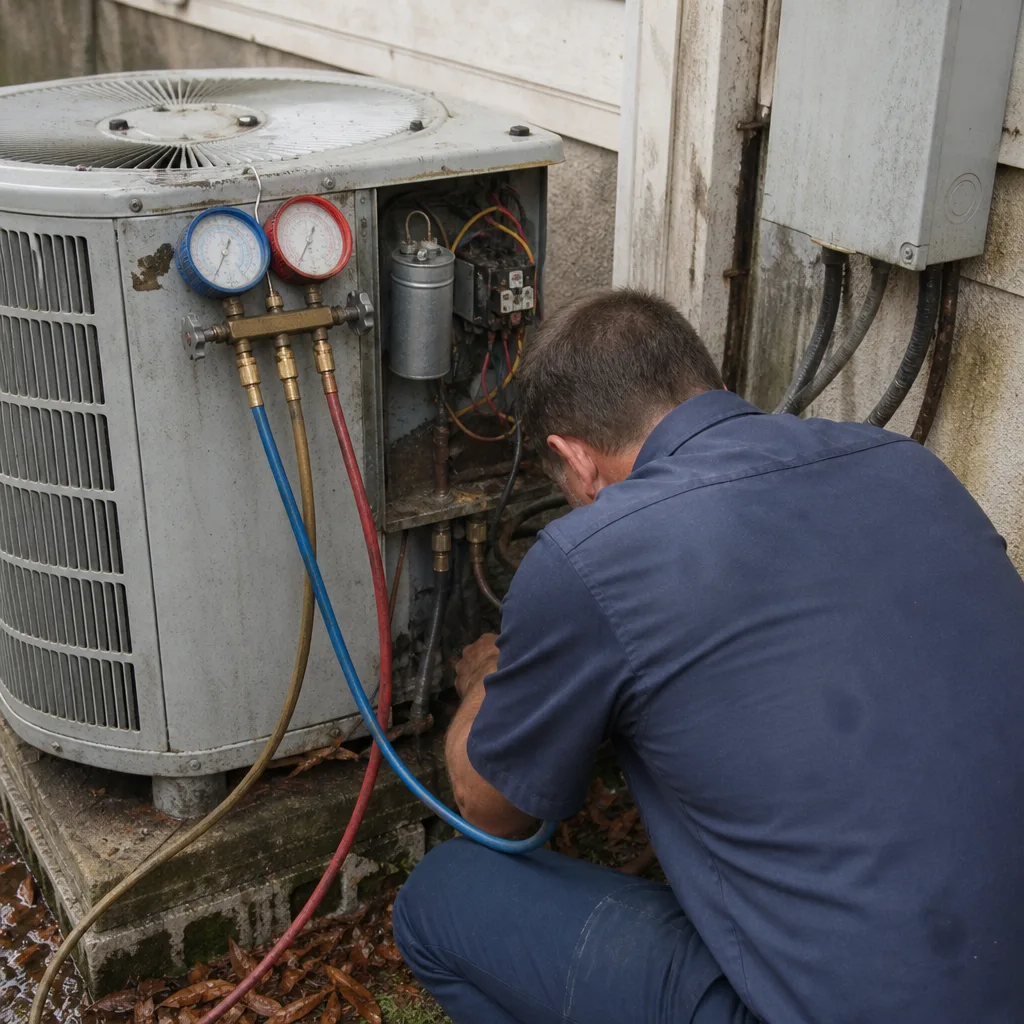 Before
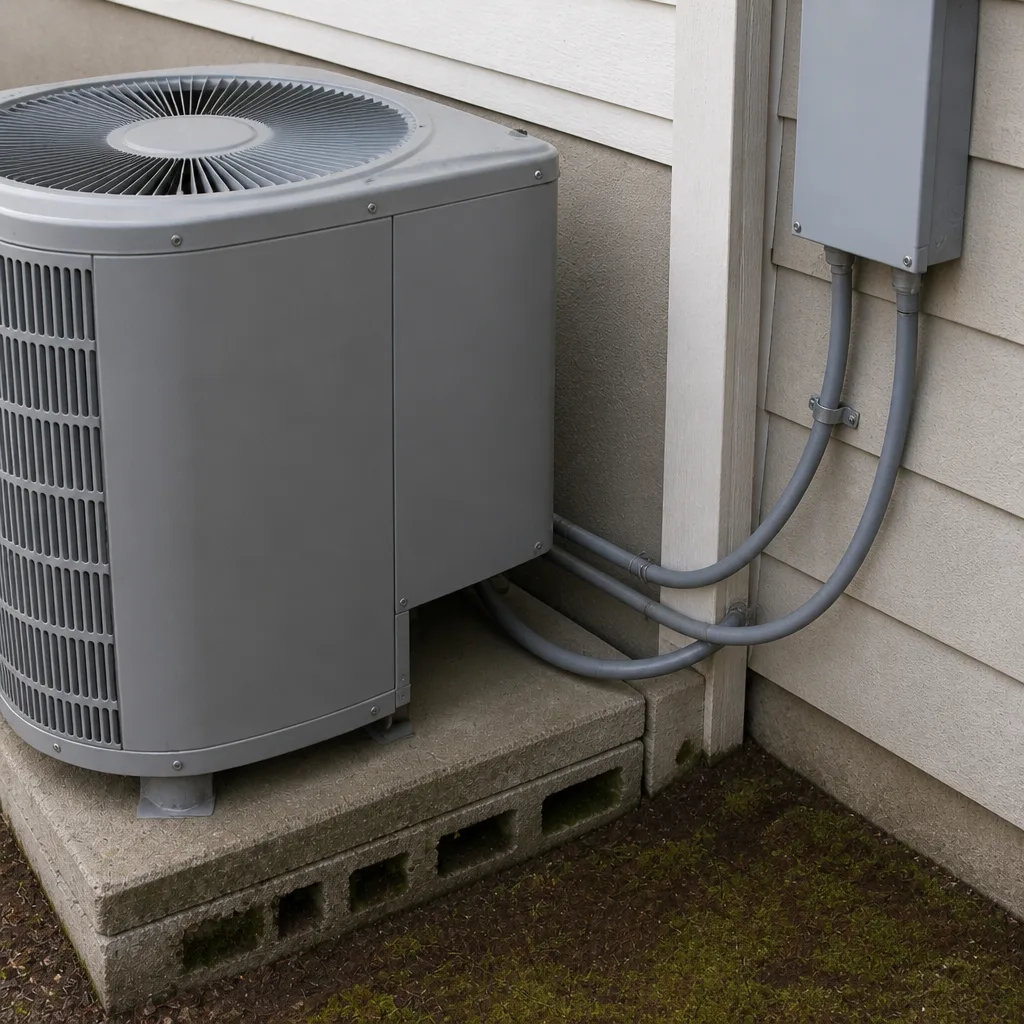 After
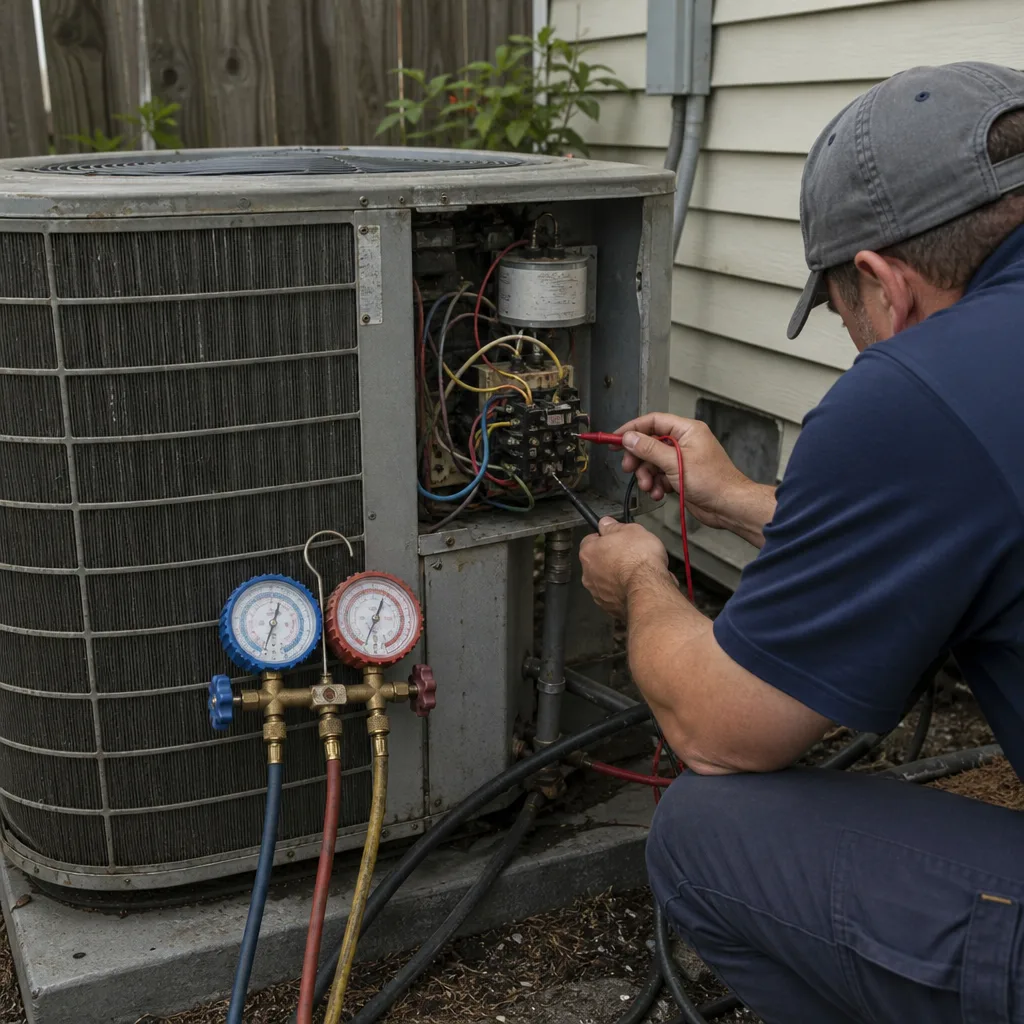 Before
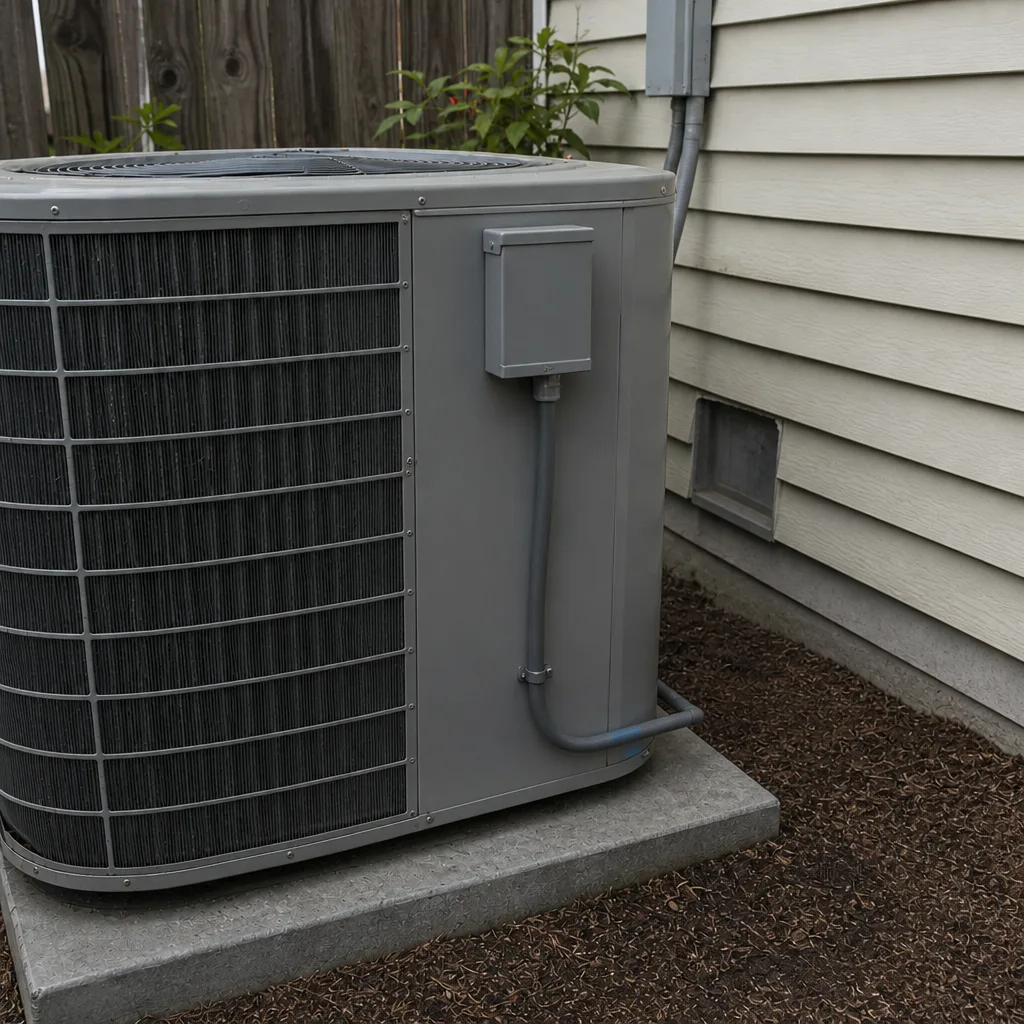 After
Common Mistakes to Avoid
- Cranking the thermostat down to force a system to cool faster. It doesn’t cool faster, and it runs the system longer. Set a reasonable target and let the system do its job.
- Topping off refrigerant without a leak search. Refrigerant doesn’t get used up. If the system is low, there’s a leak, and adding refrigerant without fixing it is a repeat service call waiting to happen.
- Changing parts to “see if that fixes it.” Every part you swap introduces a variable. A professional diagnosis costs less than a stack of guesses.
- Running the system with a panel off or a filter out. Filter-out testing runs the coil and blower dirtier. Panel-off running exposes live components to a hot attic and pets.
- Not reading the warranty before the DIY repair. Pull out your owner’s manual or find the warranty online before you touch the system. This is the most common mistake we see.
- Clearing the drain with a pressure washer or a sharp wire. PVC under an attic air handler is more fragile than it looks. A cracked drain becomes a ceiling repair.
- Skipping filter changes because the access is inconvenient. If your filter is in a hot attic, set a reminder to change it in the early morning. The alternative is a system working harder all summer.
Frequently Asked Questions
No. Recharging an air conditioner requires EPA Section 608 certification under federal law, and it applies to homeowners as well as professionals. There’s no exception for “personal use” refrigerant handling. If your system needs refrigerant, it also has a leak, and a certified technician needs to find and repair the leak before recharging.
Very often, yes. Most manufacturer warranties on Rheem, York, Daikin, Bryant, and other residential equipment condition coverage on repairs by a licensed contractor. Some also treat aftermarket or non-specified parts as modifications. Read your specific warranty, or call the manufacturer’s warranty line to ask. If you have a parts warranty in force, that $20 capacitor isn’t worth the risk.
Yes. Replacing a thermostat doesn’t typically require a license or a permit, and it’s a reasonable homeowner project. Photograph the wiring before you disconnect anything, and if the new thermostat’s instructions don’t match what you see, stop and call a professional. Thermostat wiring mix-ups are one of the more common calls we get.
Usually not if the insurer determines your own work caused the damage. Standard Florida policies exclude damage caused by faulty workmanship or improper repair, and that language applies to HVAC work. Read your policy, or call your agent with the specific scenario before you decide. “It’s probably covered” is not a safe assumption.
Because the filter and coil weren’t the cause. Sustained warm air after basic maintenance almost always points to refrigerant charge, a failing capacitor or contactor, a thermostat or control board issue, or a compressor problem. Only the electrical components are legal for a homeowner to touch, and diagnosis comes before replacement. This is the point where a professional visit saves money.
If you’ve done the safe homeowner tasks (filter, drain, coil rinse, thermostat settings) and the problem persists, call. HVAC diagnosis depends on pressure gauges, meters, and temperature readings that homeowners don’t have on hand, and every additional DIY attempt adds cost and complexity. If you’re in Clearwater or nearby, call (855) 360-7082. We answer 24/7. Fast dispatch from 7am to 7pm, Sunday through Friday.
The Bottom Line
DIY HVAC work in Clearwater is narrow, specific, and genuinely worth doing within the legal boundaries. Change your filter on a real schedule, flush your drain carefully, rinse your outdoor coil with the power off, and set your thermostat sensibly. Those tasks are free of legal risk, and they protect the equipment. Everything else has a consequence: refrigerant handling is a federal crime without EPA 608 certification, equipment replacement requires a licensed contractor and a permit, and DIY repairs can void manufacturer warranties and complicate insurance claims. Learn where the line falls before you reach for a screwdriver. When you need a licensed contractor on the record, or when the diagnosis gets complicated, that’s the call to make.
When you need help sorting out whether your system needs a repair or a replacement, or when you’re ready to price a job, call Millbrook AC Repair at (855) 360-7082 for a free estimate. We work on nine major HVAC brands, install and repair with brand-agnostic diagnosis, and handle both heating and cooling so you have one point of contact for the whole system. Serving homeowners throughout Clearwater and the surrounding area.
Written by the team at Millbrook AC Repair.