
Last updated November 16, 2026
 AC repair
 Furnace & heating
 Heat pumps
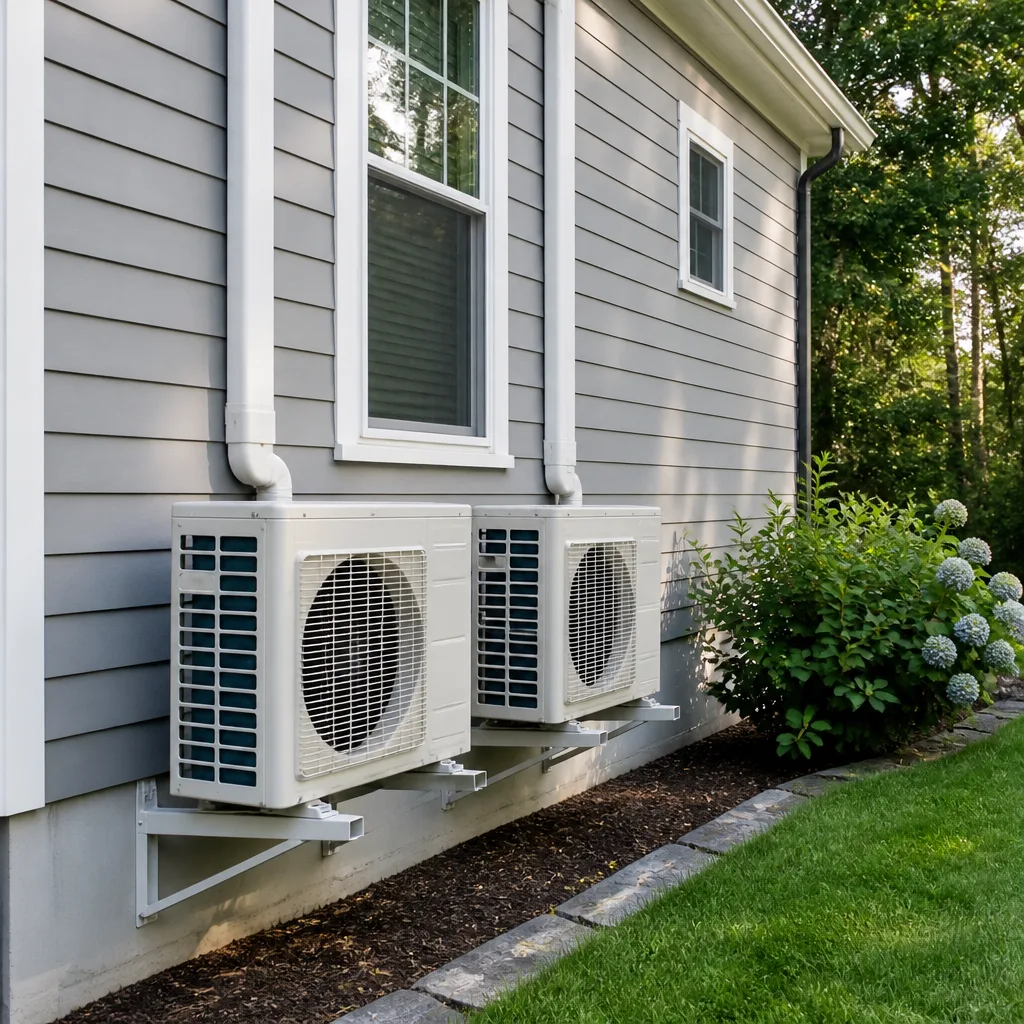 Ductless mini splits
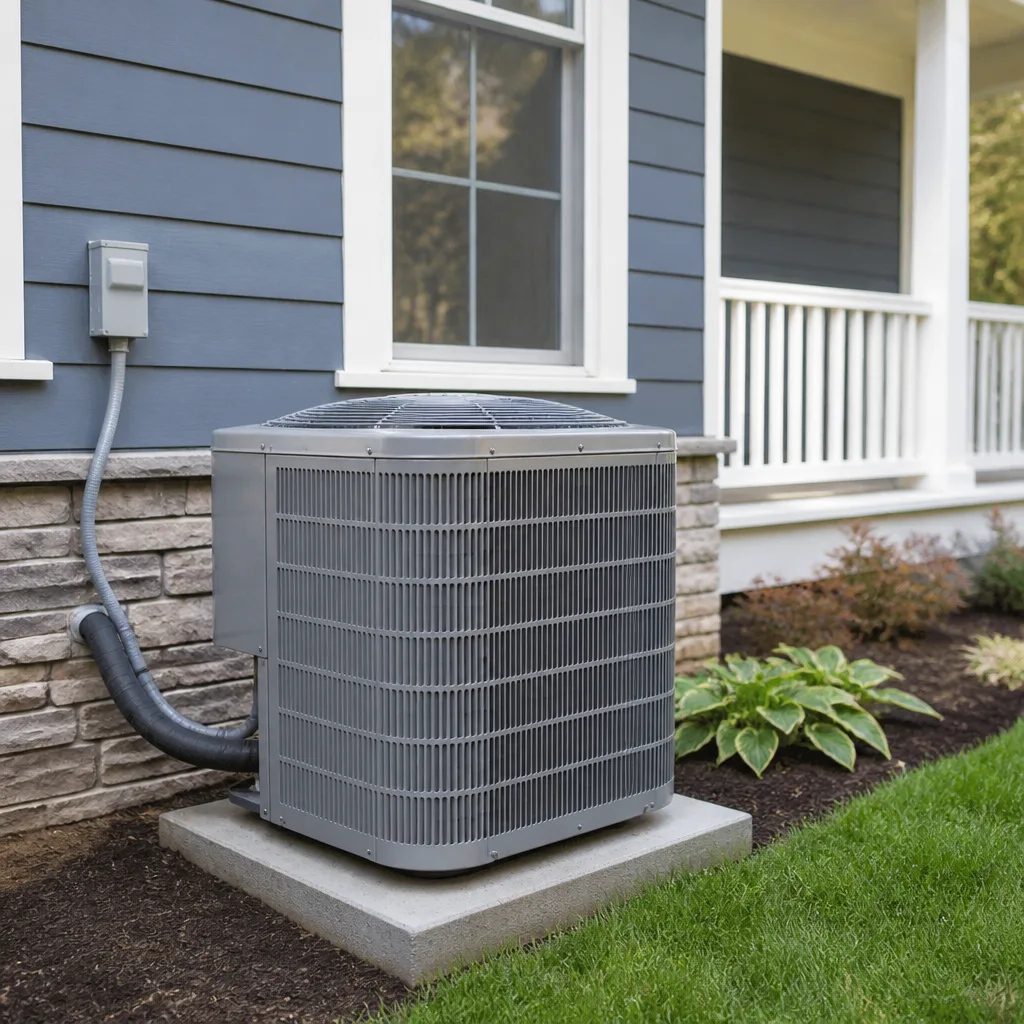 Carrier
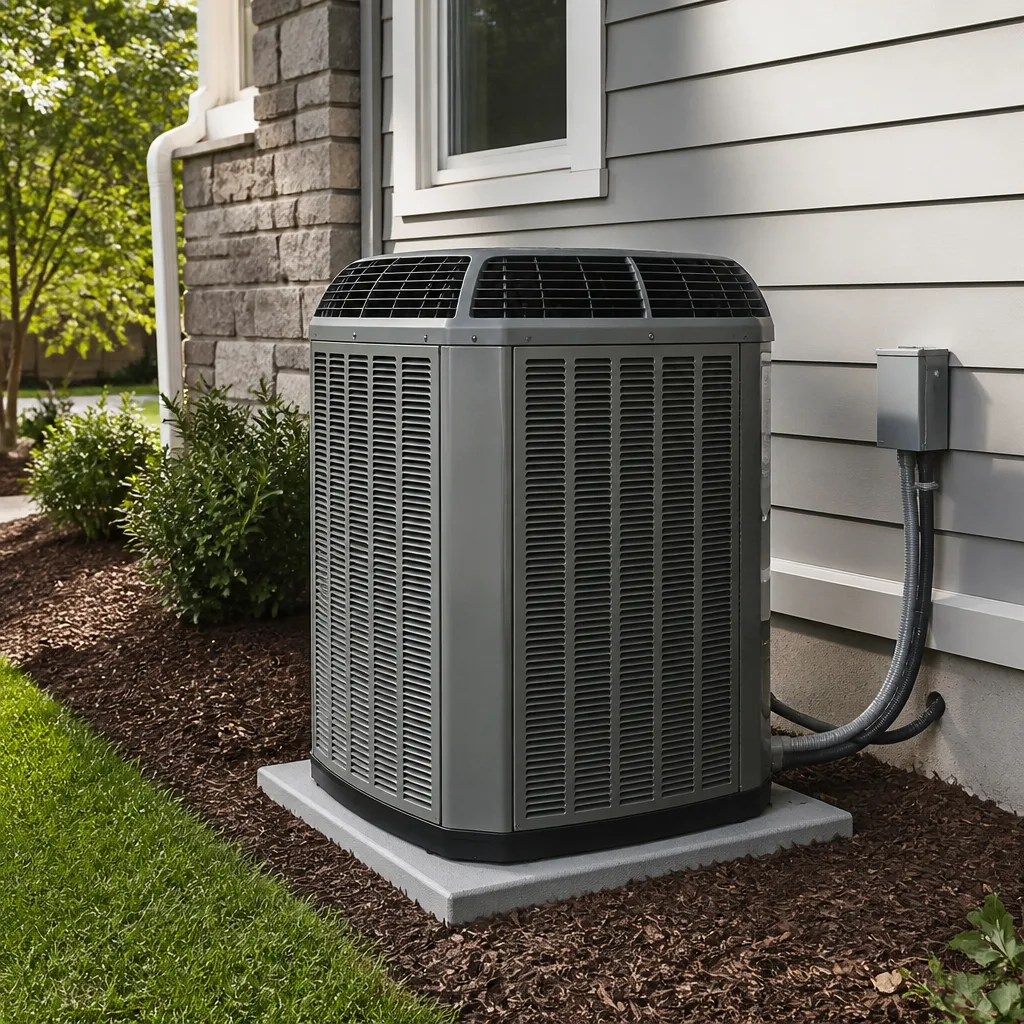 Trane
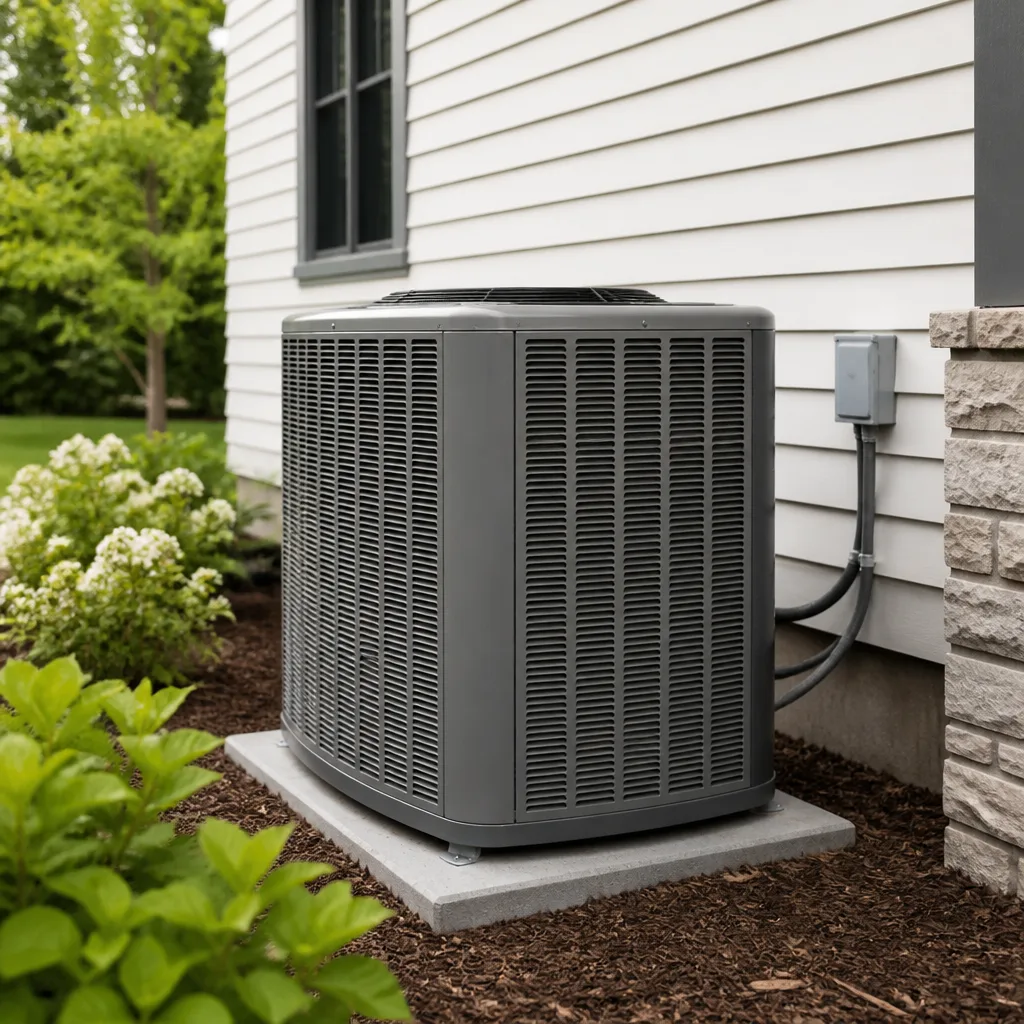 Goodman
Seasonal tune-up and full diagnostic on your Carrier, Trane, or Goodman system - readings shown to you before any repair is proposed
Diagnosis first, numbers second - you approve the repair price before a single part goes in.
Get your free estimateHVAC Emergency Preparedness Guide for Clearwater Homes
Most homeowners treat an AC failure as a repair problem. In Clearwater, it’s a time problem. When a system quits during a heat advisory, the clock starts running, and the house can climb past 90°F indoors within roughly four hours, sometimes faster in a poorly insulated home or one that catches direct afternoon sun. That’s not enough time to start shopping for contractors or comparing quotes from scratch. The homeowners who come through a summer failure calmly are the ones who planned for it in February, not the ones who got lucky. This guide walks through the failures most likely to hit a Clearwater house, how to slow heat gain while you wait, what to have ready before anything breaks, how storm season fits in, and how to decide at 2am whether the repair is worth it.
Quick Answer
To prepare for an HVAC emergency in Clearwater, know your system’s model and serial numbers, keep a contractor contact where you can find it in the dark, understand which failures are repairable and which usually mean replacement, and have a plan for the first four hours of heat gain. The most common summer emergencies here are a failed capacitor or contactor, a refrigerant leak, a clogged condensate drain, a tripped breaker, and a blower motor that won’t start. Most of these are fixable quickly once a trained technician is on site, which is why having the number ready matters more than having tools ready.
Styles & brands we work with
- AC repair
- Furnace & heating
- Heat pumps
- Ductless mini splits
- Carrier
- Trane
- Goodman
Table of Contents
- The Five Most Common Emergency HVAC Failures in Clearwater
- How to Slow Heat Gain Immediately After a Failure
- What to Have Ready Before an Emergency
- Hurricane Season: Protecting and Restarting Your Outdoor Unit
- Repair or Replace? The Decision Framework for a 2am Failure
- What an Emergency Service Call Actually Involves
- Choosing Equipment That Fails Less Often
The Five Most Common Emergency HVAC Failures in Clearwater
Not every breakdown is a mystery. In our experience across Clearwater, the same handful of failures account for most no-cooling calls, and each one has a recognizable signature. If you can identify which situation you’re in before the technician arrives, you save time on the phone and you can describe the problem accurately.
1. A failed capacitor or contactor. This is the most common summer failure we see. The capacitor is a small component that helps the compressor and fan motor start. Under the long runtimes Clearwater systems see from May through September, capacitors wear out faster than in cooler climates. The clue: the thermostat is calling for cool, the outdoor unit hums but the fan doesn’t spin, or nothing happens at all. Usually a quick repair.
2. A refrigerant leak. A system that runs constantly but never quite reaches the set temperature, or one with ice on the indoor coil or the refrigerant line, often has lost charge. Low refrigerant points to a leak, not just a top-off. The clue: weak cooling that gets worse over weeks, not hours.
3. A clogged condensate drain. Clearwater’s humidity means your system pulls a lot of water out of the air. That water has to go somewhere. When the drain line clogs with algae or debris, the float switch shuts the system down to prevent water damage. The clue: the system stops suddenly and there’s water near the indoor air handler or a wet spot on the ceiling below it.
4. A tripped breaker or a loose electrical connection. The outdoor unit draws significant current. A breaker that trips once and stays reset may be a fluke; one that trips repeatedly is a warning. The clue: complete silence from the outdoor unit and a tripped breaker at the panel.
5. A failed blower motor or control board. Air moves but it isn’t cold, or the system won’t respond to the thermostat at all. Modern control boards on brands like York and Daikin handle a lot of logic, and when they fail, the symptoms can look like several problems at once. The clue: inconsistent behavior, strange clicking, or a system that starts and stops unpredictably.
Knowing which of these you’re facing helps, but never open the electrical panel or the outdoor unit cabinet to check a capacitor yourself. Those components hold a charge even after power is cut. Leave that to a trained technician.
How to Slow Heat Gain Immediately After a Failure
The moment your AC stops, heat starts moving into the house. Every action you take in the first hour buys you time. Here are the moves that actually matter, ranked by how much difference they make in a typical Clearwater home.
- Close every window and exterior door, and draw the blinds on sun-facing windows. This is the single biggest lever. Solar gain through glass can push indoor temperatures up fast. Blackout curtains or even a light-colored sheet taped over direct afternoon sun makes a measurable difference.
- Turn off heat-producing appliances. The oven, the dryer, the dishwasher, incandescent lighting, and electronics all add heat. Skip cooking indoors and use the grill or order out.
- Consolidate into one room and abandon the rest. Pick the coolest room in the house, usually the one with the least sun exposure and fewest exterior walls, often on the north side or a lower floor. Close the doors to rooms you won’t use so you’re cooling less square footage with body heat and fans. Don’t try to hold the whole house; hold one room.
- Use fans to move air across your skin, not to cool the room. Ceiling fans and box fans don’t lower air temperature, but moving air across skin makes you feel several degrees cooler. Run them only in rooms you’re occupying.
- Keep hydrated and avoid physical exertion during peak heat. Heat illness sets in faster than people expect. Drink water, and check on elderly neighbors and anyone without a working system.
- Know your exit plan. If indoor temperatures approach the high 80s and you can’t get relief, plan to spend the hottest hours somewhere with working AC, whether that’s a family member’s home, a library, or a cooling center. Clearwater has public spaces with reliable cooling, and using them for a few hours is a reasonable move, not a defeat.
What doesn’t help: opening windows “for airflow” when outside air is hotter than inside, or running a whole-house fan that pulls in hot attic air. In Clearwater’s summer humidity, opening the house to “cool it down” usually makes things worse.
What to Have Ready Before an Emergency
The call is much faster when you don’t have to go hunting for information. Prepare this once and you’ll never scramble for it again.
- Your HVAC contractor’s phone number, written down. Not just saved in your phone, where a dead battery or a borrowed handset leaves you stuck. Keep it in a kitchen drawer or on the fridge. Millbrook AC Repair answers at (855) 360-7082, so write that number down now.
- The model and serial numbers of both your indoor and outdoor units. These are on metal nameplates on the equipment. A photo on your phone works. With the numbers, a technician can look up exact part availability, refrigerant type, and warranty coverage before they arrive.
- The location of your electrical panel and the breaker labeled for the AC. If the outdoor unit is silent, checking whether its breaker has tripped is a safe, useful first step. If it has tripped once, reset it. If it trips again, stop and call; repeated tripping is a real electrical problem, not a nuisance.
- The location of your condensate drain and float switch. If the system shut off with water nearby, finding the float switch helps you understand what happened and confirm the automatic shutdown did its job.
- Your system’s age and service history. Whether the equipment is six years old or eighteen changes the advice a technician gives you on a failure call.
- A rough sense of your home’s hottest rooms. This helps you consolidate quickly under stress.
None of these require tools or know-how. They’re the equivalent of putting a flashlight and spare batteries in the drawer before the power goes out. Every Clearwater homeowner can have all of it ready in an afternoon, and it pays off the first time something fails on a hot afternoon.
Hurricane Season: Protecting and Restarting Your Outdoor Unit
Clearwater’s storm season overlaps the peak of cooling season, which creates a specific set of HVAC problems. The outdoor unit is the exposed part of your system, and it’s the part most likely to be damaged or disabled by a storm. Here’s how to handle it on both sides of a storm.
Before a storm
- Secure the outdoor unit cover or strap, if you use one. Some homeowners cover the top of the outdoor condenser to keep out flying debris. Never wrap the whole unit in plastic; trapping moisture invites corrosion. A rigid, vented cover strapped down is safer than a loose tarp.
- Clear the area around the unit. Loose patio furniture, potted plants, and anything that can become a projectile should be brought inside.
- Note your settings and shut the system off at the breaker before the worst winds arrive. This isn’t mandatory, but it prevents the compressor from trying to start under unstable power.
- Check your drain line. If it’s already slow, a storm makes it worse.
After a storm
- Visually inspect the outdoor unit from a safe distance before turning anything on. Look for debris inside the grill, bent fan blades, standing water, or obvious damage. Don’t stick your hands into the unit.
- Check for downed lines or flood water near the equipment. If either is present, don’t touch the unit or the panel. Call for help.
- Restore power and let the system run. Give it a few minutes to respond. If it doesn’t start, or if you hear unusual noise, shut it off at the breaker and call.
- Watch for water indoors. Storm-driven humidity and a clogged drain can combine to trigger the float switch.
If the unit sits through flooding or submersion, it needs a professional inspection before restart. Powering a wet compressor can destroy it. This is exactly the kind of check we handle as part of our Millbrook AC Repair service, and it’s worth doing before storm season rather than after.
Repair or Replace? The Decision Framework for a 2am Failure
Here’s the hardest call a homeowner makes: the system dies at 2am on the hottest night of the year, and you have to decide whether to pay for a repair now or replace the equipment. It’s a stressful moment, but the framework is simpler than it feels. Ask yourself these questions in order.
How old is the system? If it’s in its early teens or older and this is its second or third major failure, replacement often makes more financial sense than another repair. If it’s under ten, repair almost always wins.
How big is the repair? A capacitor, contactor, or clogged drain is a modest fix regardless of system age. A failed compressor or a refrigerant leak in the sealed coil is a much larger repair, and on an older system the repair cost can approach a meaningful fraction of new equipment. That’s when you compare repair cost against the age and efficiency of what you have.
How efficient is the current system, and how well did it cool before this? If it was already struggling to keep up in July, repairing it only gets you back to struggling. If it cooled well until this moment, a repair restores a system you liked.
What will you do if you can’t decide tonight? You can usually get the system back to running with a repair and take a few weeks to plan a replacement properly. A rushed replacement on a 2am call rarely gets you the right-sized equipment for your home’s ductwork and load.
The decision framework, in short: repair young systems, repair small failures on any system, and when a big repair lands on an old system, get a written estimate on both a repair and a replacement before committing. That’s a calmer comparison, and it’s how we approach it. Whether you need AC installation or a straightforward fix, we give you both numbers.
One thing that helps: proper sizing. Systems that were oversized at install short-cycle constantly, which wears components early. When it’s time for replacement, the right size and a matched indoor/outdoor pair matter more than the brand badge. That’s a conversation worth having before a failure, not during one.
What an Emergency Service Call Actually Involves
First-time callers often don’t know what happens when they call. It’s straightforward, and knowing the process keeps the call shorter.
- You describe the symptom. “The outdoor unit is silent,” “the fan spins but the air isn’t cold,” “water is leaking near the air handler,” or “the breaker keeps tripping.” Specific beats general.
- You share the model and serial numbers and the equipment age if you have them. This gives the technician a head start.
- You get a dispatch window.
- On arrival, the technician diagnoses before touching anything. A good technician tests the system, finds the actual cause, and explains it. Brand-agnostic diagnosis matters here: the right fix depends on what your system needs, not what’s easy to sell. That’s how we work across York, Daikin, Bryant, American Standard, and the rest of the nine major brands we’re trained on.
- You get an upfront price before any repair begins. A written, per-job estimate is the standard we hold to. You approve it or you don’t.
- If the repair needs a part, you hear about it immediately. Most common parts are available; less common ones may require a return visit. You’ll know before the technician leaves.
If you’re not sure whether your situation is an emergency or a nuisance, call anyway. Diagnosing over the phone takes a minute, and the answer is always free. If you’re headed toward a bigger job, our furnace repair page covers the heating side of the same relationship. And when you’re ready to talk numbers, the Clearwater service page gives you the direct line.
Choosing Equipment That Fails Less Often
Emergency preparedness isn’t only about reacting well. It’s also about owning equipment that fails less often in the first place. In Clearwater’s climate, that mostly comes down to a few practical choices.
- Get the load calculation right. Oversized systems cycle too much and wear out faster. Undersized systems never shut off and run to failure. The right size, matched to your home’s actual load, is the single biggest factor in equipment life.
- Match indoor and outdoor units. Mixing components can work, but a matched pair from the same line runs more efficiently and lasts longer. When you’re shopping for AC installation, insist on a matched set.
- Choose a brand with real local parts availability. A brand is only as good as its serviceability. Working across nine manufacturers means we can be honest about which lines are easiest to service in Clearwater and which tend to have parts delays. York, Daikin, Bryant, and American Standard are all well-served, and so are Carrier, Trane, Lennox, Goodman, and Rheem.
- Don’t skip routine checks. The failures that stop a system at 2am are usually foreseeable. Capacitors degrade, drains clog, and coils get dirty. A check before the first heat wave is cheaper than a failure repair.
Common Mistakes to Avoid
- Opening the outdoor unit or electrical panel to check a capacitor or breaker yourself. Capacitors hold a charge that can seriously injure you. A tripped breaker is fine to reset once; anything beyond that is a technician’s job.
- Assuming a system that just needs a refrigerant top-off will stay fixed. Low refrigerant is a symptom of a leak. Refilling without finding the leak buys you weeks, not years.
- Leaving the float switch bypassed after a condensate clog. Bypassing it stops the shutdown, but it also stops the protection. Fix the drain, don’t disable the safety.
- Opening windows “to cool the house down” during a Clearwater summer. When it’s 94°F outside and humid, open windows make the house hotter. Keep the house closed and consolidate into one room.
- Calling around for three quotes in the middle of a heat advisory. Compare quotes for planned work. In an emergency, get the system stabilized first. You’ll have better information for every later decision.
- Letting a tripping breaker run for days. A breaker that trips repeatedly is warning you about a real electrical problem, not a nuisance. Keep resetting it and something eventually fails more expensively.
- Skipping the pre-storm check and restart-after-storm inspection. A few minutes of inspection before and after a storm prevents water damage and compressor failure later.
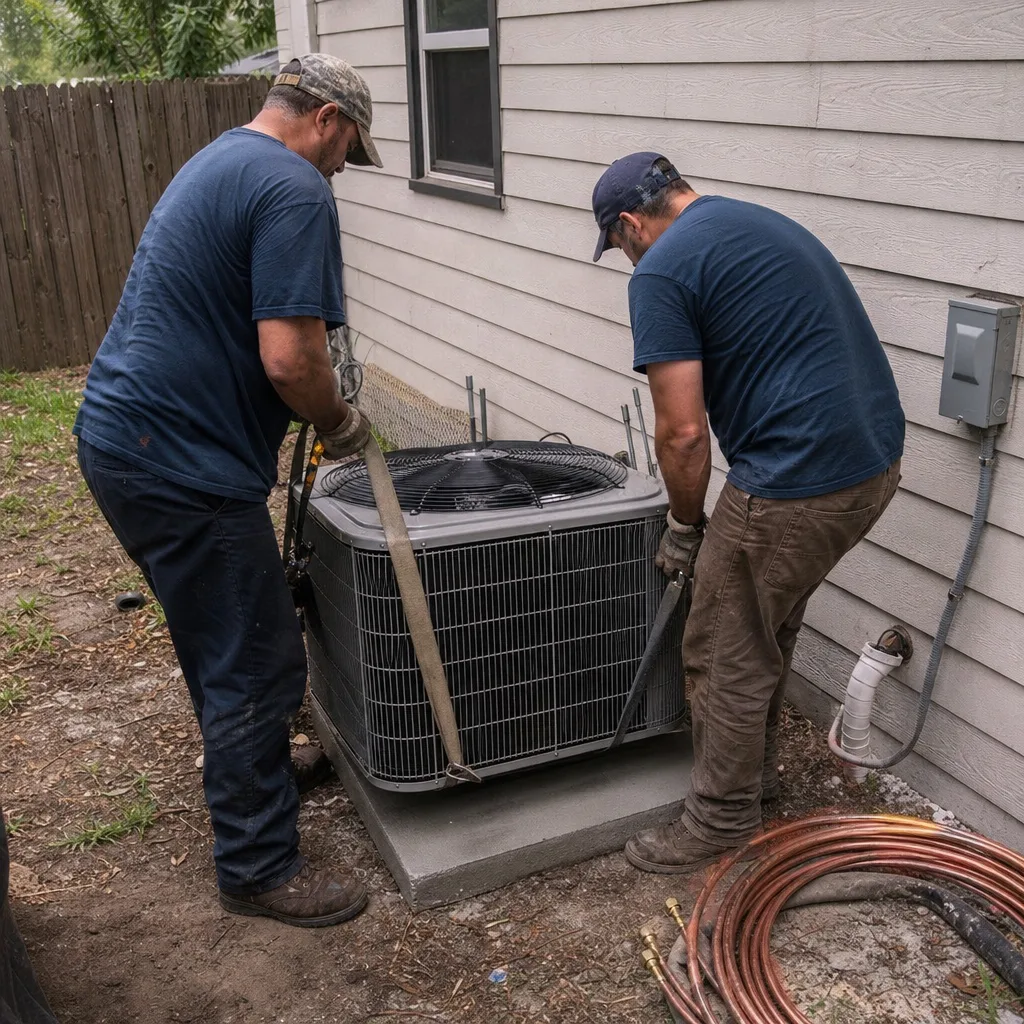
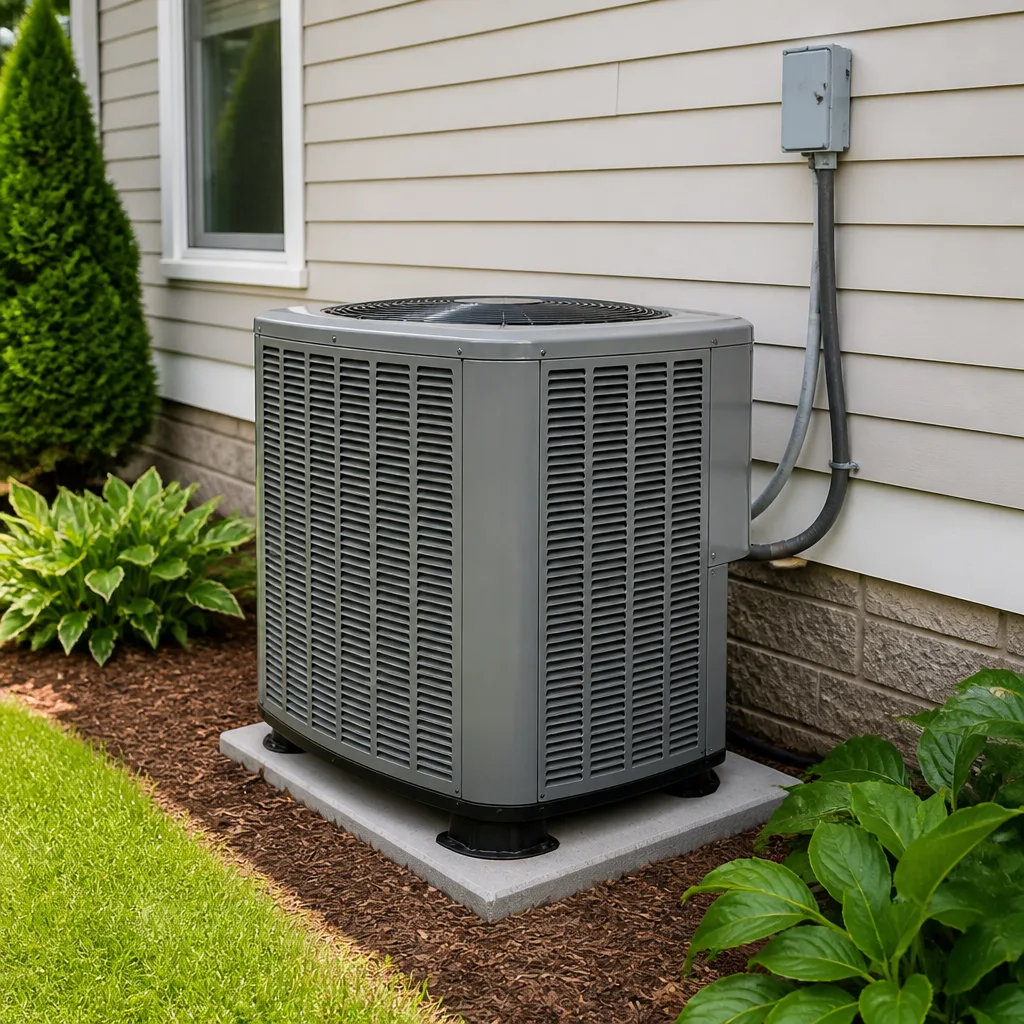
See the difference
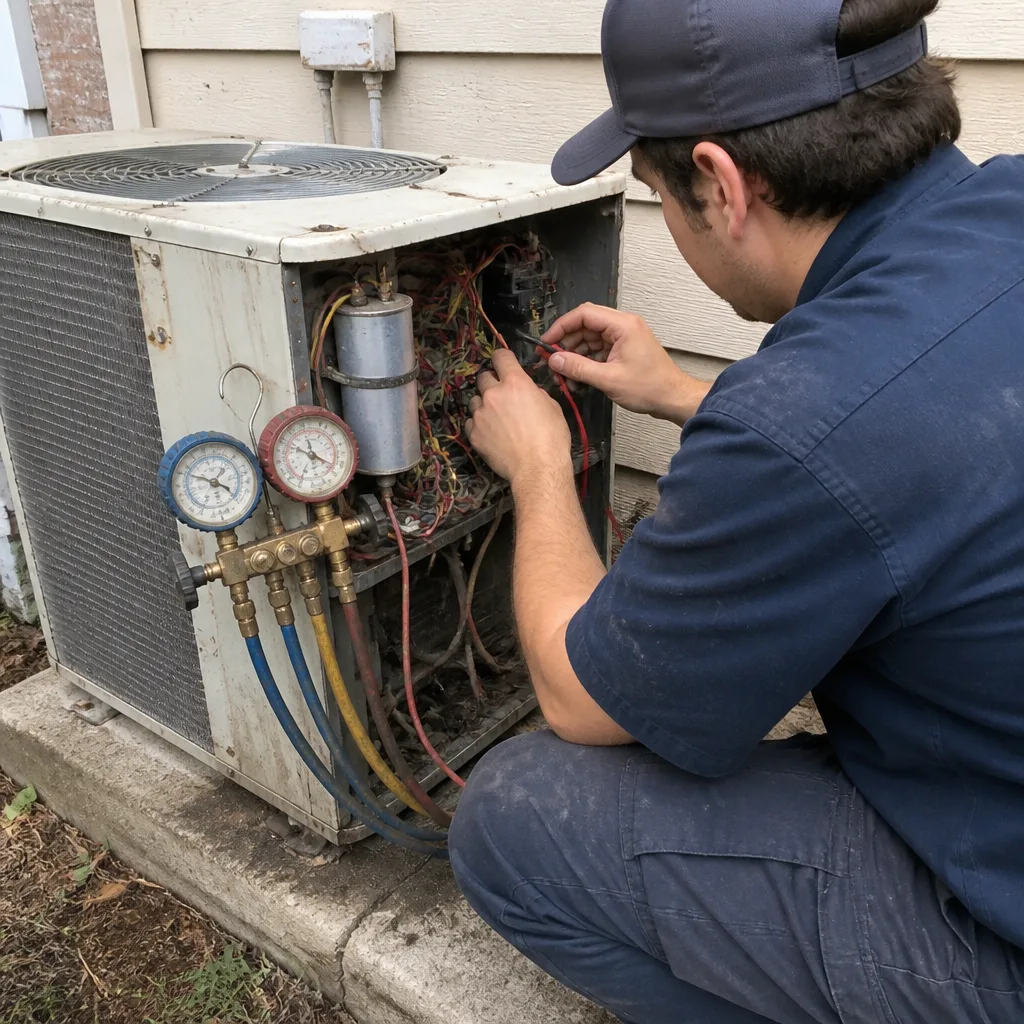 Before
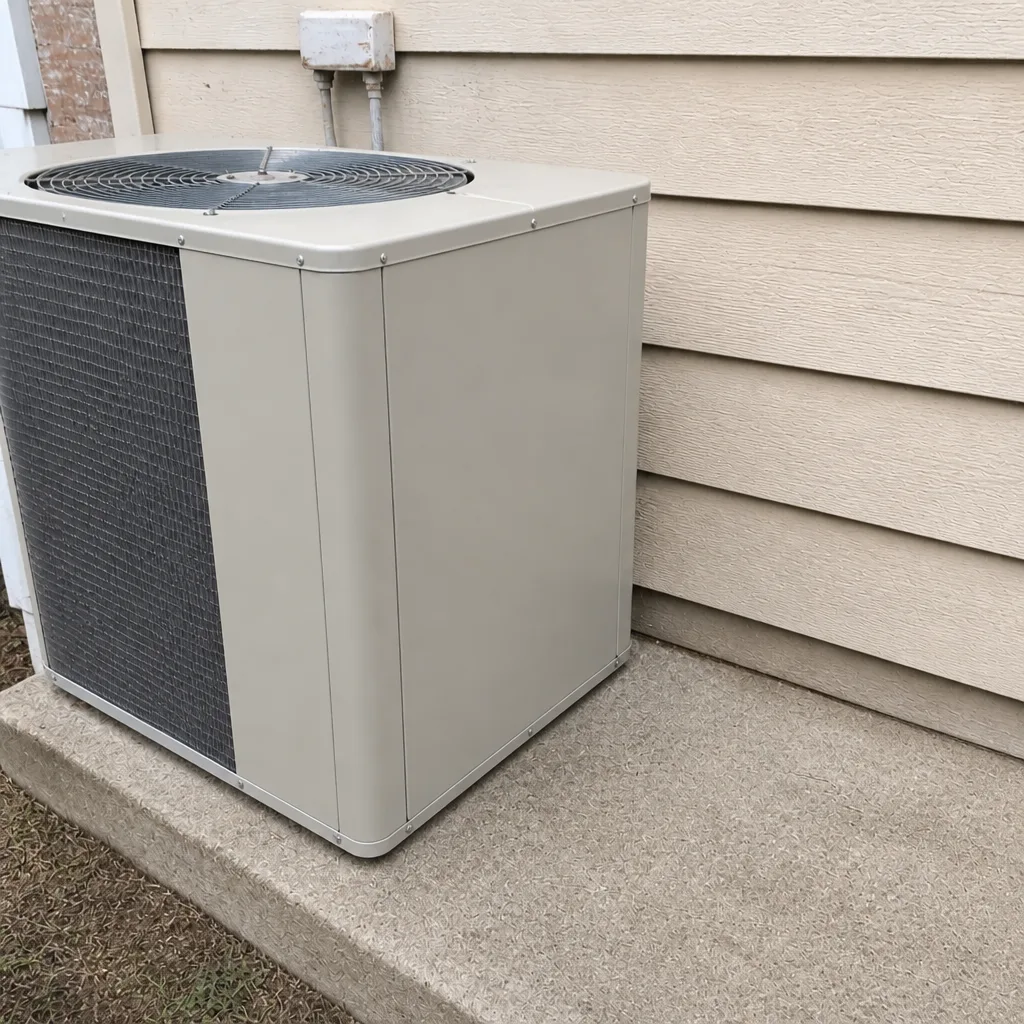 After
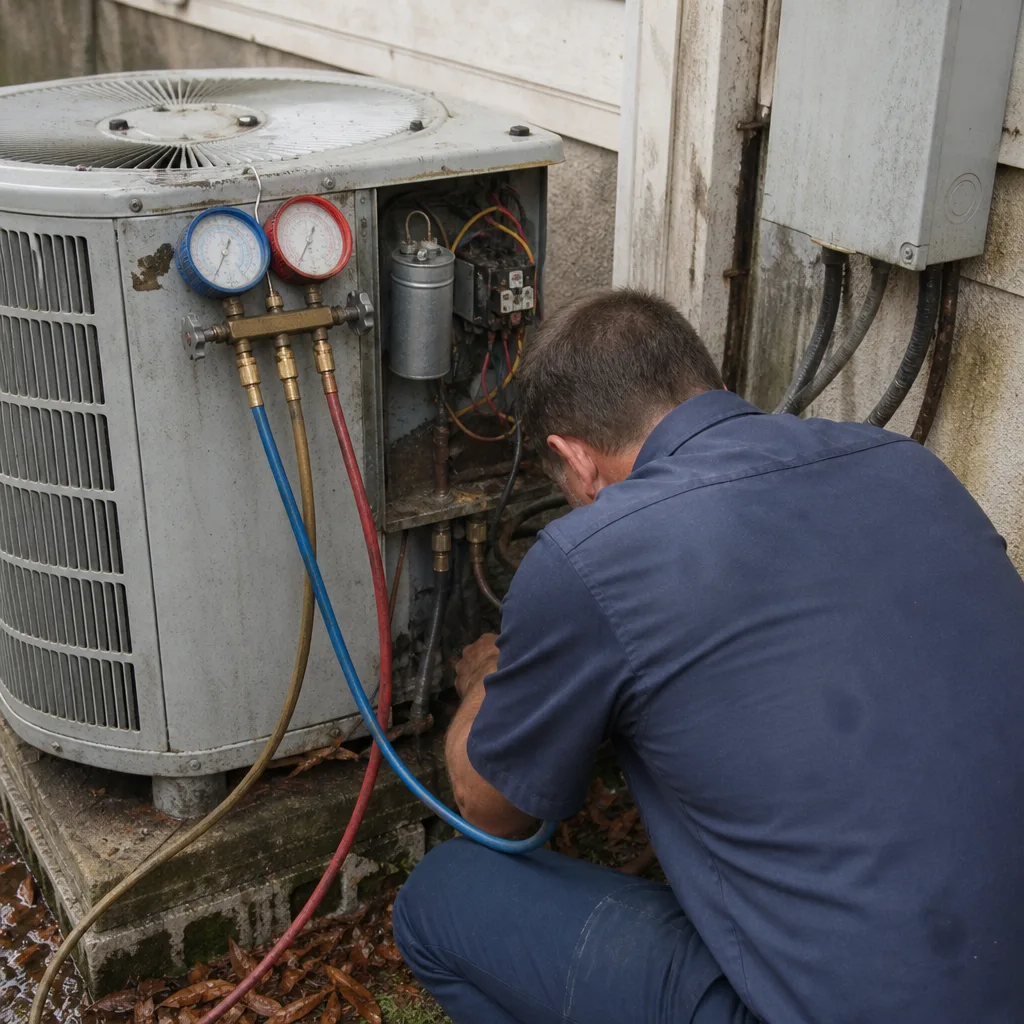 Before
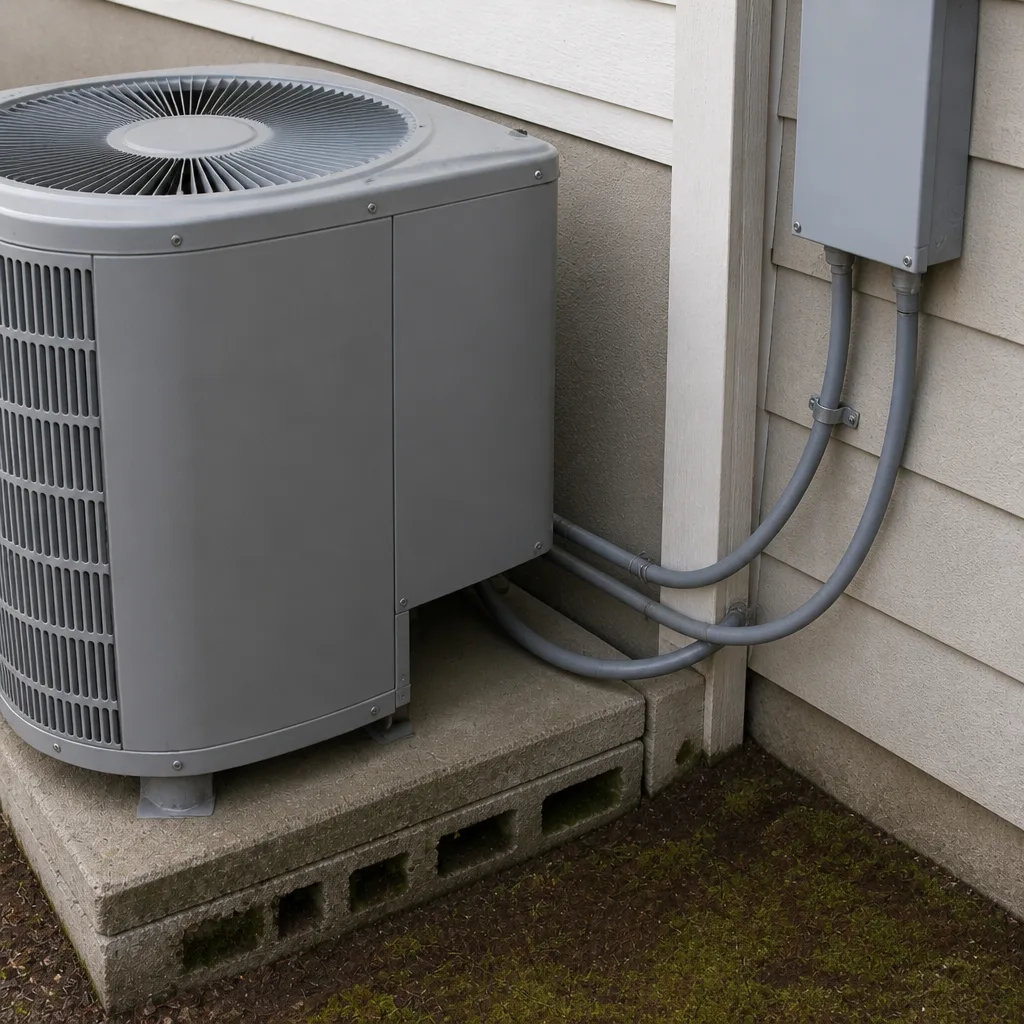 After
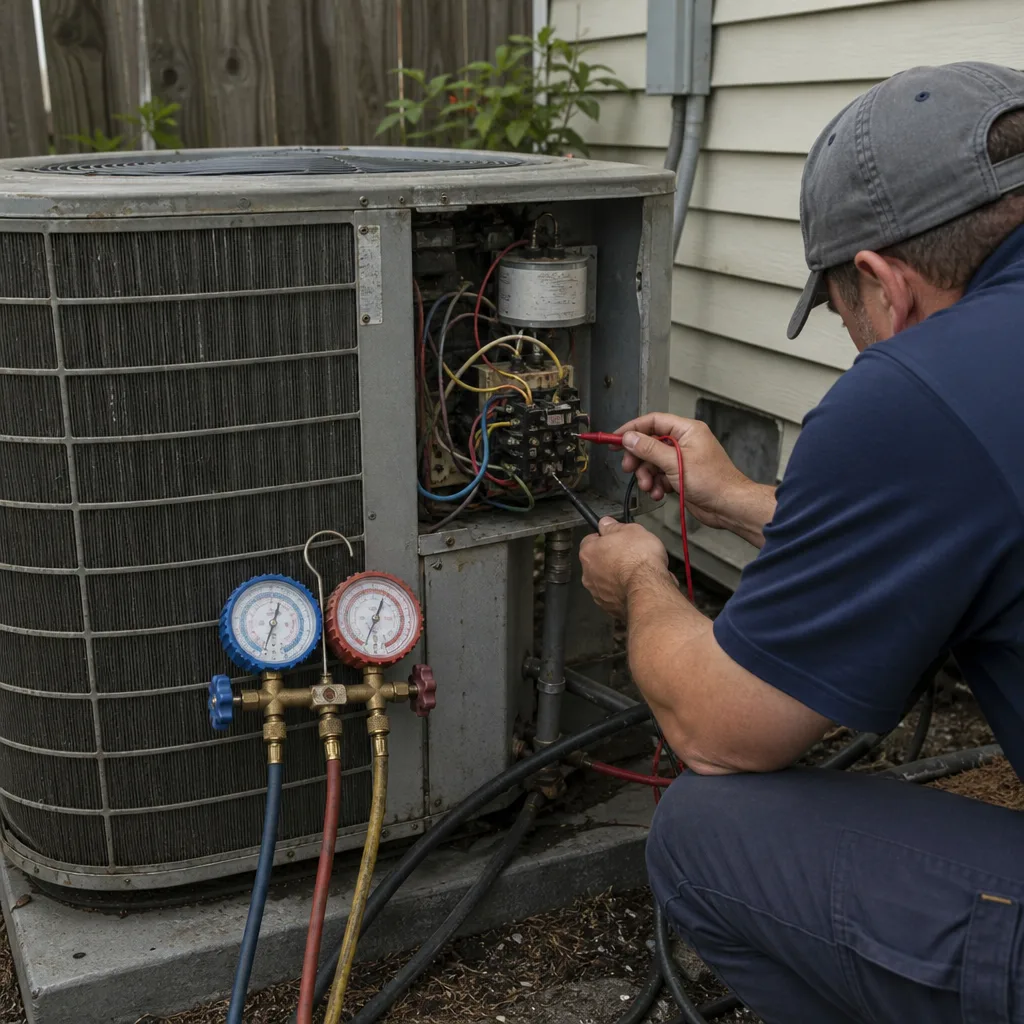 Before
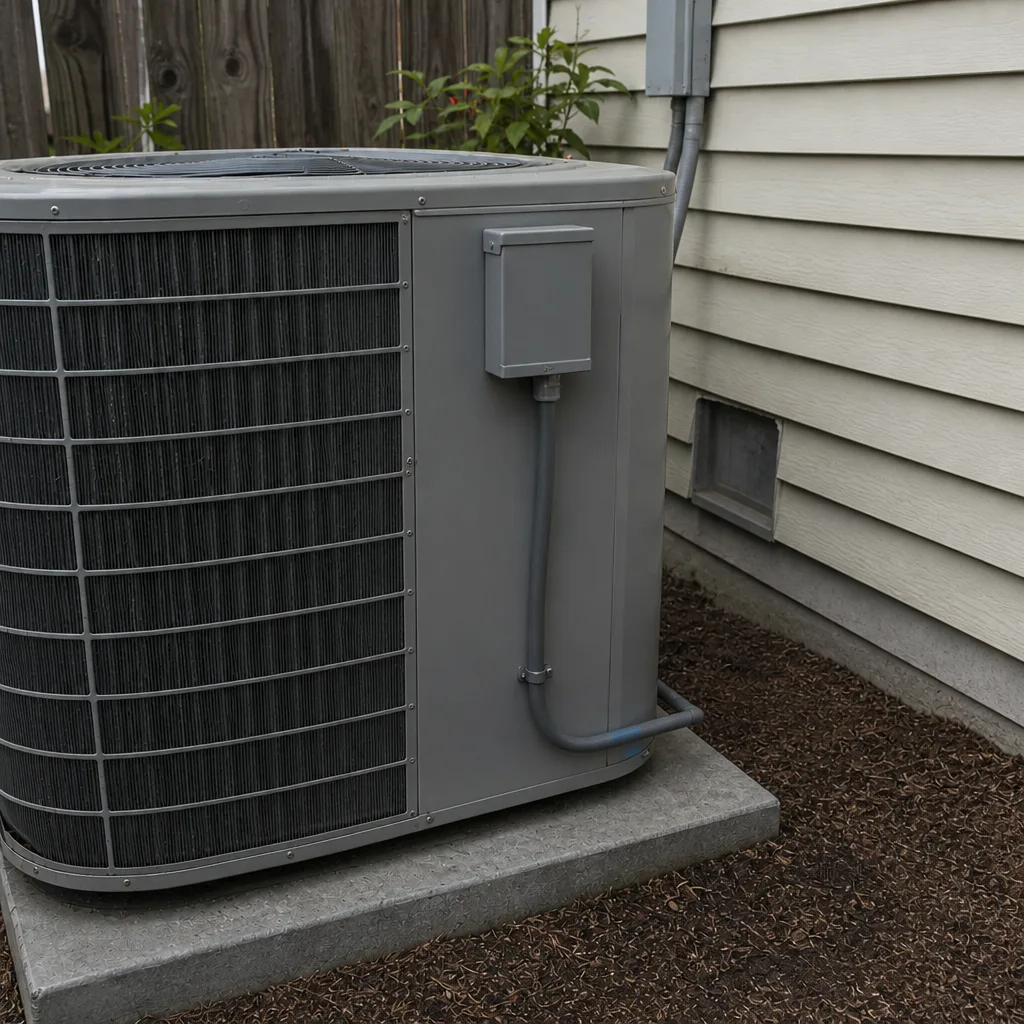 After
When to Call a Professional
Call for any failure that leaves you without cooling during a hot stretch, any time you smell burning or see sparks near the equipment, if water is pooling near the air handler, if the breaker trips more than once, or if you hear grinding or clanking from the outdoor unit. Call for storm damage and any unit that sat through flooding. Call if your system is over ten years old and starting to act up, so you can get ahead of a failure instead of meeting one in a heat advisory. And call if you just want a check before the worst heat arrives. Millbrook AC Repair offers free estimates in Clearwater and answers at (855) 360-7082. We answer 24/7. Fast dispatch from 7am to 7pm, Sunday through Friday. When it’s an emergency, the number is the plan.
Frequently Asked Questions
Indoor temperatures can climb above 90°F within roughly four hours of a failure during a heat advisory, sometimes faster in a poorly insulated home or one with direct afternoon sun. That’s why the first hour matters: draw blinds, shut windows, turn off heat-producing appliances, and consolidate into one cool room. Call (855) 360-7082 for an exact arrival window; estimates are free.
A failed capacitor or contactor is the most common summer failure we see in Clearwater. Long runtimes from May through September wear these components faster than in cooler climates. A tripped breaker and a clogged condensate drain are close behind. Don’t check the capacitor yourself; those parts hold a charge after power is cut.
Repair young systems and small failures; get written estimates on both repair and replacement when a large repair lands on a system in its early teens or older. If the old system was already struggling in July, it will still struggle after a repair. Call (855) 360-7082 for an exact quote on both paths; estimates are free.
Strap a rigid, vented cover over the top of the outdoor unit (never wrap the whole unit in plastic), bring in loose patio items, and shut the system off at the breaker before the worst winds. After the storm, inspect from a safe distance, then restore power. If the unit was flooded or you see downed lines nearby, don’t touch anything and call.
Not necessarily. Small repairs (capacitor, contactor, drain) are worth it on systems under about ten years. On older systems, a large repair like a failed compressor is the point to compare the repair against a written replacement estimate. That’s a good decision framework whether it’s 2am or 2pm.
The price is set per job by a written estimate, and the estimate itself is free. The cost depends on what failed, the parts involved, and the system’s age. Call (855) 360-7082 for an exact quote. We answer 24/7. Fast dispatch from 7am to 7pm, Sunday through Friday.
The Bottom Line
Prepare before the heat, not during it. Keep your contractor’s number written down, know your model and serial numbers, understand that failed capacitors, refrigerant leaks, clogged drains, tripped breakers, and blower failures are the five problems you’re most likely to meet, and act fast in the first hour to slow heat gain. Clearwater summers leave a narrow window between a failure and a dangerous house, and planning for that window is much easier in winter than the day it happens. Heating and cooling handled by one team, one call. Nine brands. One team. No runaround. And a number ready when you need it: (855) 360-7082.
Written by the team at Millbrook AC Repair.