
Last updated November 16, 2026
 AC repair
 Furnace & heating
 Heat pumps
 Ductless mini splits
 Carrier
 Trane
 Goodman
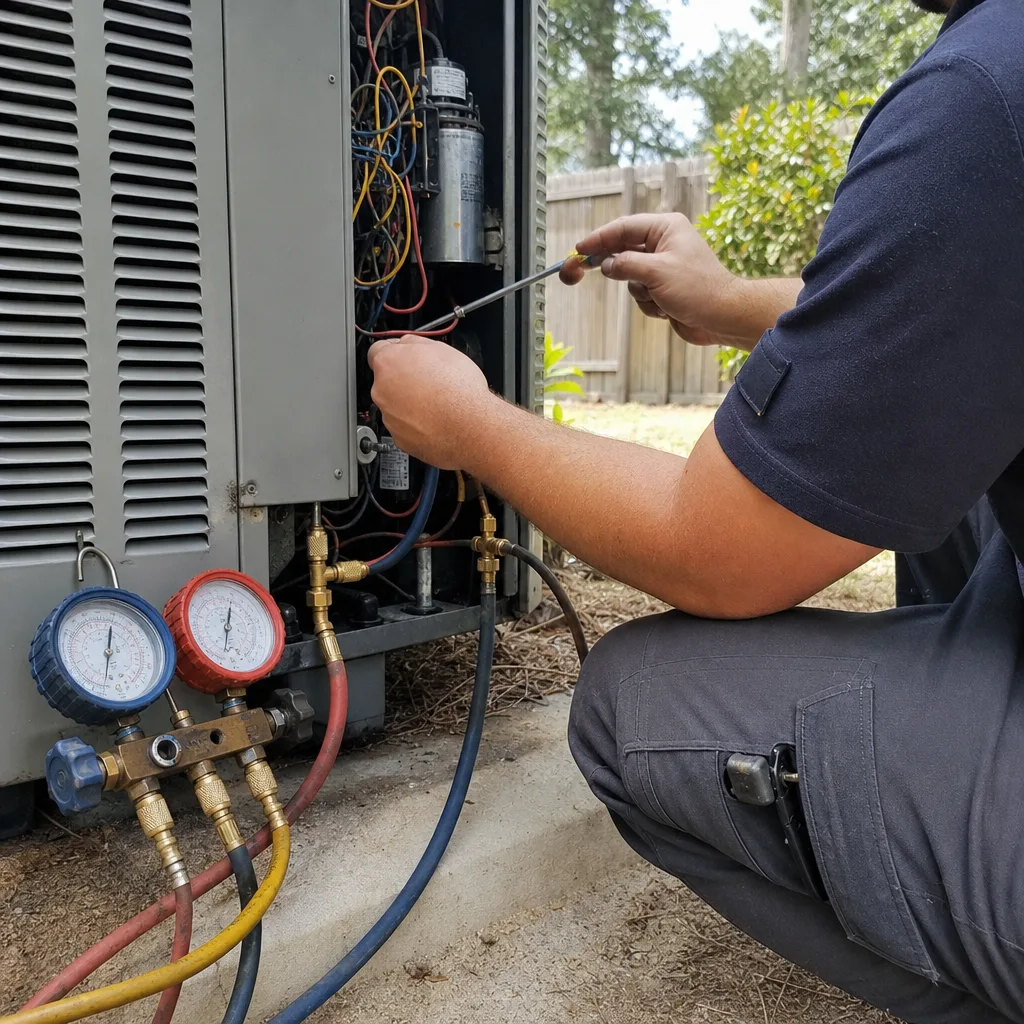
Seasonal tune-up and full diagnostic on your Carrier, Trane, or Goodman system - readings shown to you before any repair is proposed
Diagnosis first, numbers second - you approve the repair price before a single part goes in.
Get your free estimateHVAC Permits, Codes & Inspections in Clearwater, FL: What You Need to Know
The most expensive part of an unpermitted HVAC job in Clearwater usually isn’t the fine. It’s the phone call that comes years later, from a buyer’s inspector or an insurance adjuster, asking for a permit record that doesn’t exist. Homeowners who let a contractor “skip the permit to save a week” tend to discover the problem at the exact moment they can least afford it: mid-sale, mid-claim, or mid-emergency. In this guide we walk through which jobs actually trigger a permit, what the inspection process looks like, how Florida Energy Code ratings affect what equipment you’re allowed to install, and what to do if you’ve inherited unpermitted work. Clearwater homes come with their own quirks, and we’ll cover those too.
Quick Answer
In Clearwater and the rest of Pinellas County, a permit is required for HVAC work that involves installing, replacing, or making major modifications to a system or its components, including a full system changeout, a new air handler or condenser, and any new or altered ductwork. Routine maintenance, filter changes, and minor repairs that don’t alter the system or its wiring and refrigerant circuits generally don’t need one. The work must then pass inspection before it’s signed off, and the permit record is what proves the job was done legally. A permit isn’t paperwork overhead – it’s the only durable proof of a legal install.
Styles & brands we work with
- AC repair
- Furnace & heating
- Heat pumps
- Ductless mini splits
- Carrier
- Trane
- Goodman
Table of Contents
- Which HVAC jobs require a permit in Clearwater?
- What jobs count as maintenance and skip the permit?
- What happens during an HVAC inspection in Clearwater?
- Florida Energy Code and SEER2: what it means for your equipment
- How unpermitted HVAC work affects insurance and home sales
- What to do if you bought a home with suspect HVAC work
- The step-by-step permit process, start to finish
Which HVAC jobs require a permit in Clearwater?
A permit is required any time the work changes the system rather than simply servicing it. The general rule Pinellas County uses: if the job involves opening the refrigerant circuit, running new electrical, adding or significantly changing ductwork, or swapping major equipment, it needs a permit. When in doubt, ask the city’s building department – they’d rather answer a two-minute question than process a violation later.
Jobs that require a permit in Clearwater:
- Full system replacement. Removing an old condenser and air handler and installing new equipment. This is the most common permitted job we see.
- Condenser-only or air-handler-only changeout. Even replacing one half of a split system requires a permit, because the equipment match affects refrigerant charge and efficiency.
- New ductwork or significant duct modification. Adding supply or return runs, resizing trunk lines, moving a register, or replacing a duct system’s main components.
- New electrical circuits for HVAC equipment. A new disconnect, new breaker, or upsized wiring typically requires both an HVAC permit and an electrical inspection.
- Converting fuel source. Switching from electric resistance heat to a gas furnace or vice versa requires permits and often gas inspections as well.
- Adding a second system. A mini-split for a converted garage, a system for a new addition – anything that increases the count of installed systems.
There’s a common misconception that “like-for-like” replacement escapes the permit requirement. It doesn’t. A 3-ton unit swapped for a 3-ton unit in the same location is still a mechanical permit job, because the inspector has to verify the electrical connections, the drain, the refrigerant lines, and the equipment’s code-compliant efficiency rating.
What jobs count as maintenance and skip the permit?
Maintenance work exists to keep an existing system running, not to change what’s installed. If nothing gets added, removed, relocated, or electrically modified, the work is usually maintenance. That’s where the line sits in Clearwater and across Pinellas County, and it’s a line most reputable contractors know well.
Generally considered maintenance (no permit required):
- Replacing a filter, cleaning the condensate drain, or clearing a blocked drain line.
- Replacing a failed capacitor, contactor, blower motor, or fan motor with an equivalent part.
- Adding refrigerant to a system that has a known slow leak (the repair of the leak may trigger different rules, but the recharge alone is service work).
- Tightening electrical connections, testing relays, cleaning the condenser coil.
- Adjusting refrigerant charge or performing a system performance check.
- Replacing a thermostat with a compatible unit that uses existing wiring.
Where it gets murky: thermostat replacements that require new wiring, “just tap into that duct” work during a kitchen remodel, and rewiring a blower to a different speed tap during a repair. Those cross into permit territory, and a contractor who waves them through with “don’t worry about it” is telling you something about how they treat all the rules, not just this one.
If your system was installed under 10 years ago and you’re calling for furnace repair, the technician should be able to tell you whether the fix is service work or a permit job once they’ve seen the equipment. Repairs that stay inside the existing electrical and refrigerant envelope don’t need a permit even on a system under warranty; if it’s borderline, ask before they start.
What happens during an HVAC inspection in Clearwater?
An HVAC inspection is a physical visit from the local building department’s mechanical inspector, scheduled after the installation is complete but before the system is considered signed off. The inspector isn’t looking for reasons to fail you. They’re verifying that the equipment is installed to code, that the electrical and drain connections are safe, and that the equipment’s rated efficiency meets Florida’s minimums. In our experience, most failures come from small omissions – a missing condensate safety switch, an untagged disconnect, a manufacturer’s install manual not on site – rather than major code problems.
What the inspector typically checks:
- Equipment identification: model and serial numbers on the condenser and air handler match what was listed on the permit and the rated SEER2 meets the Florida Energy Code minimum for that equipment class.
- Electrical: proper disconnect, correct breaker size, correct wire gauge, properly bonded and grounded connections.
- Refrigerant piping: correct line sizing, insulation in place, line-set protection where it enters the wall.
- Condensate: pitched drain line, proper termination, safety switch on the primary or secondary drain.
- Ductwork, when in scope: sealed connections, proper support, correct sizing for the equipment’s airflow.
- Clearance and access: enough space around the condenser for airflow, service access to the air handler, code-required clearances from combustibles.
- Documentation: manufacturer’s installation instructions on site, equipment match-up documentation, permit card signed off.
The typical timeline in Clearwater runs roughly two to four business days from the request for the visit to actual inspection, though it moves slower during summer peak when the county queue fills up. A failed inspection gets a correction notice listing the specific items, then a re-inspection after the items are fixed. The re-inspection itself is usually quicker than the first visit.
One thing that surprises homeowners: the inspector doesn’t test the system’s actual cooling performance or check the refrigerant charge. They verify that the install was done correctly and safely. Performance verification is on the contractor, which is why you want someone who takes the commissioning step seriously rather than just installing and leaving.
Florida Energy Code and SEER2: what it means for your equipment
Florida’s energy code sets minimum efficiency standards for HVAC equipment installed in the state, and those minimums are expressed in SEER2 (Seasonal Energy Efficiency Ratio, second-generation). Equipment rated below the Florida minimum can’t legally be installed, and a permit that lists non-compliant equipment won’t pass inspection. The practical effect: your equipment selection isn’t just a comfort and budget decision, it’s a code compliance decision, and the contractor has to know which models are legal to install in Clearwater.
What homeowners should know:
- The minimum varies by equipment type and location. Split-system air conditioners, heat pumps, and packaged units each have their own minimum. Because Florida sits in a specific climate zone, the state’s minimums are generally higher than some other parts of the country.
- Below-minimum equipment can’t get a permit. If a contractor offers a “great deal” on equipment below the state minimum, that’s not a deal. It’s a job that will either get flagged by the inspector or, worse, get installed without a permit and become a problem for the next owner.
- Higher efficiency isn’t always the right answer. Going significantly above the minimum costs more upfront for diminishing returns in Clearwater’s relatively mild winters, where the cooling load dominates year-round energy use. Matching efficiency to the home’s actual load, not just shopping for the highest number, is where real savings live.
- Duct sealing is part of the code. New or altered ductwork must be sealed at connections to Florida’s energy code standard. If ductwork shows up on your permit, it will be inspected for leakage and insulation requirements.
This is where working with a brand-agnostic contractor matters. If a dealer only sells one line and that line’s entry models sit near the state minimum, the recommendation has nowhere to go. We work on equipment from Carrier, Trane, Lennox, and American Standard, among others, so the equipment recommendation can be based on the home’s load and the homeowner’s budget, not on what’s in inventory. The same principle applies to AC installation more broadly: a properly permitted install starts with equipment that’s legal, correctly sized, and correctly paired.
When you look at a new system’s efficiency rating, don’t confuse it with the permit reviewer’s job. The inspector checks the rating on paper and the model number against the permit. The real efficiency you’ll live with comes from proper sizing, sealing, and commissioning – things the code inspection can’t see from a clipboard.
How unpermitted HVAC work affects insurance and home sales
Homeowner’s insurance policies typically require that work on covered systems was done legally and to code. They don’t have a line item for “we check the permit history of your HVAC,” but they do have a claims process, and the claims process is where this matters. If a system-related claim surfaces a fire, water intrusion, or CO risk that traces back to unpermitted or non-compliant work, the insurer can push back on coverage, on the scope of what they’ll pay, or on renewal. Unpermitted work is the kind of detail an adjuster finds when they’re looking for any reason to question a claim.
During a home sale, the buyer’s inspector typically pulls permit records as part of their investigation. An unpermitted HVAC system gets flagged, the buyer asks the seller to fix it, and the fix usually involves opening up walls, having an inspector come out to verify what’s there, and sometimes discovering that parts of the install don’t meet current code. The seller ends up paying for re-inspection and possible re-work at exactly the moment they need the sale to close cleanly. We’ve seen deals get tangled up for weeks over what was, at the time, “just a quick swap to skip the permit line.”
If you’re buying a home in Clearwater, the request is simple: ask the seller’s agent for the permit records for any HVAC system installed in the last ten years. If they can’t produce a clear permit and inspection record, that’s a negotiating point, not a dealbreaker, but you want to know what you’re taking on.
The same issue surfaces for insurers on older claims and renewals. Some carriers ask for the install date and proof of permitted work when a home changes hands. A system that’s compliant, permitted, and documented is easier to insure and easier to finance than one that isn’t, and this matters more than the two-to-four week timeline a permit adds to a job.
What to do if you bought a home with suspect HVAC work
If you’re fairly sure the previous owner’s HVAC work was done unpermitted, the good news is that this is fixable. The process is called permitting in place or “existing work permitting,” and Pinellas County has a route for it. It’s not free, it’s not fast, and it does involve an inspector seeing what’s actually there – but it’s far cheaper than discovering the problem at sale or during a claim.
Steps to take:
- Pull the permit history first. Before you assume anything, check the county or city permit records for the address. If the system is documented, you’re done. If it isn’t, you know what you’re dealing with.
- Have the system inspected by a licensed contractor. You want a written report on the equipment, electrical connections, refrigerant lines, drain, and ductwork. This gives you the punch list before you involve the county.
- Fix the safety items first. Condensate safety switches, electrical concerns, and line-set insulation are the items that can cause real damage or injury. Handle them before the cosmetic items.
- Apply for a permit on the existing work. The county’s existing-work process lets you bring unpermitted installs into compliance. The contractor who does the inspection and any corrections usually handles this filing.
- Schedule the inspection and get the sign-off. Once the corrections pass, you have the same legal record any other homeowner has – which is the entire point.
If the existing equipment is below the current Florida Energy Code minimum (which older installs sometimes are), the path forward may involve an upgrade rather than just a permit record. That’s a conversation to have with a contractor who can walk through both options before you commit to anything. A replacement handled correctly is often less expensive than a piecemeal correction, especially if the equipment is aging anyway.
This is the kind of thing we help Clearwater homeowners sort out. Our technicians have up to 10 years of experience, and we’ve seen the range: jobs that just needed the paperwork caught up, and jobs where the whole install was wrong from the disconnect on. Either way, the answer is the same: find out what you have, then decide.
The step-by-step permit process, start to finish
Here’s the sequence, from the contractor’s side, on a typical HVAC job in Clearwater. This is what should be happening behind the scenes on your installation, and it’s what you should ask about if a contractor tries to talk you out of the permit.
- Pre-permit review. The contractor confirms the equipment selection meets Florida Energy Code minimums and that the install plan matches the permit scope. This is where brand knowledge matters – different manufacturers’ model lines map to different efficiency ratings, and the right model has to be selected before the permit is filed.
- Permit application. The contractor files the mechanical permit with the appropriate jurisdiction (Pinellas County or the City of Clearwater, depending on the address) and pays the fee. The cost is usually passed through – it’s not a number a contractor should be padding.
- Permit issuance. Typical turnaround is a few business days for a straightforward residential HVAC permit. Do not let anyone start work before this step unless it’s an emergency covered by the county’s emergency provisions.
- Install. The system goes in. The contractor keeps the permit card and the manufacturer’s installation instructions on site.
- Inspection request. Once the install is complete, the contractor calls for inspection. This is the visit described earlier.
- Sign-off. The inspector approves the work, the permit is closed, and the record becomes part of the property’s permit history. This is what you want to have documented.
One practical note: if your address is inside Clearwater city limits, check whether the city or county handles the permitting. It’s not always obvious to homeowners, and it does matter for who processes the application and how the inspection is scheduled. The contractor usually knows, but if you’re being asked to call it in yourself, that’s a signal something’s off.
The whole process – from permit application to sign-off – typically runs two to four weeks for a straight AC installation in Clearwater, and slightly longer during the summer peak. A contractor who tells you “we can get it done this afternoon, no permit needed” isn’t working faster. They’re working outside the system, and you’re the one who inherits the risk.
Common Mistakes to Avoid
- Assuming like-for-like replacement doesn’t require a permit. It does. A 3-ton swap for a 3-ton needs the same mechanical permit and inspection as a new install, because the inspector verifies the electrical, drain, and efficiency rating.
- Letting a contractor file the permit “later.” The permit has to be issued before the work begins, not after. A retroactive permit is a much harder, more expensive process than a pre-work permit, and some contractors simply won’t handle the one they skipped.
- Skipping the Equipment Rating Check. If the equipment on the permit is below Florida’s SEER2 minimum, the inspection will fail. The selection has to happen before the application, not after the unit arrives on site.
- Missing the condensate safety switch. One of the most common inspection failures in Clearwater, and also one of the easiest fails to prevent. A properly installed safety switch protects your ceiling and floor from an overflow, and the inspector will check for it.
- Assuming the sale will be fine. Buyers pull permit records. An unpermitted HVAC system that gets flagged late in a sale can cost the seller more in delays and re-work than the permit would have cost months earlier.
- Trusting the “skip the permit to save time” pitch. A short permit timeline becomes a long-term problem the day you sell or file a claim. The permit process is the cost of a legal install, not an obstacle to it.
- Ignoring the manufacturer’s install manual during inspection. The inspector expects to see it on site. A contractor who can’t produce it is telling you something about how carefully the rest of the install was done.
If you’re in the middle of a system replacement and want a second read on the permit situation, that’s a free conversation. We see the same questions from Clearwater homeowners regularly, and the answers don’t take long. Start with Clearwater if you want more on how the local picture works.
See the difference
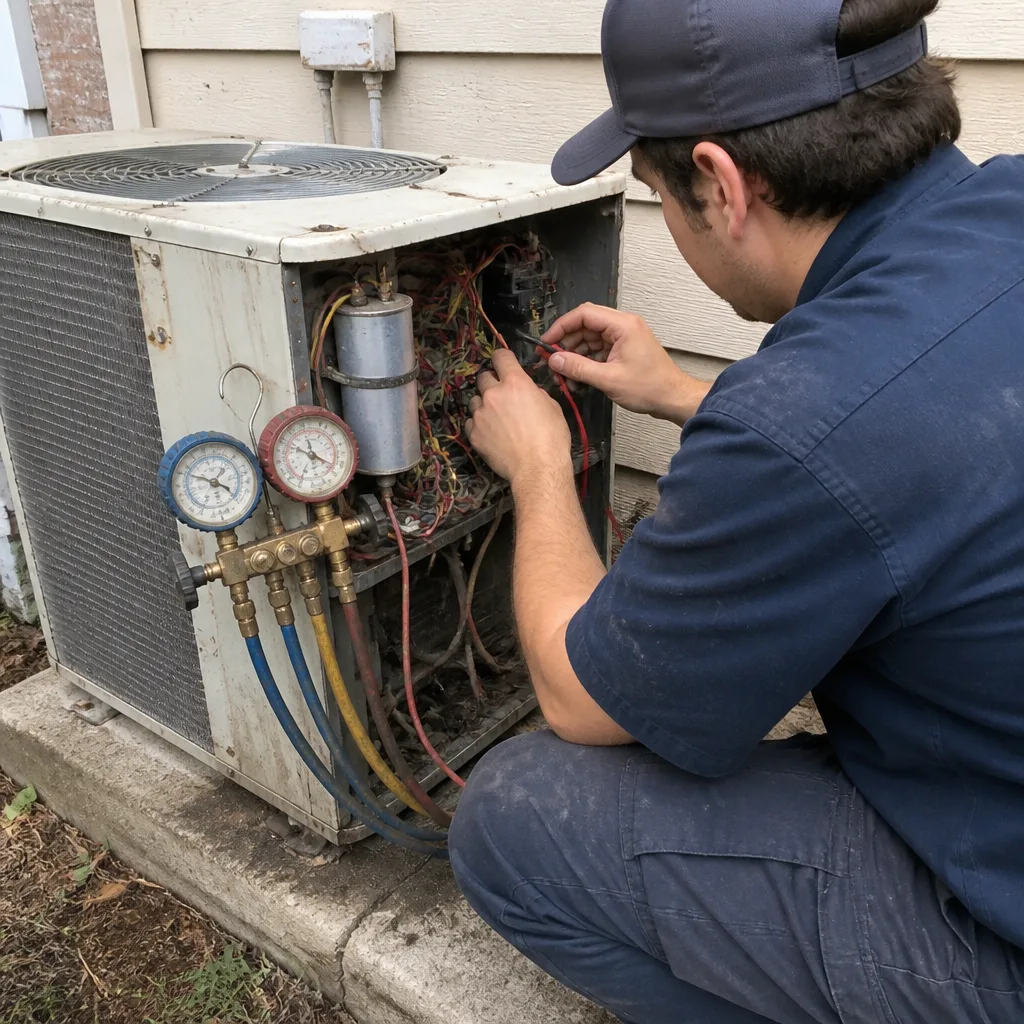 Before
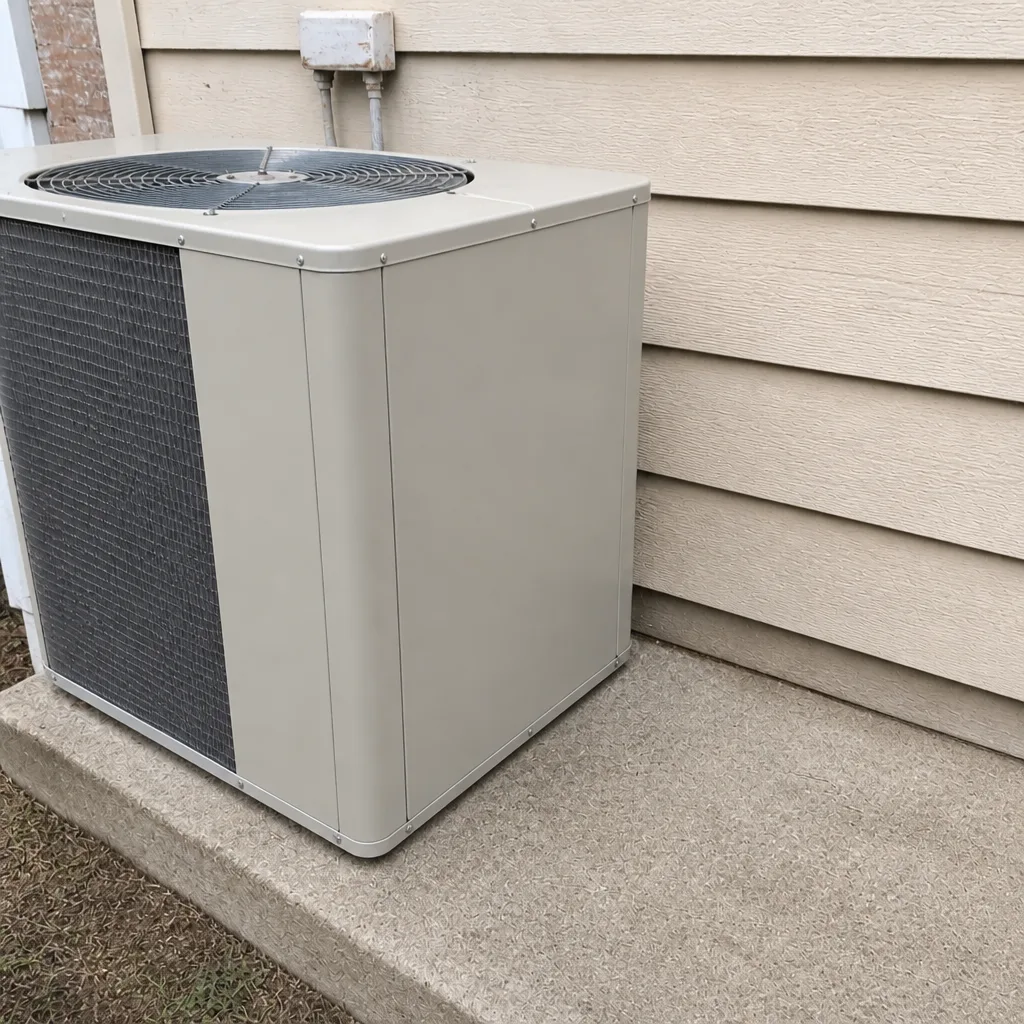 After
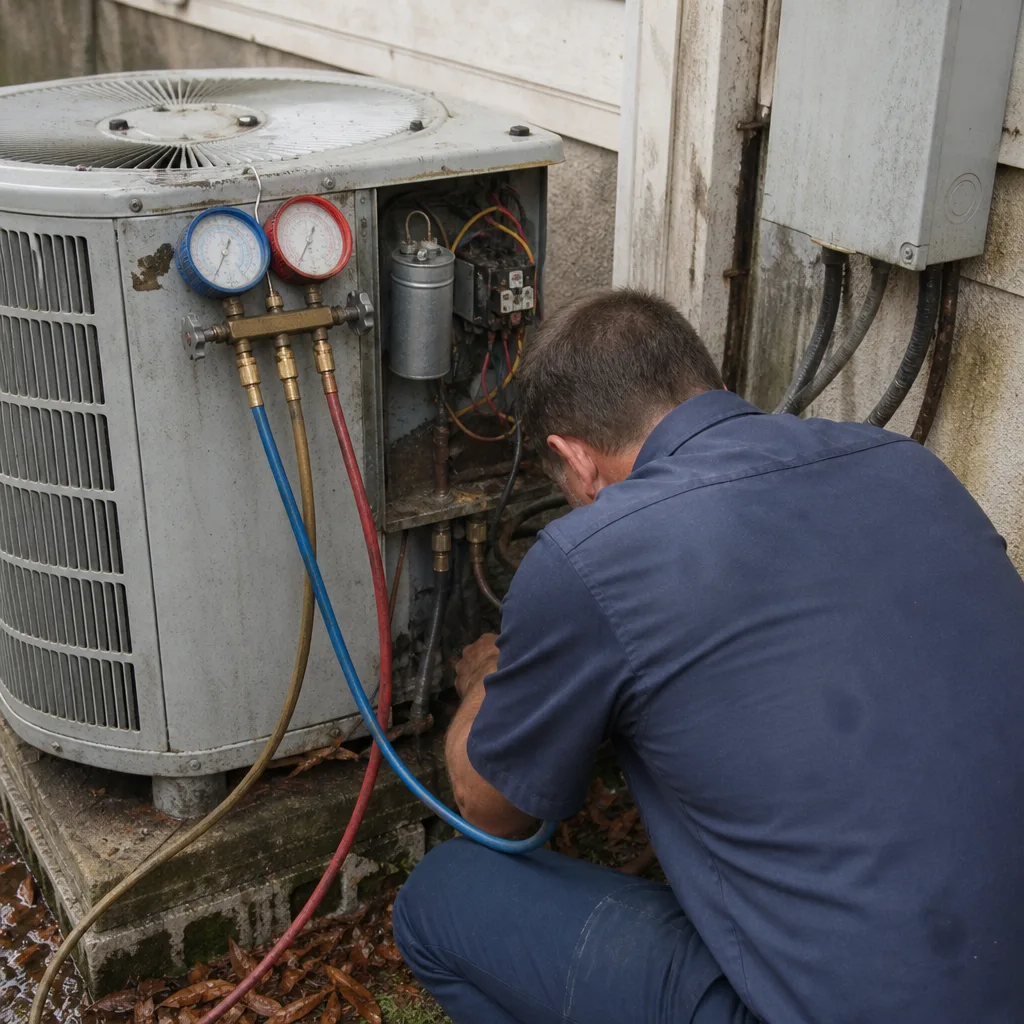 Before
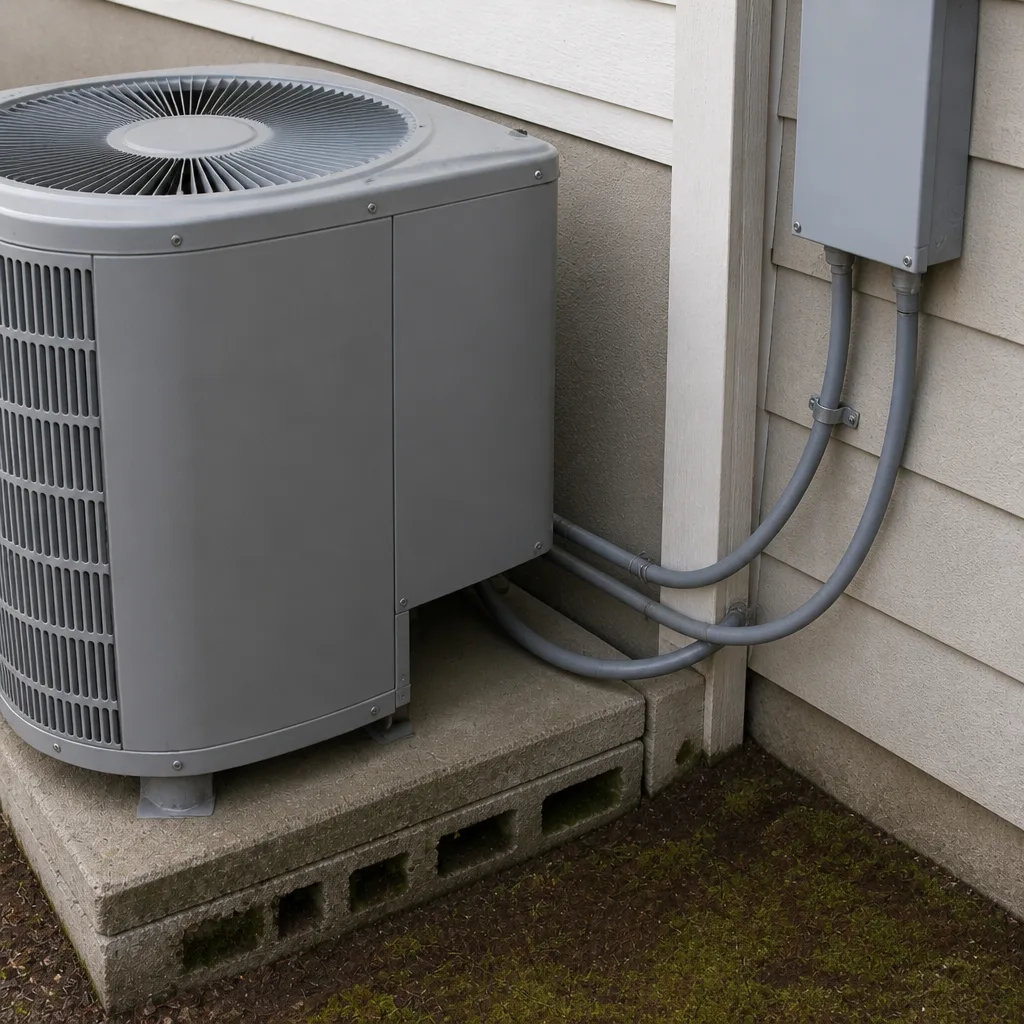 After
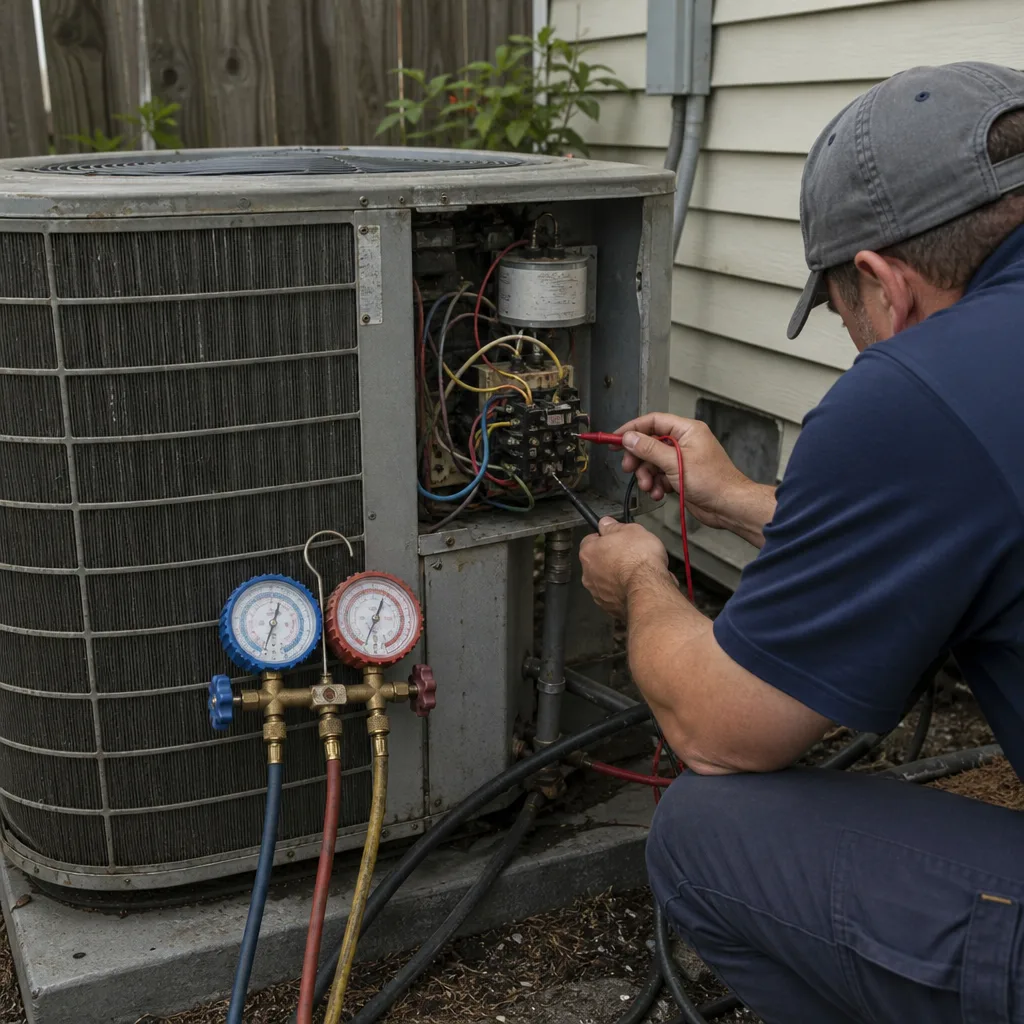 Before
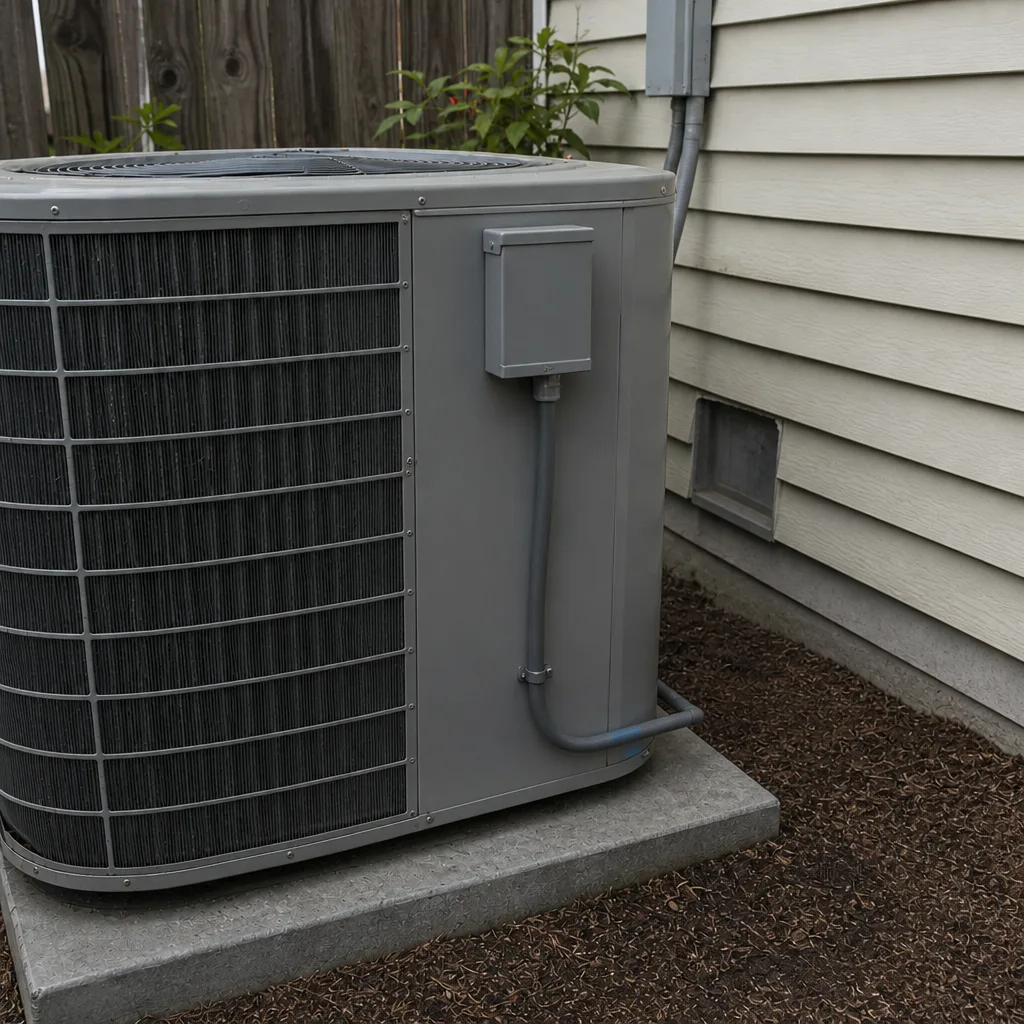 After
When to Call a Professional
Call us when the work involves installing, replacing, or significantly modifying HVAC equipment, because that’s permitted work that has to be done by a licensed contractor with the correct permit. Call when an inspection fails and you need to know what the correction notice is actually asking for – the list of failed items is easier to fix than it looks once you’ve seen the underlying cause. Call when you’re buying a home in Clearwater and want the permit history checked before you sign. Call when you suspect the previous owner’s install was unpermitted and you need a real inspection before you file anything with the county. Call when a piece of equipment below Florida’s SEER2 minimum is quoted at a “great price” and you want to know whether it can legally be installed at your address. And call when your existing system is at the age where repair versus replace is the honest question, and the answer affects what permits and inspections are coming next.
Millbrook AC Repair offers free estimates in Clearwater. Call (855) 360-7082. We answer 24/7. Fast dispatch from 7am to 7pm, Sunday through Friday.
We work on the brands you already have – Carrier, Trane, Lennox, American Standard, and the other major manufacturers we’re certified to service – so the recommendation isn’t shaped by which brand pays the dealer a bonus. The permit is the same permit either way. A single contractor handling both the cooling and heating side of the same job means the permit scope gets filed once, correctly, instead of in two separate filings by two separate companies who never talk to each other.
Frequently Asked Questions
Yes. Replacing a condenser, an air handler, or a full split system in Clearwater requires a mechanical permit from Pinellas County or the City of Clearwater, depending on the address. The install must be inspected and signed off before the permit is closed, and the permit record is what proves the work was done legally. Call (855) 360-7082 if you want a free estimate and a permit-scope walk-through before you commit.
No. Florida’s energy code sets minimum efficiency ratings for HVAC equipment installed in the state, and an inspection will fail if the equipment on the permit is below the minimum. Some contractors try to talk homeowners into “close enough” or “not really enforced,” but the permit record is on file and the sign-off won’t happen on non-compliant equipment. If a deal looks too good on price, it’s worth asking whether the equipment meets the current Florida minimum.
The inspection itself is usually under an hour, but the wait from request to visit typically runs two to four business days for a residential job. The full sequence, from permit application through sign-off, usually runs two to four weeks for a standard AC installation, and longer during the summer peak when the county inspection queue fills. Scheduling ahead and getting the install completed early in the week helps.
The buyer’s inspector typically flags it, and the seller is usually asked to bring it into compliance before closing. That means permitting the existing work, having it inspected, correcting whatever the inspection finds, and covering the cost and timeline at the worst possible moment. The cost to fix it later is almost always higher than the cost of the original permit. If you’re selling soon and aren’t sure, pull the permit history first.
Pull the permit records for your address through Pinellas County or the City of Clearwater, whichever processes permits for your address. The record should show the permit number, the contractor, the scope of work, and the inspection sign-off. If the address shows a recent install but no permit, the work was almost certainly done without one. Call (855) 360-7082 for a free estimate on bringing the work into compliance.
It can. Insurers typically require covered work to have been done legally and to code, and a claim that traces back to unpermitted work is where coverage questions get raised. The policy language varies by carrier, but the pattern is consistent: properly permitted and documented work is easier to insure, easier to finance, and far easier to sell. If you’re unsure about your own home, the permit history is the place to start.
The Bottom Line
In Clearwater, a permit isn’t optional paperwork – it’s the legal record that your HVAC system was installed to code and inspected by the local authority. Replacement, new or significantly modified equipment, and added ductwork all require one. Maintenance and minor repairs don’t. Florida’s SEER2 minimums restrict what equipment can legally be installed, and an inspector will check the equipment on the permit against those minimums. Unpermitted work follows the house, not the contractor, and surfaces at sale or during a claim. If you suspect the previous owner’s install was unpermitted, pull the permit history and get a licensed inspection before filing anything. The permit process adds a few weeks to a job. Skipping it adds a liability that follows the property for years.
If you want a free estimate on permitted HVAC work in Clearwater – installation, replacement, or bringing an existing install into compliance – Millbrook AC Repair handles the full scope, from brand-agnostic equipment recommendations to the permit filing and inspection coordination. Call (855) 360-7082. We answer 24/7. Fast dispatch from 7am to 7pm, Sunday through Friday.
Written by the team at Millbrook AC Repair.